

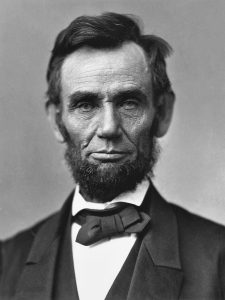
During the early 1840s, the political landscape of Illinois was defined by a rudimentary legislature, intense personal rivalries, and the raucous, highly partisan warfare of the pioneer press. In Springfield, the newly established state capital, political power was heavily concentrated within a tightly-knit circle of Whig lawyers and officeholders known to their detractors as the “Springfield Junto”. This influential coterie, which featured prominent figures such as Abraham Lincoln and his first law partner, John Todd Stuart, operated as a powerful political machine, utilizing coordinated legislative strategies and anonymous media campaigns to guide their party’s fortunes. Stuart, widely known by the legislative sobriquet “Jerry Sly” for his mastery of intrigue and “low cunning,” epitomized the backroom maneuvering of the group, which systematically worked to undermine the dominant Democratic Party.
The primary battlefield for this political struggle was the partisan press. The Junto relied on Simeon Francis’s Sangamo Journal, an influential Whig organ, as its main mouthpiece. Lincoln and other Whig leaders enjoyed unmatched liberty in the columns of the Journal, routinely composing anonymous editorials, dispatches, and highly satirical pseudonymous letters designed to mock and discredit Democratic leaders. In response, the Democratic Party’s chief organ in the capital, the Illinois State Register—co-edited by William Walters—launched a relentless campaign to expose what they framed as a shadowy, undemocratic cabal. In 1840, the Register publicly unmasked the Whig leadership, charging that the “Junto” was a deceptive faction “whose members deliberate in secret, write in secret, and work in darkness—men who dare not let the light of day in upon their acts”. This aggressive exposure aimed to strip the Junto of its carefully cultivated public image and reveal the coordinated strategies driving Whig policy.
The Register’s efforts to expose the Junto’s “work in darkness” culminated in a major scandal during the legislative session of 1841. That year, the Democratic paper charged the Junto with executing a sophisticated “foul stratagem” designed to fracture the Democratic coalition. According to the Register, a prominent member of the Junto had secretly drafted a series of highly partisan articles under the pseudonym “Conservative” for publication in the Sangamo Journal. The Whig operatives then systematically circulated rumors among local Democrats, falsely claiming that Judge Jesse B. Thomas, a key supporter of Democratic President Martin Van Buren, was the true author of the pieces. By exposing this clandestine operation, the Register revealed that the Junto had deliberately manufactured this deception to make Judge Thomas “obnoxious” to his own party, hoping to politically isolate him and ultimately force him to align with the Whig organization.
Parallel to these media exposures was a bitter, underlying ideological conflict regarding race and the franchise that foreshadowed the rise of the anti-slavery “Black Republican” coalition in the 1850s. Throughout the late 1830s and early 1840s, the Register and other Democratic presses shamelessly appealed to regional prejudices, seeking to paint the Springfield Junto as radical agitators. Whig leaders frequently used tactical legislative maneuvers to embarrass their opponents on racial issues, such as introducing resolutions during the 1835–1836 legislative sessions to taunt Democrats into implicitly endorsing black voting rights. In response, Democratic editors aggressively deployed highly racialized, nativist rhetoric, seeking to brand the Whigs as a fanatical “nigger-worshipping” party that favored social and political equality. Organizers within the Democratic ranks warned voters that the Junto’s secretive, underground operations were designed to subvert the established social order of the state and flood the prairie with newly enfranchised black citizens.
Ultimately, the Register’s aggressive campaign to infiltrate and expose the Springfield Junto highlighted the central role of print media in shaping early American political structures. By casting a spotlight on the “secret deliberations” of Lincoln, Stuart, and their allies, the Democratic press forced the Whigs to navigate intense public scrutiny. Although this period of brutal, anonymous journalistic warfare eventually culminated in personal crises that forced Lincoln to abandon the practice of anonymous character assassination in 1842, the tactical blueprints established during these early struggles laid the structural foundations for the modern party system, demonstrating the volatile, powerful fusion of media, machinery, and political power on the American frontier.