
The summer of 1946 was a period of intense political friction for President Harry S. Truman as he struggled to assert executive authority over a rebellious domestic landscape. The primary battlefront lay not in Washington, but in his home state of Missouri, where Congressman Roger C. Slaughter—a conservative Democrat representing Truman’s own district—consistently used his seat on the powerful House Rules Committee to stall the administration’s Fair Employment Practices bill. Infuriated by this localized mutiny, Truman launched a direct, highly public campaign to defeat Slaughter in the upcoming August primary. Declaring to reporters, “If Mr. Slaughter is right, I’m wrong,” Truman made a bold show of bringing Jim Pendergast—the nephew of his late political mentor, Tom Pendergast—to the White House to coordinate a counter-campaign, leveraging the muscle of the old Kansas City organization to back a challenger, Enos Axtell.
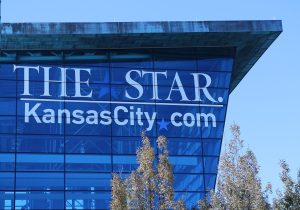
This overt alliance with his old machine allies provoked a storm of outrage from the Kansas City Star, a highly influential and historically anti-machine newspaper. To the editors of the Star, the sight of a sitting President summoning a local boss to the White House to engineer a congressional primary was a dangerous display of backroom bossism. When Truman traveled back to his home at 219 North Delaware Street in Independence during the first week of August 1946 to cast his ballot, the Star responded with an aggressively hostile surveillance tactic. Rather than relying on routine press coverage, the newspaper staked out a reporter equipped with binoculars directly outside the President’s residence, keeping a relentless watch on the house to record and report Truman’s every physical move.
The surveillance, however, did not yield the compromising backroom operational footage the paper’s editors might have hoped to capture. Instead, it set the stage for a classic display of Truman’s defiant, homespun humor. Spotting the reporter watching him through binoculars early the next morning, the President chose not to retreat indoors or instruct his Secret Service detail to clear the sidewalk. Instead, Truman walked directly up to the journalist and confronted him, not with anger, but with a highly detailed and thoroughly mock-serious breakdown of his private routine. Truman proceeded to tell the reporter in detail exactly how he had spent his morning thus far, explicitly including certain personal acts performed in the bathroom. By delivering this highly candid, ribald itinerary, Truman successfully disarmed the surveillance effort, treating the Star’s intrusive stakeout as a laughable absurdity.
Despite Truman’s humorous defiance, the political fallout from the primary proved highly volatile. While Axtell successfully defeated Slaughter in the primary—a victory hailed by the administration as a major vote of confidence—the aftermath was quickly tainted by controversy. Investigating reporters in Kansas City rapidly uncovered evidence of widespread vote fraud associated with the old machine’s methods. Although three federal judges eventually concluded that only minor electoral violations had occurred, the public exposure revived deeply damaging narratives regarding Truman’s historical ties to the corrupt Pendergast organization, casting a dark shadow over his victory and raising persistent doubts about his sense of presidential propriety.
For the modern reader, the binocular surveillance of Harry Truman offers a striking, almost unrecognizable window into the evolution of presidential privacy and security. Today, the notion of a hostile local newspaper mounting an unhindered, close-range binocular stakeout on a sitting President’s front yard is unthinkable, prohibited by modern security perimeters and a highly insulated press pool. This 1946 episode occurred at a historical crossroads, a moment when the presidency was beginning to acquire the immense global power of the early Cold War but had not yet fully cocooned the chief executive from the rough-and-tumble tactics of the local press. Truman’s blunt, bathroom-detailing response to the Star‘s reporter perfectly encapsulates his unique dual identity: a man who held the immense, world-shaping power of the Oval Office, yet insisted on remaining “plain Harry” from Independence, refusing to allow the grandiosity of his office to shield him from a local political fight.