
The publication of the Pentagon Papers on June 13, 1971, by The New York Times sent shockwaves through the highest echelons of the Nixon administration. The top-secret, 7,000-page officially commissioned history of American involvement in the Vietnam War exposed decades of executive-branch deception, misjudgment, and secret military escalation. Upon its unauthorized release, National Security Advisor Henry Kissinger exploded in a frenzy of concern, warning President Richard Nixon that the leak would “totally destroy American credibility forever” and guarantee that no foreign government would ever trust the United States again. Driven by an obsessive concern over security leaks and a rising bunker mentality, President Nixon required little persuasion that draconian, unconventional countermeasures were necessary to defend his executive authority and target his perceived domestic “enemies”.
To plug the leaks and neutralize antiwar critics, the administration authorized the creation of a highly secretive, informal entity formally designated as the White House Special Investigations Unit. Setting up shop in Room 16 on the ground floor of the Executive Office Building, the team quickly acquired a legendary, self-mocking moniker. Because their primary mandate was to locate and seal unauthorized channels of classified information, the unit’s members jokingly affixed a sign to their office entryway that read simply: “Plumbers”.
To lead this clandestine operation, Special Counsel Charles “Chuck” Colson recruited his friend E. Howard Hunt, a former CIA Clandestine Service operative whom Colson described to the president as ideologically reliable, fanatically loyal, and “kind of a tiger”. Hunt was joined by G. Gordon Liddy, a flamboyant former Treasury official who was hired for a $26,000-a-year gig to serve as the unit’s co-leader and chief strategist. Working under the direct supervisory authority of Domestic Policy Advisor John Ehrlichman, the Plumbers operated as a private, highly compromised security apparatus inside the White House, untethered from standard legal or bureaucratic constraints.
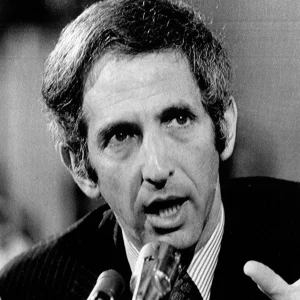
The Plumbers’ first and most obsessive target was Daniel Ellsberg, the disillusioned former defense analyst who had copied and leaked the Pentagon Papers. Nixon fiercely directed his aides to gather compromising information on Ellsberg to systematically smear his reputation and “convict the son of a bitch in the press”. When the FBI proved too slow or legally restrained to satisfy the White House, the Plumbers decided to take matters into their own hands. Ehrlichman personally signed off on a highly sensitive, covert operation to break into the Beverly Hills office of Ellsberg’s psychiatrist, Dr. Lewis Fielding, in a desperate bid to obtain his private medical files.
In September 1971, Hunt and Liddy traveled to California to execute the burglary. To facilitate the mission, Hunt leveraged his old intelligence connections to borrow a suite of espionage equipment from the CIA, including miniature cameras, false identity papers, and a collection of cumbersome disguises that included a long, brown-haired wig for Liddy and a mechanical device designed to force the wearer to limp. The operation, however, degenerated into a complete farce. The Plumbers rifled through Dr. Fielding’s cabinets but came up entirely empty-handed, finding absolutely nothing useful regarding Ellsberg. Before departing, the burglars scattered loose pills across the office floor to make the break-in resemble the work of a local junkie desperate for drugs—a ruse so convincing that the Los Angeles Police Department subsequently arrested an innocent local addict for the crime.
The Plumbers’ appetite for illegal, operational overreach quickly expanded beyond the Fielding break-in. Liddy devised a highly radical plan to firebomb the Brookings Institution, a progressive Washington think tank where the administration suspected classified files regarding Lyndon B. Johnson’s secret wartime diplomacy were stored. Liddy’s plan envisioned having Hunt’s Cuban collaborators infiltrate the building disguised as firefighters during the chaos of the blaze, blow the safe, and escape with the files. Although the firebombing plot was never executed, the unit successfully engaged in extensive, unauthorized warrantless wiretapping of journalists and administration staff, routing the intercepted transcripts directly to Hunt and Liddy’s White House offices.
The illegal blueprints and “whatever it takes” culture established by the Plumbers in Room 16 laid the direct, inevitable foundation for the Watergate scandal. In June 1972, several core members of the Plumbers’ network—including Liddy, Hunt, and security consultant James McCord—were implicated and arrested during the second burglary of the Democratic National Committee headquarters. The arrests triggered an immediate, panicked cover-up within the West Wing. Fearing that a thorough investigation would expose the Fielding burglary and other administration “horrors,” John Ehrlichman instructed White House Counsel John Dean to “deep six” a bulky briefcase recovered from Hunt’s office safe. The briefcase, which contained Hunt’s files on Ellsberg, forged State Department cables fabricated to implicate John F. Kennedy in the 1963 assassination of Ngo Dinh Diem, and dirt on Senator Edward Kennedy, was handed over to acting FBI Director L. Patrick Gray, who subsequently burned the documents in his backyard.
The complex web of secrecy finally shattered in April 1973. Seeking to protect himself from becoming the administration’s “fall guy,” John Dean cooperated with federal prosecutors and disclosed the existence of the Fielding break-in. Despite President Nixon’s furious attempts to suppress the revelation under the guise of “national security,” Assistant Attorney General Henry Petersen and Attorney General Richard Kleindienst concluded they had a binding legal duty to inform the court. On April 26, 1973, the shocking details of the Plumbers’ burglary were officially read in open court during Daniel Ellsberg’s ongoing espionage trial. The exposure of such egregious, systemic government misconduct dealt a terminal blow to both the prosecution and the broader Watergate cover-up, forcing the trial judge to permanently dismiss all charges against Ellsberg.
For the modern reader, the legacy of the White House Plumbers stands as a chilling monument to the corrupting influence of executive paranoia, the limits of absolute secrecy, and the eventual collapse of the imperial presidency. The transition from plugging national security leaks to conducting extrajudicial domestic espionage demonstrated that once a governing administration decides that “all law stops at the White House fence,” it inevitably sets off a self-destructive cycle of criminal cover-ups. Ultimately, the Plumbers’ clandestine crusade to destroy Daniel Ellsberg backfired catastrophically, transforming a localized battle over leaked documents into the most devastating constitutional crisis in modern American history.