

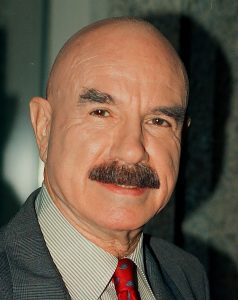
The Watergate scandal of the early 1970s is historically remembered as a clumsy, “third-rate burglary attempt” that systematically unraveled into the greatest constitutional crisis in modern American history. However, the break-in was merely the final, scaled-down iteration of a highly aggressive, deeply sinister domestic intelligence campaign codenamed Operation Gemstone. Conceived by Republican political operatives and funded through clandestine reelection campaign channels, Operation Gemstone was designed to implement a vast program of political espionage, wiretapping, and physical disruption targeting the Democratic Party during the 1972 presidential election.
The Genesis of Gemstone: The Million-Dollar Blueprint
The conceptual origins of Operation Gemstone trace back to January 1972, when G. Gordon Liddy, a former FBI agent serving as the legal counsel and counterintelligence chief for the Committee for the Re-election of the President (popularly known as CREEP), presented a highly ambitious intelligence-gathering plan. In a series of high-level meetings held in the ceremonial Justice Department office of Attorney General John Mitchell, Liddy outlined a massive $1 million covert campaign.
With White House counsel John Dean present, Liddy detailed what Dean later described as “the most incredible thing” he had ever heard. The original Operation Gemstone blueprint proposed an array of highly illegal, black-ops maneuvers, including:
- “Black bag” burglaries to photograph sensitive campaign documents.
- Mugging and kidnapping teams to neutralize political agitators.
- Clandestine wiretapping operations against key political targets.
- Using high-priced prostitutes to compromise and weaken Democratic Party leaders.
Mitchell sat amazed, laughing and puffing on his pipe, but ultimately balked at the astronomical price tag and the extreme nature of the proposals, causing Dean to assume the absurd project had died a natural death.
The Resurrection and the Scaled-Down “Gemstone III”
Despite Mitchell’s initial rejection, the White House was increasingly consumed by an obsessive desire for actionable political intelligence. Chief of Staff H. R. “Bob” Haldeman placed intense pressure on CREEP to deliver results, while special counsel Charles Colson called deputy director Jeb Stuart Magruder to demand that Liddy’s project be authorized. Magruder was told to “get off his duff” and finalize the project.
Under pressure on multiple fronts, Magruder had Liddy strip out the most outrageous elements of the plan—such as the kidnapping plots and the prostitutes—and cut the budget down to a more modest quarter-million dollars ($250,000). On March 30, 1972, Magruder flew to Key Biscayne, Florida, where Mitchell was vacationing. After a perfunctory twenty-minute meeting, Mitchell signed off on “Gemstone III”. The bureaucratic machinery of political sabotage had officially been set in motion.
May 28: The Initial Entry and Gemstone Stationery
The scaled-down plan specifically prioritized the infiltration of the Democratic National Committee (DNC) headquarters located on the sixth floor of the Watergate office building in Washington, D.C.. The objective was twofold: to protect the upcoming Republican National Convention from leftist agitators and to actively bug the telephone lines of the Democratic National Committee, particularly that of the Democratic chairman, Larry O’Brien.
The first phase of the tactical operation was executed successfully on the night of May 28, 1972. Liddy’s team of undercover specialists successfully breached the locks, penetrated the DNC offices, and planted audio bugs in two of the street-side offices. For the next week, Liddy monitored these phone lines from room 214 of the adjacent Watergate Hotel and room 723 of the Howard Johnson motel across the street.
Using these wiretaps, Liddy transcribed the private telephone conversations of Democratic Party officials, typing his summaries on special Gemstone stationery marked with the warning, “Exploitation May Compromise Source”. However, the intelligence “product” was highly disappointing. One of the bugs, which had cost the campaign $30,000, malfunctioned entirely, and the intercepted calls yielded little more than DNC aides arranging personal dates.
June 17: The Botched Second Entry
Frustrated by the poor quality of the initial wiretaps, Liddy and Hunt planned a second break-in for June 17, 1972, to repair the malfunctioning bug and photograph additional campaign documents. The entry team consisted of James McCord (CREEP’s chief of security), E. Howard Hunt (an ex-CIA operative serving as a White House security consultant), and several anti-Castro Cubans recruited from Miami.
The operation collapsed in spectacular fashion. An alert night watchman at the Watergate complex noticed that multiple door locks had been taped over, and he immediately summoned the local police. Plainclothes officers trapped the entry team inside the DNC offices. The police caught five burglars in suits and blue surgical gloves crouching behind desks, placing them under arrest.
At the crime scene, police seized cameras, sophisticated electronics, and $6,300 in cash, composed entirely of crisp $100 bills. Federal investigators quickly traced these sequential bills to a secret CREEP campaign fund controlled by Mitchell and Stans, linking the burglary directly to President Nixon’s reelection campaign.
The Cover-Up and the Unraveling
To protect the president on the eve of the 1972 election, the White House immediately launched a massive, illegal conspiracy to obstruct justice. Haldeman directed efforts to hide campaign connections, while Nixon ordered the CIA to tell the FBI to halt its investigation on false grounds of “national security”. Over $450,000 in “hush money” was funneled to the burglars from secret safe funds to secure their silence.
Despite these containment efforts, the Gemstone conspiracy slowly collapsed:
- In March 1973, James McCord broke ranks, writing a letter to Judge John Sirica confessing that the burglars had committed perjury and had been coerced into silence with offers of executive clemency.
- Special Counsel John Dean, realizing he was being set up as the administration’s “fall guy,” turned over his files to federal prosecutors.
- On July 16, 1973, Alexander Butterfield testified before the Senate Select Committee on Watergate, revealing that Nixon maintained a secret taping system that had recorded all of these conspiratorial conversations.
The public disclosure of these tapes—including the “smoking gun” conversation of June 23, 1972, in which Nixon could be heard directing the CIA-FBI cover-up—triggered a profound political backlash. Richard Nixon was forced to resign the presidency in ignominy on August 9, 1974. John Mitchell, Bob Haldeman, John Ehrlichman, and Charles Colson were ultimately convicted of conspiracy and obstruction of justice, cementing the botched burglaries of Operation Gemstone as the ultimate catalyst for the downfall of the Nixon administration.