

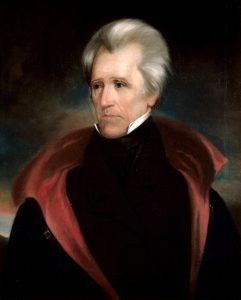
In the early decades of the nineteenth century, the American political landscape underwent a seismic shift, migrating from an elite-dominated republic to a boisterous, mass-participation democracy. While the founding generation in Philadelphia had envisioned a system of diffused powers with intermediary institutions designed to temper the passions of the electorate, the emergence of Andrew Jackson permanently rewrote the script of public life. Faith in “the people” and non-elite participation had first emerged as a rhetorical force with Thomas Jefferson’s triumph in 1800, yet early Republican leaders remained members of the educated, southern gentry who expected the electorate to defer to established elites. This traditional, top-down structure held firm until Jackson’s rise. Jackson, the first president to come from the common people rather than an educated elite, came to symbolize a new era where popular democracy, disdain for elitism, and a mystical connection to the popular will became the defining characteristics of the American identity.
The ideological foundation of Jacksonian populism was forged in the bitter fallout of the 1824 presidential election. Despite winning a plurality of the popular and electoral votes, Jackson was denied the presidency when the House of Representatives selected John Quincy Adams, who subsequently appointed House Speaker Henry Clay as his Secretary of State. Jackson and his supporters instantly decried this transaction as a “corrupt bargain”, establishing a powerful political narrative that framed the country as locked in a fundamental struggle between democracy and systemic corruption. This grievance galvanized Jackson’s 1828 rematch against Adams, transforming American campaigning into the Second Party System. To mobilize a rapidly expanding electorate—fueled by state legislatures loosening property restrictions to grant universal white male suffrage—Jackson’s campaign managers, led by Martin Van Buren, pioneered the tools of modern mass politics. They established “Hickory Clubs”, held massive parades and barbecues, and printed countless partisan newspapers to foster a sense of shared, patriotic identity among the working classes. Voter turnout exploded from 27 percent in 1824 to 57 percent in 1828, sweeping Jackson into the White House in a landslide.
At the center of Jackson’s populist creed was the revolutionary assertion of executive supremacy. Jackson was the first president to insist that the chief executive was the only official elected by all the people, a distinction he believed made the White House, not Capitol Hill, the center of national power. While Henry Clay and the emerging Whig Party championed an elitist, top-down view of government that prioritized congressional authority and federal investment in private corporations, Jackson grounded his authority in the grass roots. He actively positioned himself as the tribune of the people, declaring that the president possessed a direct mandate to protect the unconnected, uneducated, and humble members of society from a corrupt, self-serving financial and congressional establishment. To prevent the entrenchment of a permanent bureaucratic elite, the administration instituted the “spoils system” of political patronage under the banner of “rotation in office”. Although critics charged that this system merely institutionalized party corruption and sycophancy, Jacksonians defended it as a necessary measure to return the government to the plain people.
The dramatic climax of Jacksonian populism was the Bank War of 1832. Jackson viewed the Second Bank of the United States, a private monopoly holding federal deposits, as a “hydra-headed monster” and the ultimate embodiment of unfair privilege. When Congress passed a bill to renew the Bank’s charter, Jackson vetoed it, releasing a revolutionary veto message that openly invoked class conflict. Drafted by Amos Kendall, the message declared that when the laws undertook to add artificial distinctions to natural advantages—making “the rich richer and the potent more powerful”—the humble members of society had a right to complain. This bold appeal bypassed traditional constitutional arguments to take the issue directly to the voters in the 1832 election, fundamentally changing the presidency from a administrative office into an active instrument of political leadership. His opponents, who organized the Whig Party in response, fiercely condemned this executive overreach as “executive usurpation” and “despotism,” mockingly labeling the president “King Andrew the First”. Yet, Jackson’s personal popularity was so immense that his congressional majorities consistently stood by him, transforming the veto from a purely constitutional shield into a powerful political weapon.
Despite its democratic triumphs, Jacksonian populism harbored dark and violent contradictions. The tragedy of Jackson’s legacy is that a movement dedicated to freedom and the common man failed to view liberty as a universal gift, restricting its protections strictly to white males. Under Jackson and his successor, Van Buren, the Democratic Party became the primary vehicle for the expansion of slavery and the systematic dispossession of Native Americans. Jackson staunchly defended human bondage; he was an unrepentant slaveholder who owned approximately 150 slaves, freed none in his will, and actively used federal power to intercept and suppress abolitionist literature.
Furthermore, Jackson’s populism directly fueled the national policy of Indian removal. Viewing Native Americans as obstacles to white agricultural expansion, Jackson ignored federal court rulings and signed the Indian Removal Act of 1830, resulting in the forced expulsion of over 70,000 Native people east of the Mississippi. This brutal campaign of state-sponsored expulsion culminated in the “Trail of Tears”, where thousands of Cherokees, Choctaws, and other sovereign tribes died of cold, hunger, and disease along the march to the West.
Ultimately, the populist legacy of Andrew Jackson permanently altered the structural DNA of the American republic. By insisting that the Union was formed by the consent of “We the People” rather than a compact of sovereign states, Jackson established the powerful nationalist theories that Abraham Lincoln would later invoke to preserve the nation during the Civil War. Jackson’s presidency proved that a leader could dismantle rival centers of elite power by building an emotional, direct connection with the masses and repeating a unified message through friendly media. In doing so, Jacksonian populism successfully democratized the political process and expanded the power of the executive, leaving behind a powerful blueprint for presidential leadership that has inspired and challenged successive generations of American reformers and demagogues alike.