

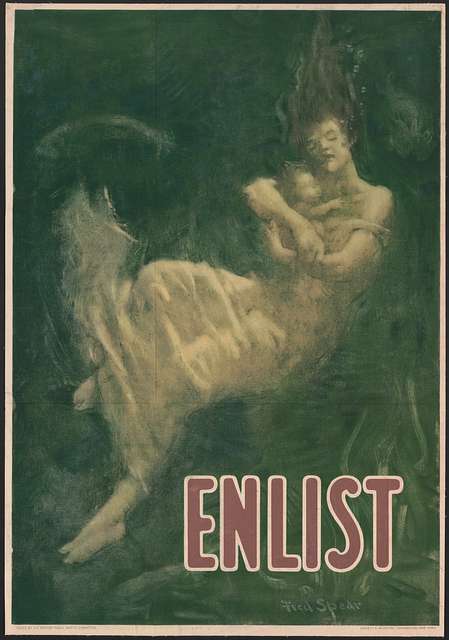
The period of August 1914 to 1918 marks a pivotal time when the United States, initially committed to neutrality, was drawn into the global conflagration of World War I, eventually playing a decisive role before retreating into a period of pronounced isolationism. The reasons for both its entry and its subsequent disengagement from global affairs, particularly its rejection of the League of Nations, are complex and deeply rooted in a confluence of economic imperatives, diplomatic maneuvers, and shifting domestic sentiments.
Before its intervention in April 1917, the United States maintained a deep-seated tradition of neutrality, a policy advocated by figures like Washington and Hamilton and affirmed by the nation’s historical avoidance of European conflicts. President Woodrow Wilson, echoing this sentiment, famously declared that the nation was “too proud to fight”. Public opinion overwhelmingly favored peace, with polls as late as 1917 showing a ten-to-one preference for staying out of Europe’s war. Around one-third of America’s 100 million citizens in 1915 were immigrants or first-generation citizens, many of whom had sought refuge from Europe’s very conflicts and conscriptions. This widespread public reluctance meant that when the U.S. eventually entered the war, the government had to actively work to “manufacture” a consensus, resorting to an elaborate propaganda campaign, military conscription due to a lack of volunteers, and harsh penalties for dissenters.
However, the war, even before formal U.S. entry, was an undeniable economic force shaping American policy. A significant recession had begun in the U.S. in 1914. By 1915, massive war orders from the Allied powers, predominantly England, had dramatically stimulated the American economy. This period saw the United States transform from an international debtor, owing $3 billion, to a major creditor, holding $9 billion in foreign government and private credits by 1921. Financiers like J.P. Morgan and Company served as official agents for the Allies, selling their war bonds and acting as purchasing agents for war materials. They profited handsomely from both ends of the transactions—commissions on borrowed money and on its expenditure—and from production contracts with companies within their vast financial orbit. This immense financial entanglement meant that powerful banking interests, most notably Morgan, were “not overly anxious to see hostilities come to a close,” as their prosperity became deeply tied to an Allied victory.
The immediate trigger for U.S. entry was Germany’s declaration of unrestricted submarine warfare in April 1917, which led to the sinking of merchant vessels. While the torpedoing of the British liner Lusitania in 1915, resulting in 124 American deaths, had already sparked public outrage, it did not immediately draw the U.S. into the war. It’s a crucial, though often concealed, truth that the Lusitania, despite official claims of an innocent cargo, was “heavily armed” with 1,248 cases of 3-inch shells, nearly 5,000 boxes of cartridges, and 2,000 more cases of small-arms ammunition. Both the British and American governments actively “lied about the cargo”. Wilson’s stated justification for war—to uphold Americans’ right to travel on merchant ships in war zones—was described as “rationalization of the flimsiest sort” by historian Richard Hofstadter, given that British actions had also intruded on American rights, yet Wilson did not suggest war with them. The underlying economic necessities, the need to protect the vast loans and trade with the Allies, largely drove Wilson’s shift. Colonel Edward M. House, Wilson’s close adviser, even negotiated a “secret agreement” with England and France in March 1916, pledging the United States to intervene on the Allies’ behalf, with terms designed to make Germany refuse a peace proposal and thus appear at fault.
The U.S. military was largely unprepared for war in 1917, with an army smaller than Portugal’s and only enough ammunition for about a day and a half of combat for the initial expeditionary force. Despite this, the nation rapidly increased its military establishment from 174,000 to 2.8 million men, sending 2 million overseas, with 1.4 million seeing combat within nineteen months. The war effort also engaged 6.5 million Americans, including civilian war workers. American industries quickly converted to war production, becoming a major supplier for the Allies.
The war profoundly impacted American society. As Randolph Bourne famously articulated, “War is the health of the state”. It served to quiet class struggle and foster patriotism. However, it also came at a severe cost. Beyond the 10 million battlefield deaths and 20 million deaths from hunger and disease globally, the U.S. suffered over 250,000 military casualties, including 50,000 killed in action and 67,000 dead from disease. The rapid casualties forced the British army to repeatedly lower its height requirements for enlistment, revealing the brutal attrition on the Western Front. Within the first three months of the war, almost the entire original British army was “wiped out”. Major battles like Verdun and the Somme in 1916 saw hundreds of thousands of casualties for minimal territorial gains.
Wilson’s vision for the post-war world was ambitious, encapsulated in his call for a “war to end all wars” and “to make the world safe for democracy”. He proposed a League of Nations, intended as a new global society and government to make war illegal and ensure collective security. This was a “new type of collective security” and a “disentangling alliance” that would free nations from old power combinations. He believed that due to the U.S.’s financial leverage, the U.S. could dictate the terms of peace to England and France, who would be “financially in our hands”.
Despite Wilson’s fervent efforts at the Versailles Peace Conference in 1919, where he sought to rebuild European economies and promote stable democracies, his grand design for American involvement in a new international order was ultimately rejected domestically. The U.S. Senate failed to ratify the Treaty of Versailles in March 1920, primarily due to objections to Article X, which would have required signatories to join in wars declared by the League of Nations. Wilson’s incapacitation by a severe stroke likely hindered his ability to push for ratification or compromise with the Senate.
The rejection was deeply influenced by a pervasive public disillusionment and a desire for “normalcy”. Many Americans, particularly after witnessing the devastating costs of the war, were “thoroughly sick of wars, of international intrigues, of Bolsheviks and socialists, and of war profiteers”. The concept of “isolationism,” though often oversimplified, gained significant traction, reflecting a desire to distance the U.S. from European conflicts. The government struggled to maintain public support for a wider international role after World War I, leading to a strong “resistance to involvement”.
The period immediately following World War I saw a sharp deflation, recession, and increased unemployment in the U.S., adding to the public’s desire to withdraw from international entanglements. This era also saw the outlawry of war movement gain prominence, culminating in the Kellogg-Briand Pact of 1928, which formally renounced war as an instrument of national policy. While the U.S. did not join the League of Nations, it continued to engage in international diplomacy, such as naval arms control efforts like the Washington Conference. However, these piecemeal efforts proved fragile, collapsing under the weight of the Great Depression.
In essence, the U.S. intervention in World War I was a culmination of economic ties, strategic justifications, and a manufactured domestic consensus, driven by Wilson’s ambitious vision for a new world order. However, the immense human and economic costs of the war, coupled with deep-seated American traditions of non-entanglement and a strong internal desire for peace, led to a swift rejection of Wilson’s “idealism” and a retreat from direct involvement in European collective security mechanisms. The legacy was a period of “disillusionment” that would shape U.S. foreign policy for decades to come, leaving the nation wary of similar overseas commitments until it was directly threatened again in a subsequent global conflict.