

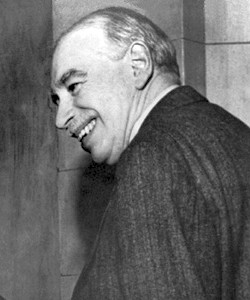
It is indeed essential to delve into the publication of John Maynard Keynes’s seminal work, The Economic Consequences of the Peace, in late 1919, as it provides a crucial lens through which to understand the complex aftermath of World War I and the subsequent shift in global economic and political thought. This book was not merely an academic treatise; it was a powerful polemic that captured the profound disillusionment felt by many regarding the terms of peace and offered a stark, unvarnished truth about the path post-war Europe was set upon.
The context of the book’s release was a world grappling with the immense human and economic devastation wrought by the Great War. While President Woodrow Wilson journeyed to Europe in December 1918, greeted with euphoric welcomes and seen as the man who could mediate among European powers, the reality of the peace conference in Paris in early 1919 was far more grim. The mood was one of vengeance, myopia, and indifference to economic realities, a stark contrast to Wilson’s idealistic vision of a “war to end all wars” and “to make the world safe for democracy”.
Keynes, serving as a key member of the British delegation to the Peace Conference, became utterly horrified by the proceedings, leading him to resign in June 1919. In the two months following his resignation, he composed The Economic Consequences of the Peace, a document that would become renowned as one of the greatest polemical works of modern times.
The core of Keynes’s argument was a scathing critique of the reparations clauses imposed on Germany by the Treaty of Versailles. He argued, with figures and passion, that Europe would only harm itself by demanding more from Germany than it could practically pay. His position was not one of compassion, but rather “elementary self-interest,” contending that restraint by the victors was necessary for their own well-being. Keynes calculated that Germany’s maximum affordable reparation was between $8 billion and $15 billion, a figure significantly lower than what was eventually approved by the 1921 London schedule. He foresaw that enforcing reparations on such a scale would lead to chaos.
Keynes’s unflinching portrayal extended to the principal figures shaping the peace. He famously called Woodrow Wilson “this blind and deaf Don Quixote”, while stating of Georges Clemenceau that he had “one illusion—France; and one disillusion, mankind”. His assessment of David Lloyd George, though a passage he ultimately deleted, was equally severe, describing him as a “syren, this goat-footed bard, this half-human visitor to our age from the hag-ridden magic and enchanted woods of Celtic antiquity”. The truth is, these were figures who often prioritized national interests and retribution over economic realities, a fact Keynes brutally highlighted.
The book’s reception was, predictably, controversial. The British Establishment, as exemplified by The Times, condemned it, arguing that Keynes had “rendered the Allies a disservice for which their enemies will, doubtless, be grateful”. The criticism often aimed to dismiss his arguments by suggesting they pleased the nation’s enemies, a common tactic against inconvenient truths. Despite this, the book became a best-seller. Its dire predictions regarding the chaos that would follow the enforcement of reparations were widely discussed. John Maynard Keynes’s biting pamphlet, The Economic Consequences of Mr. Churchill, published later, further showcased his polemical style, especially in criticizing the decision to return the pound sterling to the gold standard at an overvalued pre-war parity, which he accurately forecasted would lead to increased imports and discourage exports.
Keynes’s broader economic views were profoundly shaped by his experiences. During World War I, he worked at the Treasury, managing British earnings, loans from the United States, and proceeds from securities to cover essential overseas war purchases. He was a proponent of more “scientific” monetary systems, such as the gold exchange standard, which he believed “economized on gold internally and internationally thus allowing greater ‘elasticity’ of money”—a term that, in essence, meant the ability to inflate credit in response to business needs. He prophetically suggested that the traditional gold standard would give way to a system based on one or two key reserve centers, believing a “preference for a tangible reserve currency” was a “relic of a time when governments were less trustworthy”.
His concern for economic stability and a functional international monetary system was evident. After the war, with only the U.S. dollar remaining on a gold coin standard at its pre-war par, Europe’s fiat paper currencies were severely depreciated, leading to inflation, exchange rate volatility, and the threat of warring currency blocks. Britain’s insistence on returning to the gold standard at an overvalued pre-war parity of $4.86, while simultaneously trying to maintain a policy of inflation and cheap money, was, in Keynes’s view, a policy “doomed to end in disaster” due to its “grave inner self-contradiction”. He believed this choice would make British exports uncompetitive and lead to heavy unemployment in key industries, unless Britain underwent a severe monetary and price deflation, which was unlikely given the rigid wage rates and national unemployment insurance.
The immediate post-war period indeed saw a traditional boom followed by a severe corrective recession and deflation in 1921, contributing to public disillusionment. The “murk of the Paris Peace Settlement” lingered, and Americans became “fed up with all other nations,” craving a “return to normalcy”. This sentiment of withdrawing from international entanglements, coupled with the economic realities Keynes so powerfully articulated, fed into the U.S. Senate’s ultimate rejection of the Treaty of Versailles and, by extension, the League of Nations. The fear of being drawn into European conflicts, combined with the perception of an economic order not serving American interests, solidified this isolationist stance.
In essence, The Economic Consequences of the Peace was not just a historical account; it was a warning and a testament to Keynes’s prophetic insight into the intertwining of economic realities and political stability. His ideas, though initially controversial and often rejected by those in power, became central to economic thought and policy, particularly during the Great Depression, when his call for governmental expenditure financed by loans to increase national purchasing power gained significant traction. The book served as a profound reminder that the consequences of peace settlements, if economically unsound, could be as devastating as war itself, shaping American and global foreign policy for decades to come.