

It is indeed insightful to examine the pivotal year of 1922, a period that continued the profound transformations of the post-World War I era, particularly within the realms of international finance and East Asian diplomacy. The unfolding events reveal intricate connections between personal relationships, national interests, and global power shifts.
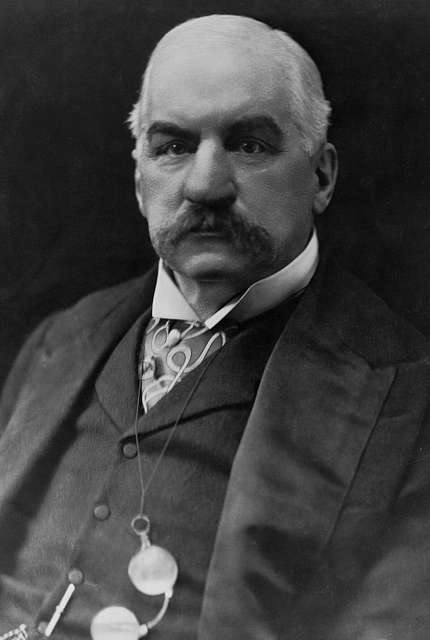
Turning first to the financial world, we observe a telling development concerning J.P. Morgan, Jr., often known as Jack Morgan, and his association with Charles Blumenthal. In 1920, convinced of a perceived “anti-Morgan cabal” among German-Jewish bankers, Jack Morgan had recruited Charles Blumenthal to infiltrate their activities, with targets including Samuel Untermyer and Otto Kahn. However, by 1922, “relations between Jack and Blumenthal soon deteriorated”. The precise reason for this unraveling stemmed from a personal financial matter: Jack Morgan had advanced Blumenthal money for a home mortgage, and Blumenthal “failed to make a timely payment”. This default on a personal debt led to increasingly “frosty” relations, culminating in the “phasing out” of Blumenthal’s payments in 1922. Adding to the tension, when Blumenthal later attempted to leverage Morgan’s name to raise funds, Jack Morgan “denied he had ever employed the man”.
This seemingly minor domestic financial squabble is set against a backdrop of significant shifts in Jack Morgan’s own international engagements. It is noted with considerable irony that, despite his fervent “hatred of Germans” and his recent efforts to spy on German-Jewish bankers, Jack Morgan was simultaneously being urged by the State Department in 1922 “to sit on a committee of bankers who would outline the conditions needed for a massive German loan”. This suggests a striking pivot in official U.S. policy, where the House of Morgan, despite its principal’s personal sentiments, was seen as an indispensable instrument for international financial rehabilitation, even for former adversaries. Indeed, “no Jew on Wall Street ever did as much for Germany as Jack Morgan would,” as he soon became “Germany’s master banker”. This move marked a significant “volte-face” for Jack Morgan, showcasing how his bank’s actions increasingly mirrored broader U.S. foreign policy objectives, even when they conflicted with his private prejudices.
Concurrently, a landmark diplomatic achievement unfolded in Washington, D.C., on February 4, 1922, with the signing of a treaty between Japan and China that restored China’s full sovereignty over Shantung Province. This pivotal agreement was a direct outcome of the Washington Conference, a major international gathering convened by the Harding administration, with Secretary of State Charles Evans Hughes at the forefront of the diplomatic offensive.
The conference’s broad agenda encompassed not only naval arms limitations but also critical “Far Eastern problems,” with China as a key participant. France, though somewhat reluctantly, agreed to attend, clarifying that French would be a coequal official language alongside English. The situation in China itself was complicated by a decade of fracturing central authority and internal divisions within the Chinese delegation due to ongoing warlord conflicts and patriotic movements.
A central point of contention was Shantung Province. Tokyo had acquired control over Shantung as spoils from Germany under the Treaty of Versailles. This concession by President Wilson at Versailles had been a major factor in the U.S. Senate’s defeat of the treaty and had fueled the nationalist May Fourth movement in China. The Chinese representatives at the Washington Conference “insisted on the full restoration of Shantung without any strings,” rejecting negotiations based on the terms of Versailles. The path to agreement was far from smooth; Chinese delegates even faced “angry crowd[s] of Chinese students” outside their legation, who were “opposed to direct negotiations with Japan,” necessitating intervention by U.S. State Department officials to free them.
After an arduous process involving “thirty-six meetings,” and with the assistance of American and British mediators, Japan finally “agreed to restore China’s full sovereignty over Shantung”. This entailed Japan withdrawing its troops and China regaining control over the critical Shantung Railroad, albeit with financial payments to Japan over time. While Japan retained some economic influence in the province, this outcome represented a “significant gain” for China. Charles Evans Hughes and Arthur Balfour, the chief British delegate, were present for the signing, symbolizing the Anglo-American role in facilitating the agreement.
Beyond Shantung, the Washington Conference yielded a broader framework for Pacific security and arms control. It resulted in a landmark Five-Power Naval Treaty, which established specific ratios for capital ship tonnage among the United States, the British Empire, Japan, France, and Italy (5-5-3-1.75-1.75 respectively) and imposed a ten-year “naval holiday” on new battleship construction. This treaty was overwhelmingly ratified by the U.S. Senate. Furthermore, the conference produced eight other security and arms control treaties, addressing diverse issues such as rules for submarines, a ban on poison gases, and most importantly for China, the enshrinement of the U.S. “Open Door principles” into the Nine-Power Treaty. This latter treaty aimed to ensure China’s independence and territorial integrity and provided guidelines for future policies, though it notably “lacked provisions for enforcement”. The Four-Power Accord also facilitated the termination of the Anglo-Japanese alliance, a primary U.S. objective, and replaced it with an agreement for consultation in the Pacific, which was seen as diplomatic cover rather than a military commitment.
In essence, 1922 was a year where American influence, both financial and diplomatic, was asserted on the global stage. While individual financial relationships like that between Jack Morgan and Blumenthal revealed underlying complexities and shifting loyalties, major international agreements like the Shantung treaty and the Washington Conference system attempted to establish a new order, reflecting the United States’ evolving role as a leading world power. However, the lack of enforcement mechanisms in some of these agreements, and the persistent nationalist aspirations in China, would later test the durability of this “Washington Conference system”.