

Ah, the tangled art of gerrymandering! This is a subject truly at the heart of how power flows—or, more accurately, how it can be dammed and redirected—within a democracy. Understanding gerrymandering is crucial because it shines a spotlight on the continuous, indeed, never-ending, struggle to ensure that our system of government genuinely reflects the will of the people, rather than the machinations of a few.
Let’s dissect this, shall we?
The Purpose and Origins of Gerrymandering
Gerrymandering is, at its core, the strategic manipulation of electoral district boundaries to favor specific political interests within legislative bodies. Imagine dividing a state into districts: ideally, these divisions would lead to a range of representatives reflecting the diverse political views of the population. However, gerrymandering throws a wrench into that ideal. It often results in districts with convoluted, winding boundaries rather than compact areas, making it quite obvious that something other than equitable representation is at play.
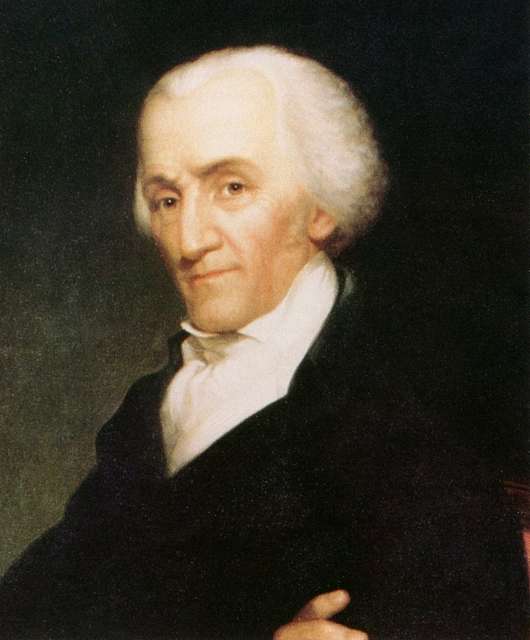
The term “gerrymander” itself isn’t some dry, academic invention, but rather a vivid historical artifact. It was coined in March 1812, appearing in the Boston-Gazette, in reaction to a redistricting map signed by then-Massachusetts Governor Elbridge Gerry. One particular contorted district north of Boston was noted to resemble a mythical salamander, and thus, “Gerry-mander” was born. This practice, favoring one political party, has a long tradition in the United States, with some tracing it back to before the 1789 election, though recent research has disproved the specific claim about Patrick Henry and James Madison’s district in Virginia. Nevertheless, the intent to gain partisan advantage through redistricting has been present since the earliest days of the Republic.
The primary purpose of gerrymandering can be categorized into three main types, though they often overlap:
- Partisan Gerrymandering: This is the most common form, explicitly designed to favor one political party while weakening another. For instance, a party controlling a state’s legislature and governorship can draw district boundaries to give itself a clear advantage. This was notably demonstrated by the Republican Party’s “REDMAP” program leading up to the 2010 elections, which aimed to secure control over congressional and legislative district maps for the following decade.
- Bipartisan Gerrymandering: Less discussed but equally impactful, this aims to protect incumbents from multiple political parties, effectively creating “safe seats” for both sides and reducing competitive elections.
- Racial Gerrymandering: This involves redrawing districts to either maximize or minimize the impact of certain racial groups’ votes. Historically, “negative racial gerrymandering” was used to suppress the voting power of minorities, particularly African Americans, after the Reconstruction Era. Conversely, “affirmative racial gerrymandering” aims to create “majority-minority districts” where a racial minority forms a majority, theoretically allowing them to elect their preferred candidates. However, this can also be used by the opposing party to “pack” minority voters into fewer districts, thus diluting their influence in others.
The techniques used to achieve these aims are often referred to as “packing” and “cracking”. “Packing” concentrates opposition voters into a few districts, giving them supermajorities there, but reducing their numbers in many other districts. “Cracking” involves spreading opposition voters thinly across many districts, making it difficult for their candidates to win anywhere. Both methods lead to “wasted votes”—either a surplus beyond what’s needed to win or votes for a losing candidate—thereby diminishing the overall impact of the disfavored party’s electorate.
How Gerrymandering Affects Democracy
The effects of gerrymandering on democracy are profound and, frankly, quite detrimental, touching upon the very foundations of representative government.
- Undermining the Principle of “Voters Choose Representatives”: Perhaps the most glaring effect is how gerrymandering flips the core republican principle that voters should choose their representatives. Instead, it allows politicians to choose their voters, enabling them to entrench themselves in office for a decade or more, regardless of actual voter preferences. This makes the political process unresponsive to the electorate.
- Increased Political Polarization: Gerrymandering contributes to political polarization. When representatives are insulated from genuine competition in their districts, they have less incentive to compromise or appeal to a broad range of views. Instead, they can adopt more extreme policy positions to satisfy their primary electorate. This exacerbates division and dysfunction in legislative bodies, as seen in the United States Congress.
- Vote Dilution and Constitutional Rights: Gerrymandering operates directly through “vote dilution,” devaluing one citizen’s vote compared to others based on their political beliefs, voting history, or party affiliation. This directly implicates fundamental constitutional rights, including freedom of speech and association. The Supreme Court has long recognized extreme partisan gerrymandering as a constitutional violation, though its ability to provide remedies has been limited.
- Technological Amplification: While gerrymandering is an old practice, modern technology has turned it into a “science”. Advances in computing power, geographic information systems, and granular census data allow mapmakers to assess voter preferences with unprecedented precision. This makes today’s gerrymanders far more effective and durable than the “crude line-drawing of the past,” making them resistant to all but the most significant shifts in political tides.
- Impact on Public Policy: The distortion of representation due to gerrymandering extends into public policy, undermining the proper representation of voter majority preferences. Sources illustrate how it has restricted the amplification of Medicaid, leading to healthcare crises in low-income communities. Furthermore, it has been linked to the adoption of prohibitive reproductive health laws that are often at odds with the majority stance of voters in those states. It can also contribute to environmental racism by “gerrymandering out” minority populations from districts farther from toxic waste sites, effectively marginalizing them and restricting their access to congressional representation that could address environmental hazards.
- Erosion of Trust in Democratic Institutions: When citizens perceive that elections are rigged or that their votes do not genuinely matter due to gerrymandering, it corrodes public trust in the integrity of the electoral process and the government itself. This disillusionment can make voters “bewildered by the constant stream of conspiratorial corruption charges” and prone to uncritically accepting partisan rhetoric. Democracy depends fundamentally on trust, and evidence of corruption, including the systemic corruption enabled by gerrymandering, saps confidence in governance.
Legal Challenges and Remedies
The United States court system has frequently grappled with the legality of gerrymandering, but federal courts have largely struggled to provide strong rulings due to concerns about political bias.
- Judicial History: The Supreme Court ruled in Davis v. Bandemer (1986) that partisan gerrymandering violates the Equal Protection Clause and is justiciable, meaning it can be heard in court. However, the Court failed to agree on a consistent constitutional standard for evaluation. This struggle continued through Vieth v. Jubelirer (2004) and League of United Latin American Citizens v. Perry (2006), where justices remained divided on how to define when partisan gerrymandering goes “too far”.
- The “Political Question” Doctrine: In a significant 5-4 decision in Rucho v. Common Cause (2019), the Supreme Court declared that partisan gerrymandering claims present “political questions” beyond the reach of federal courts. The majority opinion argued that the U.S. Constitution provides “no objective measure for assessing whether a districting map treats a political party fairly” and that federal judges have “no license to reallocate political power between the two major political parties”. This decision essentially left the development of remedies back to the states and Congress.
- Interplay with Racial Gerrymandering and Voting Rights: The Rucho decision, combined with Shelby County v. Holder (2013)—which struck down a key provision of the Voting Rights Act requiring federal preclearance for changes to voting laws in historically discriminatory regions—created a landscape of “asymmetric redistricting”. While Rucho allowed partisan gerrymandering, Shelby County removed a critical federal safeguard against racial vote dilution, particularly in the South where race and partisanship are often closely aligned. This means states can make it harder to elect anyone not aligned with the controlling party, and it’s particularly problematic for minority voters who overwhelmingly support one party.
Despite the federal courts stepping back, efforts to combat gerrymandering continue, primarily at the state level and through legislative proposals:
- State-Level Reforms: State courts and ballot initiatives have become crucial battlegrounds. For example, the Pennsylvania Supreme Court ruled gerrymandering unconstitutional under its state constitution, and Ohio residents passed an initiative requiring bipartisan approval for redistricting maps. Some states have also created independent redistricting commissions to reduce political influence.
- Legislative Proposals: Congress retains the power to “make or alter” state regulations concerning elections. Bills have been introduced, such as the “For the People Act of 2019,” which aims to establish independent commissions and criteria to ban partisan gerrymandering nationwide.
- Technological Remedies: The very technology that enhances gerrymandering can also be used to fight it. Algorithms can compare proposed districts to a sample of potential plans to identify outliers, and metric geometry can be used for forensic analysis.
In conclusion, gerrymandering is a persistent, sophisticated threat to the foundational democratic ideal of “one person, one vote.” Its purpose is to manipulate electoral outcomes for partisan gain, and its effects permeate every aspect of democratic governance, from the fairness of elections to the substance of public policy. While federal courts have largely ceded the field in partisan gerrymandering, the ongoing struggle at state levels and through legislative reform efforts highlights the continuous vigilance required from citizens to uphold the integrity of the democratic process. It’s a testament to the enduring American experiment, a constant work in progress, reminding us that democracy is, as some theorize, an ethical ideal that we can only ever approach, never fully arrive at.