

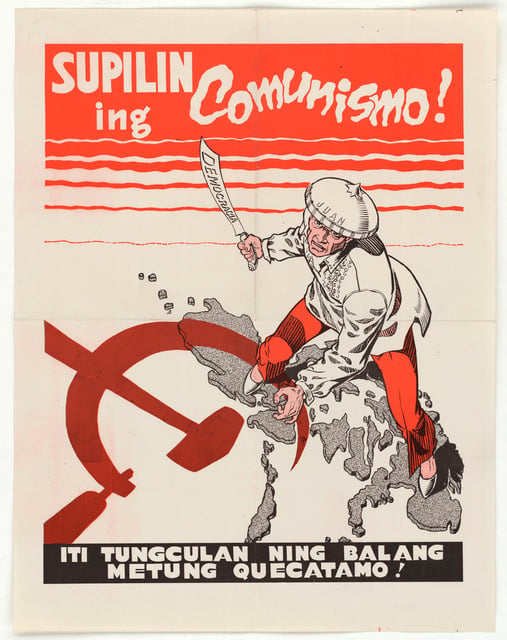
Indeed, 1948 proved to be a year of immense consequence, building upon the foundational shifts in American foreign policy that began in 1947. While we have already explored the emergence of the Truman Doctrine, the Marshall Plan, and the Berlin Blockade as pivotal Cold War initiatives, focusing on specific events within 1948 allows for a deeper appreciation of the complex interplay of political, economic, and ideological forces that truly solidified the emerging global order. Let us delve into three such critical moments.
One particularly telling episode unfolded in June 1948 when, against a backdrop of deep economic and political challenges, Robert Schuman and Georges Bidault secured a narrow legislative victory in France. This was no mere domestic political win; it represented a crucial step in the West’s collective response to the nascent Cold War. France, a proud nation with a long history of imperial ambition, found itself grappling with the daunting prospect of German recovery, a concern deeply rooted in the memory of two devastating world wars. The American government, recognizing that Europe could not recover without Germany’s revival, had pressed for the integration of the western zones of Germany into the Marshall Plan and the creation of a West German government. The “London Program” of March 1948, which coordinated the economic policies of the Anglo-American Bizonia with France’s zone, had set this process in motion.
However, this path was fraught with difficulty. The French National Assembly engaged in a “ferocious battle” over the terms of the London agreement, reflecting profound internal divisions and apprehensions about a resurgent Germany. To overcome this resistance, the American government, under the guidance of Secretary of State George Marshall, “hinted” that France’s share of Marshall Plan aid might be contingent upon its cooperation over Germany. This was a powerful lever, given the urgency of European economic recovery. The narrow victory achieved by Schuman and Bidault, with overt lobbying from American and British diplomats, cemented France’s reluctant acceptance of the U.S. plan for European integration, including Germany. This pivotal moment not only ensured the successful implementation of the Marshall Plan in Western Europe but also facilitated the path toward a unified West German state and, ultimately, the formation of the North Atlantic Treaty Organization (NATO) in 1949. It was a testament to the complex balancing act required to forge a unified Western front, even as it underscored the discomfort felt by allies like Britain and France at their military vulnerability and inclination to conciliate the USSR, which paradoxically spurred U.S. policymakers to enhance defenses.
In direct response to these Western maneuvers, the Soviet Union issued its official reply on July 14, 1948, articulating its position on international affairs. This “Soviet Reply” fundamentally framed the ongoing Berlin crisis not as an isolated issue, but as a consequence of the Western powers’ “systematic violations” of wartime agreements regarding Germany. The Soviets emphasized that Berlin was an “inseparable component part” of the quadripartite administration for all of Germany, meaning that Western occupation rights in the city were inextricably linked to its status as the capital of a united country. From the Soviet perspective, the partition of Germany was an Anglo-American decision, finalized in late 1947, that ignored their interests and gave their zone (with less population, land, and industrial wealth) a distinct disadvantage.
Stalin, in meetings with Western ambassadors, made it clear that while his government had no desire to expel the Western powers from Berlin, Western juridical rights were tied to Berlin’s status within a united Germany. He warned that if the West German Parliamentary Council, scheduled to convene on September 1, were to draft a new constitution, there would be “nothing left to discuss” regarding German unity. The American officials, however, were “loathe to discuss that wider topic”, preferring to keep negotiations narrowly focused on the Berlin crisis itself. This fundamental disagreement over the future of Germany—whether it should be unified or partitioned—became the core of the standoff, revealing how diplomatic solutions were restricted by the Western commitment to partition. The Soviet Reply, therefore, was a stark declaration of the ideological and geopolitical lines being drawn, indicating that the Soviet Union saw itself as defending its post-war gains and security interests against what it perceived as aggressive Western consolidation.
Finally, in a momentous act of ideological counterpoint, the Universal Declaration of Human Rights (UDHR) was signed in Paris by the United Nations on December 10, 1948. This document, spearheaded in its drafting and adoption by former First Lady Eleanor Roosevelt, represented a profound statement about the future of global governance and human dignity in the wake of World War II’s unspeakable horrors. The UDHR, adopted with 48 votes for and 8 abstentions, laid out 30 articles affirming fundamental individual rights, from the right to life and education to freedom from discrimination.
The UDHR was far more than a mere statement; it was explicitly designed to be “a pillar of a new international system” where a nation’s treatment of its own citizens would no longer be immune from outside scrutiny. While it lacked immediate enforcement mechanisms, its adoption established new international standards for conduct, prompting political countercurrents and giving legitimacy to nascent human rights organizations like Amnesty International and Human Rights Watch. This declaration, affirming the dignity of every human being, effectively expanded the liberal democratic understanding of personhood to encompass the entire global community, forging a shared commitment to valuing individual equality. Particularly poignant was Article 14, which solemnly affirmed the right to seek asylum, a direct acknowledgment of the masses of refugees who had fled fascist regimes and the possibility of future persecutions. In the context of the burgeoning Cold War, the UDHR served as a potent ideological weapon, contrasting the West’s espoused values of freedom and individual liberty against the “terror and oppression” characteristic of totalitarian systems. It represented a profound effort to establish a moral framework for the “free world”, even as the practical realities of containment often necessitated pragmatic choices that might, as one historian noted, involve exaggerating threats to gain public support.
In sum, 1948 was a pivotal year in which the Cold War truly crystallized. The legislative victory in France, driven by economic necessity and strategic imperatives, solidified the Western bloc’s commitment to German recovery and European integration. The Soviet Reply underscored the fundamental, irreconcilable differences over Germany’s future, directly fueling the Berlin Blockade and transforming a temporary post-war arrangement into a lasting geopolitical division. Concurrently, the Universal Declaration of Human Rights articulated a powerful ideological counter-narrative, establishing a global standard for human dignity and providing a moral framework for the Western alliance. These events, intricately woven together, cemented a “new international economic and security system” that would define America’s global role for decades to come, firmly establishing a permanent commitment to world affairs rooted in the policy of containment.