

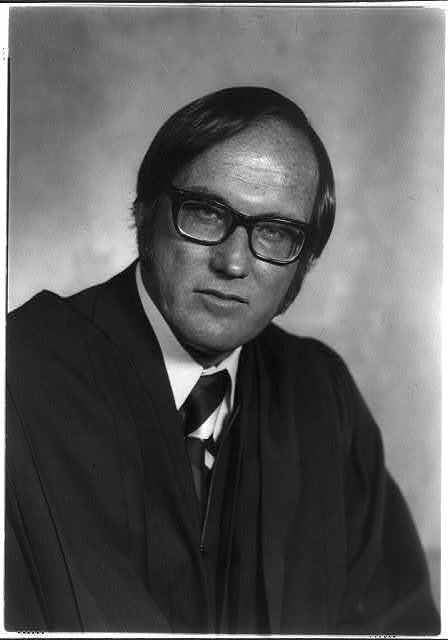
Indeed, delving into the nuances of the 1950s requires a keen eye for the undercurrents that shaped American society, and the figure of William H. Rehnquist offers a fascinating glimpse into the legal and social tensions of that era. In 1952, while serving as a law clerk to Supreme Court Justice Robert Jackson, Rehnquist authored a memorandum titled “A Random Thought on the Segregation Cases”.
This memo, penned amidst the legal landscape that would soon lead to the landmark Brown v. Board of Education decision, articulated a clear, albeit controversial, stance. It explicitly stated, “[I] realize that it is an unpopular and unhumanitarian position for which I have been excoriated by liberal colleagues but I think Plessy v. Ferguson [the decision upholding ‘separate but equal’ segregation] was right and should be reaffirmed”. This internal document, from a future Chief Justice of the United States, reveals the deep-seated resistance to desegregation that existed even within the corridors of the highest court.
Years later, during his confirmation hearing for Chief Justice, Rehnquist attempted to distance himself from the memo’s content. He claimed it “was not an accurate reflection of my own views”. Instead, he suggested that it represented “the position of… some other, totally hypothetical people— maybe one of the justices (though all of them voted to overrule Plessy), or maybe someone else, who knows”. He initially asserted that the memo was “prepared by me as a statement of Justice Jackson’s tentative views”. However, this explanation was met with skepticism. Justice Jackson’s secretary, Elsie Douglas, notably described Rehnquist’s account as “incredible on its face,” and historical research by Richard Kluger in Simple Justice also documented considerable evidence challenging Rehnquist’s assertion.
Rehnquist’s judicial philosophy, as observed throughout his career, often reflected a conservative inclination. As a lawyer in the Nixon administration, he authored a memo opposing the Equal Rights Amendment (ERA), expressing “dislike and distaste for the traditional difference between men and women in the family unit” and cautioning against the “eventual elimination” and “dissolution of the family” if sex discrimination were outlawed. Furthermore, during his time as a poll worker in Phoenix in the 1960s, witnesses testified that he challenged Black and Hispanic voters, questioning their literacy and telling them they had “no business being in the line,” although Rehnquist denied personally engaging in such challenges. These episodes underscore a consistent pattern of concern about perceived societal shifts and a preference for established norms. Notably, his former law clerk, John G. Roberts Jr., who later became Chief Justice, also faced similar scrutiny over memos he wrote as a lawyer for the Reagan administration outlining objections to expanding the Voting Rights Act, similarly claiming they did not reflect his personal views. Despite these individual positions, the Rehnquist Court, in some instances, deliberately preserved the Voting Rights Act.
The “A Random Thought on the Segregation Cases” memo stands as a powerful historical document, illustrating not only the individual views of a young William H. Rehnquist but also the pervasive resistance to racial equality that permeated American institutions in the mid-20th century, even as the nation moved toward desegregation.