

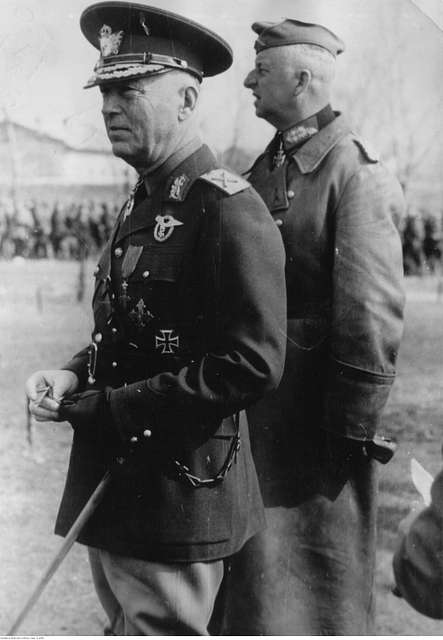
The publication of Erich von Manstein’s memoir, “Lost [German] Victories,” in 1955 stands as a telling moment in the evolving historical narratives of the mid-20th century, particularly amidst the deepening Cold War. This work contributed to a significant reframing of the Second World War, specifically the Eastern Front, in a way that resonated with and supported emerging geopolitical agendas.
Manstein’s memoir articulated a particular claim: that there had been “no Russian victories, just ‘Lost [German] Victories’”. This perspective, emerging from a former German military commander, effectively sought to minimize the decisive role of the Soviet Union in the defeat of Nazi Germany. It became part of a broader tendency where “influential Americans actually anticipated the German military command’s postwar claims”. This shift in narrative was not incidental; it aligned with a “postwar romance with the German military” in the United States.
Indeed, the sources indicate that even before Manstein’s book, there were efforts to downplay the Soviet war effort. For instance, John Kenneth Galbraith, in a December 1945 Fortune article, described the Germans as having been “caught napping” at Stalingrad, similar to the Americans at Pearl Harbor. This was a “startling statement” given that Germany had spent almost half a year on that battle and suffered its greatest defeat, sacrificing the bulk of its Sixth Army. The implication here, whether intended or not, was that if credit for a totalitarian state’s efforts had to be given, “better… Hitler’s fascist Ger-many than Stalin’s communist Russia”. This hints at a deliberate historical repackaging of Hitler’s anti-communism, “stripped of its genocidal language” but not its “murderous consequences,” which the U.S. proved ready to advance.
This reinterpretation of World War II’s history served a distinct purpose in the 1950s. The Soviet Union, having been a wartime ally, was now the primary ideological adversary in the Cold War. As such, any narrative that diminished Soviet military prowess and sacrifices, or indeed, suggested a shared historical trajectory against a common “Bolshevik menace”, could be beneficial to the Western bloc. The broader phenomenon of “Cold War triumphalism” that emerged after the fall of communism also “obscures the nature and costs of American decision making” and selectively uses archives to “celebrate its Cold War triumphs”. This later historical trend also saw the “Korean War has all but disappeared” from triumphalist narratives because it wasn’t seen as an American success, and Vietnam was largely “unremarked” by them. This suggests a continuous pattern of historical selectivity to support contemporary political narratives.
Therefore, Manstein’s 1955 memoir, “Lost [German] Victories,” was more than just a military account; it was a contribution to a potent, politically useful narrative that helped shape the Western perception of World War II in the context of the nascent Cold War, contributing to a historical amnesia about Soviet achievements and justifying a new anti-communist stance.