

The Rise of a Disruptor: From Celebrity to “America First”
Donald Trump, born in 1946, burst onto the national political scene as a real estate mogul and reality-TV star, celebrating his 79th birthday in 2025. His initial foray into politics, even before his first presidential bid, showed a knack for tapping into public resentment, particularly concerning foreign trade. As early as the 1980s, he complained about Japanese companies “knocking the hell out of our companies” with their cars and VCRs, striking a chord with the public and leading Oprah Winfrey to suggest his message sounded like “presidential talk”. This “suspicion of foreigners of all stripes” would later propel him to the White House, notably fueled by public doubts regarding Barack Obama’s “Americanness”.
His political approach became synonymous with the “MAGA” (Make America Great Again) movement and a “national populism” emphasizing “America first”. Critics characterized his style as that of a “demagogue” and “con man,” operating as a “bully in chief”. This “America First” slogan, revived by Trump, resonates with earlier movements, including that which emerged after World War I to oppose internationalism and immigration, a period where “the United States had its most sympathy for fascism”. His appeal found fertile ground in an American public “exhausted—and frustrated—by the succession of twenty-first-century disappointments”.
The First Presidency (2017-2021): Testing Constitutional Guardrails
Donald Trump’s first presidency, beginning in 2017, was marked by a series of controversial policies and a confrontational political style that challenged long-standing democratic norms.
Domestic Policy and Governance: Upon taking office in January 2017, President Trump immediately signed executive orders restricting visas for individuals from certain Muslim-majority countries and barring funding for “sanctuary cities”. While these policies faced immediate legal challenges and were blocked by courts, they signaled his administration’s aggressive stance on immigration. He also launched “blistering rhetorical attacks” on the media, calling them the “enemy of the American people,” and questioned the legitimacy of judges. This behavior, reminiscent of autocrats like Hugo Chávez and Nicolás Maduro, involved “routine use of personal insult, bullying, lying, and cheating,” which inevitably helped “normalize such practices”. He also engaged in a sustained campaign questioning Obama’s citizenship, a claim that helped elevate him from a “minor television star to legitimate political candidate”. His administration also issued Executive Order 13950, “Combating Race and Sex Stereotyping,” which regulated how federal agencies and contractors could discuss issues surrounding race and sex, prohibiting concepts like the argument that “the United States is fundamentally a racist country”. The first term also saw significant tax cuts.
Foreign Policy and International Relations: Trump’s foreign policy approach favored “transactional dealmaking over the diplomacy of ongoing partnerships,” marking a “blunt reversal” from previous administrations. His administration also implemented tariffs on various goods, particularly from China, which imposed retaliatory tariffs in 2018 in response to U.S. measures. This reflected his self-proclaimed identity as a “tariff man” and a protectionist stance that rejected previous policies such as the Trans-Pacific Partnership (TPP) agreement. He withdrew the U.S. from the Paris Agreement and initiated withdrawal from the World Health Organization. These actions often prioritized a “narrowly defined U.S. nationalism” over advancing America’s traditional diplomatic ideals.
Impeachment and Obstruction: On December 18, 2019, Trump became the third U.S. president in history to be impeached by the House of Representatives, facing charges of abuse of power and obstruction of Congress. The first article alleged that he used the powers of his office to demand a foreign government (Ukraine) attack his political rivals, specifically withholding congressionally approved military aid to pressure Ukrainian President Volodymyr Zelensky into investigating Vice President Joe Biden and his son Hunter. The July 25 transcript of his call with Zelensky was described as a “smoking gun” by some, with others claiming it was “anything but perfect”. During the withholding of aid, at least 13 Ukrainian soldiers died.
The second article charged that Trump obstructed the congressional investigation, ordering federal officials to defy subpoenas and refusing to produce documents, an obstruction described as “complete, absolute, and without precedent in American history”. While his defenders argued that asserting executive privilege was common, critics pointed out the unprecedented “total, absolute, and categorical” defiance. Despite the House impeachment, the Senate acquitted him on both charges in February 2020.
The Interlude and the Return (2021-2024): The Project 2025 Blueprint
After his defeat in the 2020 election, Trump continued to exert significant influence, especially as he waged his third campaign in 2023 and 2024. His rhetoric grew “more extreme,” with suggestions of suspending constitutional protections, prosecuting political rivals, investigating journalists for treason, and promising a “blood bath” if he were not reelected. His supporters, particularly following the January 6th Capitol attack, remained loyal, echoing his false claims of a “stolen” election.
A crucial element of this period was the development of Project 2025, a nearly nine-hundred-page blueprint authored by right-wing think tanks, including the Heritage Foundation, for a potential second Trump administration. This document laid out plans to overcome the “chaos and disorder” of his first term by drastically centralizing executive power, aiming to “cut tens of thousands of civil service workers and replace them with political loyalists”. Trump publicly denied knowledge of Project 2025, but many of its architects and proponents were later appointed to his second administration.
The Second Presidency (2025-Present): A “Shock and Awe” Campaign
Donald Trump’s second presidency began on January 20, 2025, with his inauguration as the 47th President of the United States, alongside Vice President JD Vance. This period was quickly characterized by a “shock and awe” campaign of executive actions.
Unprecedented Executive Authority: On his first day, Trump signed a record 26 executive orders, the most of any president. Within 100 days, he signed 143 executive orders, 42 proclamations, and 42 memorandums. These actions often “tested the limits of executive authority” and faced “immediate legal challenges”. Nearly two-thirds of his early executive actions mirrored Project 2025 proposals. A significant executive order revoked a Biden-era measure that prohibited outgoing officials from using government service for private gain, accepting lobbyist gifts, or lobbying for two years after government work.
Domestic Policies and Social Restructuring:
- Budget & Economic Changes: One of the earliest and most significant legislative actions was the “One Big Beautiful Bill Act,” which clawed back over $9 billion in congressionally approved spending, including $1.1 billion from the Corporation for Public Broadcasting (CPB), leading to its announced shutdown. This legislation also featured massive tax cuts primarily benefiting the wealthy, projected to add trillions to the national debt, while implementing deep cuts to social programs such as Medicaid and SNAP anti-hunger benefits, threatening healthcare for millions of Americans. Vice President JD Vance cast the tie-breaking vote for this legislation in the Senate.
- Immigration: A central focus was “cracking down on the United States-Mexico border crisis”. Actions included declaring a second national emergency on the southern border; enabling the deployment of armed forces and addressing the fentanyl crisis; designating international Drug Cartels as foreign terrorist organizations; repealing a Biden executive order that created the Family Reunification Task Force; suspending the Refugee Admissions Program for 90 days; ending the CNHV Parole Program for nationals from Cuba, Haiti, Nicaragua, & Venezuela; and attempting to end birthright citizenship for descendants of illegal immigrants born in America. Policies and initiatives revived from Trump’s first term include Remain in Mexico, construction on the US-Mexico border, and travel bans. He ordered the expansion of the migrant operations center at Guantanamo Bay to house up to 30,000 “high priority” illegal migrant detainees. The Laken Riley Act, the first legislation of his second term, mandated ICE detention for illegal aliens accused of theft or assaulting police, and allowed states to sue DHS for failures in immigration enforcement. Five detainees died in Florida immigration jails in early 2025.
- Economy: Trump inherited a resilient economy with declining inflation rates, but the national debt stood at approximately $36.2 trillion. A central element of his economic policy in the second term was a dramatic expansion of tariffs. On February 1, 2025, executive orders were signed to impose a 21, 328]. By August 2025, tariffs were imposed on more than 90 countries, ranging from 15% to 50%, with threats of additional 10% tariffs on countries aligning with BRICS nations. Specific tariffs included 50% on Brazil and India. These aggressive tariff policies led to accusations of insider trading, with some individuals making significant profits from non-public information about these changes.
- Social Issues: Trump issued executive orders health departments, slashing cancer research, eliminating a consumer protection agency, and freezing USAID funds, often “without congressional approval”. He ordered a federal hiring freeze, ended remote work for federal employees, and allowed officials to resign if they didn’t want to return to the office. The Department of Government Efficiency (DOGE), led by Elon Musk, was established to reorganize federal agencies and streamline government, with its documents classified as presidential records until at least 2034, preventing public access. Critics noted that the undermining of merit-based civil service protections aligned with Project 2025’s goals to replace career professionals with political loyalists.
Foreign Policy in the Second Term: His administration continued a non-interventionist foreign policy. He reinstated Cuba as a state sponsor of terrorism and cancelled sanctions on Israeli settlers in the West Bank. The U.S. and Ukraine signed a critical minerals deal, and peace talks between Thailand and Cambodia were brokered by Malaysia’s president. Notably, Secretary of State Marco Rubio spearheaded attacks on Cuba’s medical program and announced visa restrictions for officials linked to it. Health and Human Services Secretary Robert F. Kennedy Jr. withdrew the US pledge to GAVI and reconstituted the vaccine advisory panel, appointing new members with anti-vaccine views, leading to protests by scientists at CDC headquarters.
Controversies and Resistance: Trump’s second term was immediately met with protests, including the “People’s March” and a “Day Without Immigrants”. His administration’s actions led to immediate legal challenges. Federal judges dismissed his lawsuit against Chicago over sanctuary policies and temporarily blocked his freeze on federal grants. There was a significant feud with Elon Musk, head of DOGE, initially a close ally, over the “One Big Beautiful Bill Act” and Musk’s waning influence. Trump threatened to cancel Musk’s government contracts and even suggested investigating and deporting him. This demonstrated a willingness to weaponize the federal government against perceived disloyalty, echoing the “leopards eating faces” warning: that once unchecked power is normalized, it can turn on anyone.
The administration also continued its attacks on media organizations, calling them “criminals” and “fake news,” and suggesting they be investigated for election fraud. The White House disinvited The Wall Street Journal and Associated Press from press events after critical reporting. Actions against journalists, academics (e.g., Columbia University funding cancellation over “anti-Semitism” claims), and even law firms illustrate a pattern of using government power to “crush his enemies and make an example of them”.
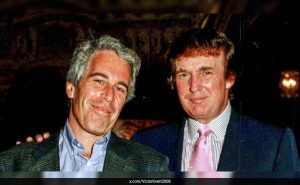
The Jeffrey Epstein Files Controversy: The administration’s handling of the deceased sex trafficker Jeffrey Epstein’s files sparked a major rift within Trump’s MAGA movement. Trump initially backed the release of documents but later lashed out at supporters for demanding them. Deputy Attorney General Todd Blanch, Trump’s former private lawyer, held a nine-hour meeting with Ghislaine Maxwell, Epstein’s co-conspirator. Metadata from prison surveillance footage near Epstein’s cell was found to have nearly “3 minutes cut”. Congresswoman Rashida Tlaib and Ro Khanna have pushed for the full release of Epstein’s financial files. Trump himself was named in the Epstein files, though this was described as “common knowledge”.
The Question of a Third Term: Donald Trump has not ruled out running for a third term, despite the 22nd Amendment limiting presidents to two terms. This notion, along with his belief that “Article II allows me to do whatever I want”, highlights a fundamental challenge to the constitutional order.
Reflections: History’s Echoes and Future Warnings
The detailed history of Donald Trump’s presidencies reveals stark and unsettling parallels with historical patterns of authoritarianism and the erosion of democratic norms. His “national populism” and “America First” rhetoric echo the “paranoid style in American politics” that Richard Hofstadter identified, and his “triumphalist aspirations” to reshape history for ideological ends are clearly visible. The manipulation of history to create a “glory story” and limit perspectives, as seen in his administration’s “1776 Report” and attacks on the “1619 Project,” is a classic tactic used by authoritarian regimes to consolidate power and suppress dissent.
Trump’s constant attacks on the media, judiciary, and civil service, coupled with his expansive use of executive orders, demonstrate a deliberate strategy to concentrate power and weaken checks and balances, a theme vividly explored in the context of Richard Nixon’s presidency. The Project 2025 blueprint, largely implemented in his second term, codifies this desire to dismantle the administrative state and replace non-partisan experts with loyalists, resembling Nixon’s efforts to “thoroughly politicize the executive branch and federal agencies”. This drive to silence critics and control narratives is a hallmark of regimes that find multiple perspectives threatening.
The weaponization of government agencies, whether through immigration enforcement, funding cuts, or legal threats against political opponents, highlights a dangerous trajectory where the rule of law is subverted for personal or political gain. This is not merely “politics as usual”; it represents a “descent into a final solution,” where constitutional rights and democratic principles are progressively narrowed until what was once considered freedom becomes authoritarianism.
In these events resides not just a chronicle of one man’s actions, but a profound warning. The erosion of democratic institutions, the deliberate spread of misinformation, the suppression of dissent, and the concentration of power are not abstract concepts; they are forces that, if unchecked, can lead to instability, conflict, and a profound degradation of human flourishing. When leaders dismiss climate science, withdraw from international agreements, and prioritize nationalistic self-interest above global cooperation, the implications extend far beyond immediate political battles, posing existential threats to our shared planet and future generations. The lessons from the past are clear: democratic resilience depends on an informed citizenry, a free press, an independent judiciary, and a commitment to truth. Courage is essential, for “if none is prepared to die for freedom, then all will die under tyranny”. The ability to learn from history, to recognize dangerous patterns, and to actively defend democratic values is not just a matter of political preference; it is, quite literally, a matter of saving life on Earth. A collective vigilance is needed, for the future is not predetermined, but forged by the collective will of those who choose to understand and act.