
The 2008 financial crisis was, by most accounts, the most significant global financial crisis since the Great Depression. It was not a singular event but a rapid cascade of failures and near-failures that shook the foundation of the global economy.
The Unfolding Catastrophe: Key Events in 2008
The crisis reached its boiling point in September 2008, marked by a series of dramatic events that sent shockwaves across financial markets worldwide.
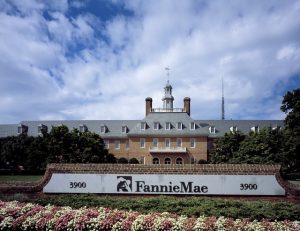
- Fannie Mae and Freddie Mac Conservatorship: Even before the September maelstrom, significant jitters were felt on Wall Street. By 2007, the economy began to slow, and the Federal Reserve Board started to raise interest rates to combat inflation. This, in turn, triggered a crash in the housing market. The Federal National Mortgage Association (Fannie Mae) and the Federal Home Loan Mortgage Corporation (Freddie Mac), two government-sponsored enterprises (GSEs) that played a central role in the housing finance system, were rapidly spiraling towards bankruptcy. While privately owned, these entities were widely believed to have the implicit backing of taxpayers. U.S. Treasury Secretary Henry Paulson, recognizing the potential systemic threat, believed their situation was “far more important to the long-term health of the economy than Lehman’s or the other investment banks’”. He pressed Congress for authority to wind them down if necessary. Indeed, an August 6, 2008, report from Lehman Brothers itself had revived fears by estimating Fannie and Freddie would need to raise an additional $75 billion in capital. On September 7, 2008, Paulson announced that the government would take control of Fannie and Freddie, placing them into conservatorship and providing up to $200 billion in potential government backing. This move, which was “nonnegotiable” according to Treasury, aimed to stabilize the housing market and was seen as removing a major source of uncertainty. Interestingly, earlier discussions about the housing crisis, as described by Alan Greenspan, included a rhetorical, supply-and-demand-driven suggestion that the government might need to “buy up vacant homes and burn them” to address oversupply.
- Lehman Brothers’ Collapse: Just a week after the Fannie and Freddie intervention, on Monday, September 15, 2008, the 158-year-old investment bank Lehman Brothers declared bankruptcy. This was the largest collapse in American corporate and banking history. Jamie Dimon, CEO of JP Morgan Chase, already anticipated this doomsday scenario days before, having examined Lehman’s books and deciding his firm would not be a lender. The failure of Lehman was a stark policy shift; unlike Bear Stearns, which had been rescued just months earlier, the government would not provide a bailout. Paulson explicitly stated he “never once considered that it was appropriate to put taxpayer money on the line with… Lehman Brothers”. This decision, influenced by political pressure against further bailouts, and a desire to teach a “moral hazard” lesson, triggered immense financial turmoil. The Dow Jones Industrial Average plunged dramatically.
- Merrill Lynch Sold: Concurrent with Lehman’s failure, on September 14, Merrill Lynch, another Wall Street icon, announced $55.2 billion in losses on subprime bond-backed collateralized debt obligations (CDOs) and sold itself to Bank of America.
- AIG Bailout: The very next day, Tuesday, September 16, 2008, the U.S. Federal Reserve announced an $85 billion loan to American International Group (AIG), the world’s largest insurance company, to prevent its bankruptcy. This was a critical intervention because AIG was “fatally intertwined with a bankrupt system” and if it fell, “every major bank” would follow. AIG had written insurance policies, known as Credit Default Swaps (CDS), worth hundreds of billions of dollars that major Wall Street firms relied on as hedges against other trades. Its failure would have stripped these “protective wrappers,” forcing banks to mark down assets and raise billions, a terrifying prospect. Robert Willumstad, AIG’s CEO, had been desperately seeking capital and credit lines, and on August 28, 2008, he met with Jamie Dimon at JP Morgan headquarters. Willumstad revealed AIG’s “liquidity problem,” explaining that a credit downgrade would trigger massive collateral demands ($10.5-$13.3 billion) that AIG could not meet by quickly selling its state-regulated insurance assets. Dimon, initially underestimating the scope, “finally understood the scope of the problem”. AIG was facing a $5.3 billion loss, and was considered “too big to fail” due to its sheer size ($1 trillion balance sheet) and its interconnectedness through CDS. The Fed’s decision to rescue AIG, despite the recent Lehman decision, highlighted the inconsistent nature of the government’s response, leading to confusion in the market.
Root Causes and Contributing Factors
The crisis was not an isolated incident but the culmination of several deeply embedded issues:
- Subprime Mortgages and Securitization: At the heart of the crisis was the explosion of subprime mortgage lending. Banks were eager to make home loans to nearly anyone, even those with “weak credit scores” or “no documentation,” leading to skyrocketing home prices and rampant speculation. These risky mortgages served as the “raw material” for Wall Street’s “elaborate creations”. These loans were bundled, “sliced and diced,” and repackaged into complex financial products known as mortgage-backed securities (MBS) and collateralized debt obligations (CDOs). The stated purpose of MBS was to redistribute risk and make markets more efficient, but instead, the same “innovative spirit was being put to the opposite purpose: to hide the risk by complicating it”. CDOs were particularly problematic, described as a “credit laundering service” that could “turn lead into gold”. Rating agencies, “morally bankrupt and living in fear,” would pronounce 80 percent of these dubious bonds as triple-A, making them palatable for pension funds and insurance companies that were only allowed to invest in highly-rated securities.
- Credit Default Swaps (CDS): These “unregulated insurance for investors” were sold by firms like AIG, providing a perceived hedge against default. AIG accepted these illusions as reality, believing that the “odds of a wave of defaults occurring simultaneously were remote”. As a result, AIG did not set aside sufficient capital against these highly-rated CDOs.
- Excessive Leverage and “Cheap Money”: Wall Street firms operated with “enormous quantities of debt,” with debt-to-capital ratios as high as 32 to 1. This “juggernaut” was fueled by “cheap money,” stemming from a “savings glut in Asia” and “unusually low U.S. interest rates under former Federal Reserve chairman Alan Greenspan”. This environment encouraged financial institutions to take on enormous risks, believing they had conjured “a new era of low-risk profits”.
- Financial Deregulation: The crisis was the culmination of decades of deregulation. Since the 1980s, the “dismantling of Keynesian-style fiscal management” and the “deregulation of the nation’s marketplaces” had an “enduring impact on the ability of the government both to maintain cyclical stability… and to sustain regulatory vigilance”. Laws and rules enacted after the 1929 crash, designed to prevent big banks from making excessively risky bets, had been “dismantled”. This deregulation encouraged “excessive risk taking” and the growth of “too big to fail” institutions. The concept of “Too Big to Fail,” popularized in the 1980s, implied that large institutions would be bailed out, creating incentives for “excessive risk taking”. This belief in an “implicit government guarantee” or a “Greenspan put” further encouraged high leverage ratios at large financial institutions.
- Lack of Regulatory Oversight and Warnings Ignored: Despite warnings from figures like Tim Geithner, who for years cautioned that the explosive growth in credit derivatives could make the system “more vulnerable, not less”, these concerns were often “not shared by his original boss at the Fed, Alan Greenspan”. Economists like Michael Burry had diagnosed the disorder years in advance, writing in 2003 that “complicated financial stuff was being dreamed up for the sole purpose of lending money to people who could never repay it”. Alan Greenspan himself, who had long been a critic of Fannie and Freddie, told a congressional oversight committee in 2008 that he was in a “state of shocked disbelief” that “the self-interest of lending institutions” had not protected the integrity of finance.
The Government’s Response: A Mix of Desperation and Inconsistency
Facing a crisis of “utter uncertainty” and a market gripped by “fear and disorder that no invisible hand could tame”, Wall Street and Washington were forced to improvise, often resorting to “policy by deal” rather than established rules.
- Federal Reserve as Lender of Last Resort: The Federal Reserve, under Chairman Ben Bernanke, took on an unprecedented role, becoming the “lender of last resort to the entire financial system”. It expanded its balance sheet by hundreds of billions of dollars, purchased illiquid assets, and worked closely with the Treasury. The Fed opened its “discount window” to investment banks, providing liquidity against various forms of collateral. This was a significant departure from previous practices, as the Fed had never before made such enormous loans to the private sector. International concerns, particularly the strengthening dollar, also prompted coordinated policy actions, including raising interest rates, which helped the Fed respond to inflation in a way that domestic factors previously had not. The Federal Reserve quietly used dollar swap agreements to stabilize other markets, underscoring the importance of the U.S. dollar.
- The Troubled Asset Relief Program (TARP): In October 2008, Congress approved $700 billion for the Treasury to “support banks and financial institutions”. While initially presented as a plan to buy troubled assets directly from banks to clean up their balance sheets, the Treasury, under Paulson, “lacked a coherent plan and frequently allowed its actions to differ from its statement”. It quickly shifted strategy to injecting capital directly into banks, essentially taking “part-ownership in what were once the nation’s proudest financial institutions”. This rapid policy evolution was criticized; for example, Representative Barney Frank mockingly declared September 15, 2008, as “Free Market Day,” noting, “The national commitment to the free market lasted one day”.
- Inconsistent Decisions: A major criticism of the government’s response was its “series of inconsistent decisions”. They “offered a safety net to Bear Stearns and backstopped Fannie Mae and Freddie Mac but allowed Lehman to fall into Chapter 11, only to rescue AIG soon after”. This lack of a clear pattern or “rules” confused investors, leading to further panic. Tim Geithner acknowledged that “emergency actions meant to provide confidence and reassurance too often added to public anxiety and to investor uncertainty”. The “lender-of-last-resort policy” was never clearly defined or announced in advance.
- Political Fallout and Public Outcry: The bailouts triggered a “raucous public outcry,” with warnings about “creeping socialism” and questions about the government’s role in the economy. Figures like Jim Bunning branded Paulson a “Socialist” for the Fannie and Freddie actions and criticized the Fed for putting “taxpayers on the hook”. There was palpable anger over bank executives receiving “large bonuses” despite the bailouts. President Obama, despite his administration’s interventions, never “publicly rebuked Dimon or the other big bankers,” instead defending them as “very savvy businessmen”. A key criticism was the government’s failure to adequately address the foreclosure crisis, with major banks opposing proposals that would allow bankruptcy judges to restructure shaky home mortgages.
Impact and Lingering Questions
The immediate impact was devastating: trillions of dollars in wealth vanished, millions lost jobs, homes, and savings, and the American middle class lost roughly $6 trillion. The U.S. economic recovery was “distressingly slow”, and its weakness dragged on the global recovery.
The 2008 crisis brought to light fundamental flaws in the financial system and continues to fuel debates about regulation and the concept of “too big to fail”. Despite the severity of the crisis, “regulators have not announced a policy or encouraged financial markets to believe that they have abandoned ‘too big to fail.’ In fact, mergers have made the largest firms larger”. There remains a significant risk that “unless those regulations are changed radically… there will continue to be firms that are too big to fail. And when the next, inevitable bubble bursts, the cycle will only repeat itself”.