

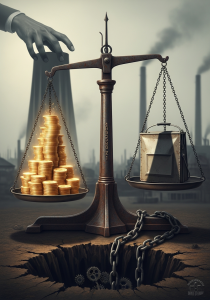
Indeed, the narrative of World War II’s conclusion for the United States is less an endpoint and more a profound pivot, setting in motion monumental shifts in domestic economy and social structure. As we delve into the post-1945 landscape, it becomes clear how deeply intertwined the wartime experience was with the evolving roles of labor and the fundamental changes in public perception regarding wealth and taxation.
The Paradox of Union Power Post-World War II
While the war years were a period of immense growth for American labor unions, paradoxically, their power began to diminish even as their membership soared. By 1945, the CIO and AFL boasted over 6 million members each, a significant increase that transformed the industrial landscape. The war had put almost everyone to work, effectively ending the lingering unemployment of the Great Depression, and fostering an atmosphere of patriotic unity against overseas enemies. This newfound employment security, combined with union “no-strike pledges” made for the war effort, seemingly offered a good trade for jobs, overtime pay, and security.
However, beneath this veneer of unity, workers’ grievances simmered. Wages were often controlled more effectively than prices, leading to frozen wages amidst skyrocketing corporate profits. This frustration manifested in a surge of “wildcat strikes,” with 1944 alone seeing more strikes than any previous year in American history, involving a million workers in critical industries like mines, steel, and auto. When the war ended, this unrest intensified, with 3 million workers on strike in the first half of 1946.
The federal government and the emerging union leadership responded to this wave of militancy with a dual strategy of control and concession. The National Labor Relations Board (NLRB) was used to channel labor’s “insurrectionary energy” away from disruptive direct action and into formal elections, contracts, and negotiations, thereby helping to “stabilize the system”. Even militant unions like the CIO adopted this approach to build large, respectable organizations. Legal decisions further constrained labor, with the Supreme Court declaring sit-downs illegal and state governments passing laws to hamper strikes, picketing, and boycotts. This period also saw the rise of “right-to-work” laws, originating in Texas in the 1940s, explicitly designed to challenge unions, particularly the CIO, which was known for its more racially progressive stance and efforts to eliminate the poll tax.
Despite the massive increase in union membership during the war and the immediate post-war period, the unions’ actual power to effect change through strikes was increasingly “whittled down”. Management largely retained control over decision-making. This contrasts sharply with observations that, in the 1930s, labor gained most from spontaneous uprisings before unions were formally recognized. By the end of the war, though industrial unions were recognized, and companies professionalized their employee relations, the landscape was shifting. An interesting observation from the time was that wages for laborers were rising faster than management, which led to the pioneering of executive compensation consulting to address this perceived imbalance.
Nonetheless, the immediate post-war era, sometimes referred to as the “Great Compression”, saw a period where economic inequality declined significantly. From 1940 to 1970, income growth was stronger for the bottom fifth of the country than for the wealthy, and notably faster for Black Americans than for whites. Millions were lifted out of poverty. Public policies emerging from the New Deal and World War II had shifted much of the economic risk onto large corporations, offering workers strong employment contracts, social security, and employer-provided benefits that effectively gave employees “property rights in their jobs”. The vision of corporate governance widely accepted post-WWII was one where management balanced the claims of stockholders, employees, customers, and the public.
This period of broadly shared prosperity and economic leveling was driven by several factors, including the direct and indirect impact of the war, such as a slowdown in labor supply growth (due to fertility decline and restricted immigration) and a rapid advance in education, both of which contributed to higher labor earnings across the board and a compression of wage differentials. However, the erosion of union power became more pronounced starting in the late 1970s, coinciding with globalization, labor-replacing technologies, and a shift in corporate mission towards maximizing shareholder returns. Ronald Reagan’s firing of air traffic controllers notably signaled a new era of labor relations, legitimizing aggressive anti-union tactics by employers. The decline in private-sector unionization, from 35% in the mid-1950s to 6.4% today, directly parallels the shrinking share of total income going to the middle class. The “countervailing power” that unions once provided against corporate might effectively disappeared, leading to a direct transfer of wealth from workers to corporations and their shareholders.
The Shifting Perception of the Tax System
The contrast in public opinion regarding the fairness of the tax system between the immediate post-World War II period and the late 20th century is striking and deeply illustrative of the underlying economic shifts. Shortly after World War II, when top income tax rates reached as high as 90%, a 1946 Gallup poll revealed that an astounding 85% of the public considered the federal tax code “fair”. This high degree of public acceptance for steeply progressive taxation reflects a unique period in American history.
Following the war, the American tax code indeed remained “confiscatory” for the wealthy, with top brackets staying at 75-90% well into the 1970s. This allowed for massive public investments in infrastructure and human resources, notably financing college or training for 7.8 million returning veterans through the GI Bill, which also spurred suburban growth through mortgage guarantees. During this time, the share of taxable income flowing to the top 1% averaged just 10%, and most people felt a steady improvement in their economic lot, making “inequality” less of a political concern. However, after the war, there was a concerted effort to attack the idea of expanding public services, often driven by a desire to reduce all forms of taxation and rehabilitate the prestige of private production.
The dramatic shift in public perception and tax policy began in the 1970s and accelerated into the 1980s. By 1984, a public opinion survey by the Internal Revenue Service (IRS) found that 80% of those polled agreed with the statement: “The present tax system benefits the rich and is unfair to the ordinary working man and woman”. This stark reversal in sentiment directly correlated with significant changes in tax policy that had begun to dismantle the progressive structure of the post-war era.
Starting with the Kennedy-Johnson administrations, tax rates on the very rich were lowered from the World War II-era 91% to 70%. The Carter administration, despite objections from the President himself, saw Congress further grant tax breaks to the wealthy. The Reagan administration, with bipartisan support, then aggressively reduced the top rate to 50% and, by 1986, to a mere 28%, effectively eliminating the “progressive” income tax idea where the rich paid higher rates. This shift largely benefited the super-rich, with the net worth of the “Forbes 400” tripling between 1978 and 1990, resulting in a gain of a trillion dollars for the wealthiest 1% and a loss of about $70 billion annually in government revenue. Simultaneously, the Social Security tax became more regressive, taking a larger percentage from lower and middle incomes than from high earners.
This era marked a “stunning deterioration in distributional equity”, with almost all increases in accumulated wealth and income accruing to the top 20% of households. The economic policies of the Reagan administration, often framed as “trickle-down” economics, posited that tax cuts for the wealthy would stimulate investment and employment. This directly contradicted the Keynesian view that more equitably distributed incomes, achieved through the tax system, would drive consumption and economic growth.
The rising public discontent was not solely about taxes. Surveys from the early 1970s onward showed increasing distrust in government, business, and the military across all segments of society, not just among the poor or radicals. Public officials were perceived as uncaring, and the overall mood was one of “general malaise” and “crisis of institutional confidence”. The concept of a “permanent war economy” became entrenched, with massive military budgets generating profits for defense contractors, and employment and wages tied to war industries. This was often fueled by anti-Communist hysteria, presenting military spending as a necessity.
In essence, the decades following World War II saw a complex interplay of forces. While the war initially spurred economic leveling and a widespread sense of fairness regarding taxation, the subsequent shift in political and economic power, marked by the decline of organized labor and a dramatic restructuring of the tax system, led to increased inequality and a growing public perception that the system was rigged in favor of the wealthy. This transformation laid the groundwork for new societal challenges and a fundamentally different American economic and political landscape in the late 20th century.