

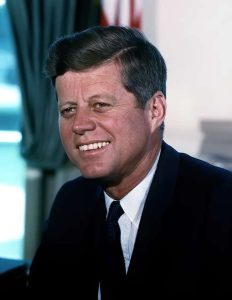
The 1960 U.S. presidential election, which saw John F. Kennedy narrowly defeat Richard Nixon, was a pivotal moment in American history, widely perceived as the dawn of a new era after the “sterility” of the Eisenhower years. This election was not merely a change in leadership; it represented a shift in national sentiment, a yearning for renewed vigor and purpose, particularly against the backdrop of Cold War anxieties and evolving domestic challenges.
John F. Kennedy, a senator from Massachusetts, embodied a fresh, youthful image that sharply contrasted with his opponent, Richard Nixon. While the two men were of similar age and had entered Congress at the same time, Kennedy quickly became a symbol of the future, rebirth, and hope. He was perceived as young, handsome, cultured, brave, and virile, an image carefully cultivated despite his chronic ailments and a conservative voting record in Congress. The vast wealth and influence of his father, Joseph P. Kennedy, significantly aided in shaping this public persona.
The campaign itself was dominated by Cold War security concerns. Kennedy aggressively challenged the foreign policy legacy of the outgoing President Eisenhower, warning of a “missile gap” and America’s failure to compete effectively in the “Third World”. This narrative capitalized on existing public anxieties, fueled by events such as the Soviet Union’s launch of Sputnik in 1957, which had led Americans to “shiver at the apparent loss of technological superiority”. He argued that the country had fallen into “eight years of drugged and fitful sleep” while the “Communist tide began to pour in”. Kennedy also pledged to “get the country moving again,” appealing to a nation that had experienced a mild recession in the final months of Eisenhower’s term.
A significant hurdle for Kennedy was his Catholic faith, which had historically been a barrier to the presidency. He directly addressed this issue, particularly during the West Virginia primary, asserting, “I do not take orders from any Pope, any Cardinal, any Bishop or any Priest”. This direct approach, coupled with the burgeoning influence of television, played a crucial role in his victory. The 1960 debates between Kennedy and Nixon were the first televised presidential debates, fundamentally transforming American political campaigns. Kennedy, with his polished “style,” was widely seen as outperforming Nixon, who “lacked style,” contributing significantly to the perception that Kennedy “oozed it”.
Furthermore, Kennedy garnered crucial support from African American voters, partly due to his intervention in securing Martin Luther King Jr.’s release from a Georgia prison during the campaign, an action Nixon conspicuously avoided.
The election results were incredibly close in the popular vote, with Kennedy winning by less than one-tenth of one percent, or about 118,500 votes. However, his victory in the Electoral College was more decisive, securing 303 electoral votes from twenty-three states, compared to Nixon’s 219 from twenty-six states. Kennedy’s strength lay in the urban and suburban North and Northeast, where he carried seven of the nine largest states, while Nixon performed better in rural areas and the West.
Upon taking office, Kennedy brought with him a profound sense of national hope and a team of “young and energetic” advisors, often referred to as “the best and the brightest”. This team, including his brother Robert Kennedy as Attorney General and Robert McNamara as Secretary of Defense, was characterized by its “vigor” and an inclination towards “activism” and “crisis management”. Kennedy’s domestic agenda, dubbed the “New Frontier,” aimed to increase the minimum wage, broaden Social Security benefits, and allocate federal funds to distressed areas, marking a continuation of liberal objectives. Initially, a fiscal conservative, Kennedy was persuaded by his Council of Economic Advisors chairman, Walter Heller, to adopt Keynesian thinking, leading to increased federal spending that spurred economic recovery and growth.
A prominent aspect of his early administration was his ambitious commitment to the space program. Seeing Eisenhower’s response to Sputnik as mere “indifference,” Kennedy declared a national mission to land a man on the moon before the decade’s end, a challenge that galvanized American confidence in technology and its resolve against the Soviets. Kennedy also publicly affirmed the U.S. commitment to maintaining the dollar as “good as gold” at $35 an ounce, viewing it as a critical element of America’s leadership in the free world.
In sum, John F. Kennedy’s election in 1960 marked a significant moment of transition, reflecting a national desire for dynamic leadership and a renewed sense of purpose. His campaign effectively leveraged Cold War anxieties, economic promises, and the burgeoning power of television to present an image of a vibrant, forward-looking America, poised to meet global challenges with a new generation of leaders.