

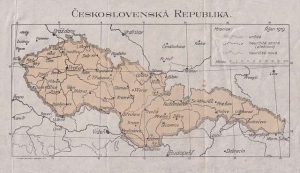
The year 1968 in Czechoslovakia stands as a stark and tragic illustration of the inherent contradictions and brutal realities underlying Soviet-bloc communism. What began as a hopeful, albeit cautious, movement toward “socialism with a human face” under Alexander Dubček, ultimately succumbed to external suppression and, disturbingly, internal purges that embraced anti-Semitism, targeting Jewish communists, officers, and professors. This period revealed the profound fragility of reform within totalitarian systems and the readiness of regimes to revert to oppressive tactics under the guise of combating perceived enemies.
The “Prague Spring” of 1968, led by Alexander Dubček, was an attempt to forge a “more democratic socialism” in Czechoslovakia. It encompassed aspirations for a mixed economy, greater internal democracy within the Communist Party, and a significant expansion of free speech. Dubček and his supporters were acutely aware of the fate of earlier reforms, such as those in Hungary in 1956, where Imre Nagy’s efforts were brutally crushed by Soviet tanks. Consequently, Dubček’s program sought to maintain the Communist Party as the sole political entity and to keep Czechoslovakia as a “loyal member of the Warsaw Pact,” seemingly avoiding Nagy’s “fatal misstep” of proclaiming a multiparty system and independent foreign policy. This nuanced approach aimed to introduce reforms without directly challenging the fundamental political structure or external alliances.
However, despite these cautious parameters, Moscow deemed Dubček’s liberalizing reforms as having gone “too far”. In August 1968, Warsaw Pact tanks rolled into Prague, effectively ending the Prague Spring and hopes for a different, better kind of socialism. This act ushered in an era of “normalization,” which, while perhaps less overtly bloody than Stalinist terror, was arguably “morally much worse”. It marked a return to dogmatism, censorship, and oppression, but without the sincere, albeit misguided, belief in a socialist paradise that characterized earlier Stalinist periods. Instead, normalization fostered a “reign of the opportunists,” where party apparatchiks, devoid of ideals, prioritized personal gain and conformity over genuine conviction.
Within this climate of suppressed reform and renewed authoritarianism, the Communist Party in the Soviet bloc, particularly in Poland, embraced an anti-Semitic campaign that mirrored and exacerbated the purges in Czechoslovakia. The sources indicate that in Poland, in the spring of 1968, the Polish United Workers’ Party responded to student protests against censorship by blaming “Zionist conspirators” and unleashing an anti-Semitic campaign. This campaign involved propagating “fantastical accusations of a Nazi-Zionist conspiracy against Poland,” portraying Nazis saluting Israeli tanks and suggesting Israeli occupiers studied Adolf Eichmann’s works. This narrative was a convenient pretext to purge universities and party ranks.
The targets were predominantly Polish Jews, many of whom were assimilated, deeply attached to Poland, and had been communists themselves, some even survivors of the Holocaust. These included Jewish communists, officers in the army, and professors. Figures like Szymon Zachariasz, Grzegorz Smolar, Michał Mirski, and Adolf Berman, who had been prominent in the Central Committee of Jews in postwar Poland and active in communist circles, were directly impacted. For instance, Grzegorz Smolar, a lifelong communist, was removed as editor of a newspaper he co-founded and cast out of the Party, with his children subsequently imprisoned for their participation in student protests. Aleksander Masiewicki, a former student of Adolf Berman and a communist, found himself compelled to resign from the Party. These purges often forced Jewish individuals to give up their Polish passports in exchange for exit visas, leading to mass emigration.
This “anti-Zionist” campaign, as it was termed, was a continuation of a broader historical pattern where anti-Semitism was weaponized under the guise of ideological purity. Earlier, the Stalinist “anticosmopolitan” campaign in 1949 had similarly targeted “rootless cosmopolitans,” a euphemism for Jews, and led to a “brief love affair” between communists and Zionists being brought to an end. The stereotype of “Judeo-Bolshevism,” which falsely asserted communism was a “Jewish conspiracy against the Poles,” fueled Polish anti-Semitism even after the fall of communism. The events of 1968 demonstrated how easily the “enmity of the nations” could supersede the socialist premise of the “fraternity of peoples,” leading to persecution based on ethnicity rather than class.
The fallout from 1968 and its purges was profound. For many, the Soviet invasion of Prague and the subsequent purges, ironically, “meant the end of Marxism” itself, as Marxist belief became “decoupled from communist practice”. The disillusionment spread, transforming many who had once been young Stalinists or reform Marxists into dissidents. The intellectual journal New York Review of Books, for instance, found its birth and early flourishing in the dissenting milieu of the 1960s, playing a “seminal role in intellectual debate regarding the civil rights, antiwar, and counterculture movements”. The Polish historian Jan Gross, who had emigrated after the “anti-Zionist” campaign, later wrote about the “hell wrought upon eastern Poland” by Soviet occupation and the massacres carried out by Polish neighbors against Jews in Jedwabne, illustrating the breakdown of civility under totalitarian pressures.
The courageous response of Czechoslovak dissidents, exemplified by Václav Havel and Charter 77, emphasized “truth” (pravda in Czech) as an “existential imperative” against the regime’s pervasive lies. They operated in an “unreal world” of underground self-publishing (samizdat) and “antipolitics,” believing that direct political engagement would inevitably compromise one’s integrity. This commitment to truth, even amidst moral crisis and the exposure of collaborators through “lustration”, stood in stark contrast to the regime’s cynical manipulation of anti-Semitism for political ends.
In sum, the events of 1968 in Czechoslovakia, intertwined with the anti-Semitic purges in Poland, laid bare the deeply authoritarian nature of Soviet-style communism. They marked a point of no return for many, exposing the system’s readiness to sacrifice its own professed ideals and even its loyal adherents for the sake of control. The purges against Jewish communists and intellectuals were not an anomaly but a chilling demonstration of how ethnic and nationalist anxieties could be exploited to solidify power, leaving a lasting legacy of trauma and a profound questioning of the very possibility of a humane communism.