

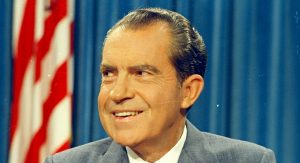
Indeed, shifting our gaze to the United States in the late 1960s reveals a pivotal moment in American domestic policy, particularly concerning the federal government’s approach to drug control. This period saw crucial administrative restructuring and the laying of ideological groundwork by the incoming Nixon administration that would redefine drug policy for decades to come. To truly understand this transformation, one must grasp the specific bureaucratic changes and the political calculus that drove President Nixon’s early focus on drug use.
In 1968, a significant administrative change occurred within the federal government regarding drug enforcement. Congress, following a plan initiated by President Lyndon Johnson as the 1968 election approached, shifted the constitutional basis for federal drug control. This moved it from the older, less direct authority of taxing to the broader power to regulate interstate commerce. As a direct result of this shift, the Federal Bureau of Narcotics (FBN) was merged with the Bureau of Drug Abuse Control (which had been part of the FDA) to form a new, more robust entity: the Bureau of Narcotics and Dangerous Drugs (BNDD). This newly formed agency was then transferred to the Department of Justice (DOJ). This move signaled a tougher, more centralized approach to drug enforcement, consolidating functions that had previously been dispersed across different departments.
Upon taking office in 1969, President Richard Nixon wasted no time in making the reduction of drug use a paramount priority for his administration. He sought to fulfill a campaign promise to “undermine illegal drug use and crush the criminal drug trade”. While the formal “all-out offensive” and declaration of a “War on Drugs” with significant budget increases would come in June 1971, Nixon’s rhetoric and policy direction immediately set the stage.
Nixon’s strong stance on drug use was deeply intertwined with his broader “law and order” platform. In response to widespread urban unrest and protests of the late 1960s, Nixon shrewdly used the issue of “law and order” to shift public discourse away from social justice concerns. He appealed to what he perceived as “Middle American sentiments” by demonizing drug users, portraying them as a threat to societal order. This strategy resonated with many who had grown “tired of the turmoil of the 1960s”.
A primary driver for Nixon’s intensified focus was the growing concern over a “two-front heroin epidemic”. Domestically, inner cities—particularly poor Black and Puerto Rican communities—were experiencing a surge in heroin addiction, leading to increased crime rates. White Americans, though less directly affected, feared the breakdown of “law and order” and the potential spread of the epidemic to their own communities, a fear amplified by media portrayals. Simultaneously, reports from Vietnam in early 1971 revealed alarming rates of heroin addiction among American servicemen, with estimates suggesting as many as 15% were addicted to cheap, high-ppurity “China White” heroin. The prospect of these addicted soldiers returning home further fueled the urgency for action.
Nixon’s administration responded by advocating for “punitive anticrime measures” over the job training and antipoverty programs favored by his predecessors, Kennedy and Johnson. Despite a trend of decreasing incarceration rates in the 1960s, the Nixon administration began constructing prisons at “unprecedented rates”. The focus was squarely on punishment, with Nixon believing that “society has few judgments too severe, few penalties too harsh” for “pushers”—those who exploited the vulnerable. Although the formal declaration and massive funding increase for the War on Drugs came in 1971 (with the federal drug budget jumping from $81 million in 1969 to $350 million), the ideological and administrative groundwork for this profoundly punitive approach was undeniably laid in the very first years of Nixon’s presidency. This marked a significant shift towards a criminal justice-centric model, prioritizing enforcement and incarceration over treatment and social welfare initiatives.