

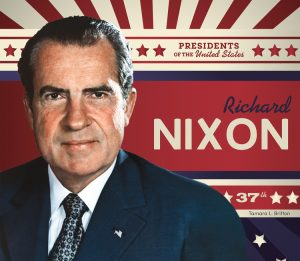
The year 1970 marked a critical juncture in U.S. economic policy, particularly as the newly appointed Federal Reserve Chairman, Arthur Burns, began to navigate the complex economic landscape and his evolving relationship with President Richard Nixon. The events of this year illuminate a significant tension between the administration’s political goals and the Fed’s role in managing the nation’s economy.
On January 31, 1970, Arthur Burns was sworn in as Chairman of the Federal Reserve System [i]. This was the fulfillment of a promise Nixon had made to Burns, his chief economic advisor and overseer of policy papers during the 1968 presidential campaign, that he would succeed William McChesney Martin when Martin’s term ended in January 1970. At the morning ceremony in the East Room of the White House, President Nixon notably intertwined the idea of the Fed’s independence with his own economic desires. He light-heartedly, but pointedly, told the assembled crowd, “You see, Dr. Burns, that is a standing vote of appreciation for lower interest rates and more money”. Nixon further emphasized his respect for the Fed’s independence but then added, “However, I hope that independently he will conclude that my views are the ones that should be followed”. Burns, for his part, stated his duty was “to help protect the integrity of the dollar and to help foster a stable prosperity for the nation”. This exchange immediately highlighted the brewing conflict: Nixon sought easy money to boost employment and ensure his 1972 reelection, while Burns, although committed to economic stability, implicitly prioritized the dollar’s value, which could conflict with expansionary policies.
As 1970 unfolded, Burns faced an unprecedented economic challenge: “stagflation”. Both inflation and unemployment were on the rise simultaneously, a “lethal combination” that policymakers had not encountered before and for which traditional economic theories offered no clear solution. The prevailing economic textbook theory, the “Phillips curve,” suggested a trade-off between inflation and unemployment, implying that one would rise as the other fell. This meant that any action to curb inflation risked increasing unemployment, and vice-versa.
In this challenging environment, Burns began publicly suggesting solutions beyond traditional monetary and fiscal policy. On May 18, 1970, Arthur Burns suggested “voluntary measures” for inflation control, proposing that business and labor voluntarily restrain wage and price increases. By October 1970, the Business Council, a prestigious group of CEOs, also pushed for voluntary controls, not purely for altruistic reasons, but hoping that such measures would pressure unions to curb large wage settlements.
President Nixon, however, harbored a deep-seated aversion to any across-the-board government intervention in the private sector, viewing mandatory controls as “anathema” to his conservative Republican principles. He became increasingly incensed by Burns’s public advocacy for wage and price controls, perceiving it as an attempt by Burns to “box him in” by eliciting support from various constituencies. Nixon even used intermediaries, such as John Ehrlichman, his chief domestic policy advisor, to pressure Burns. In a phone call on March 20, 1970, Ehrlichman relayed Nixon’s message that “Responsibility for recession is directly on the Fed,” threatening that the president would “take on the Fed publicly” if they didn’t “free up construction money now”. George Shultz, a key economic advisor, further fueled Nixon’s hostility, accusing Burns of “holding the money supply hostage” to fiscal policy, suggesting that Burns was unwilling to lower interest rates unless Nixon reduced the budget deficit. At a cabinet meeting on April 3, 1970, Nixon slammed his hand on the table, declaring, “When we get through, this Fed won’t be independent if it’s the only thing I do”.
By November 20, 1970, following a disappointing midterm election for Republicans, Nixon was determined to prevent an economic slowdown and an increase in unemployment, viewing Burns as crucial to this objective. Burns, however, continued to advocate for direct controls. In a one-hour-and-three-quarter meeting, Burns “emphasized time was short” and that Nixon would “eventually have to adapt [wage and price controls],” asserting that the “chances of success in [the presidential election in 1972] would be best if he moved promptly”. Nixon, known for avoiding confrontation, listened “sympathetically” without revealing his true feelings.
Despite Nixon’s public opposition, a significant shift in his stance appeared to emerge in December 1970. On December 4, 1970, Nixon gave a speech at the Waldorf Astoria to the National Association of Manufacturers. In this address, he connected his newfound “flexibility” on wage and price controls with an implicit understanding that Burns would, in turn, lower interest rates and increase the money supply. Just three days later, on December 7, 1970, Burns gave a “tougher speech on inflation,” further solidifying his position on the necessity of controls.
This public interplay led the media to speculate about a tacit agreement between the two men. Leonard Silk of The New York Times dubbed it “the Accord of 1970” on December 9, 1970. BusinessWeek echoed this sentiment, suggesting that Burns was “offering the White House a concordant that could develop into a new framework for economic policy: monetary and fiscal policy would both be turned toward rapid expansion, and continued inflation would lead to intensified government intervention in private economic decisions,” through forceful opposition to price and wage increases via controls. This proposed framework implied a major departure, effectively suggesting that the government could use expansive monetary and fiscal policies to spur growth and employment, with direct controls serving as the primary mechanism to contain the resulting inflation.
However, this “implicit agreement” proved short-lived. Nixon soon “reverted to his strong opposition against controls,” even as rising wages and prices continued to plague the economy through the first half of 1971. Despite the momentary truce, the fundamental tension between the administration’s political imperatives and the Fed’s economic mandate remained, setting the stage for even more dramatic interventions in the coming years.