

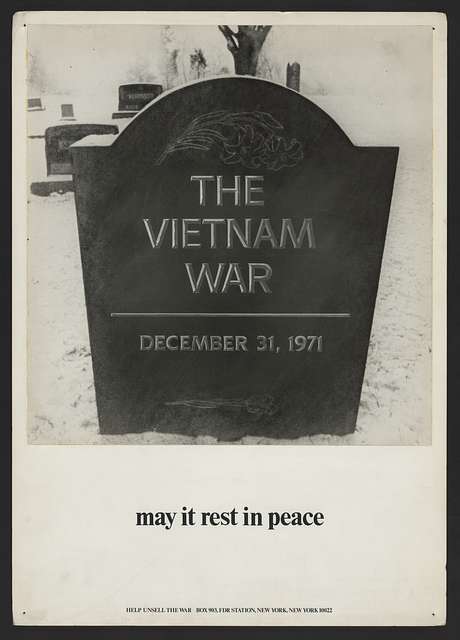
The enduring shadows of past conflicts, particularly the Vietnam and Iraq Wars, profoundly shape the landscape of U.S. foreign policy today. The concept of “emergency” and the rationale for ongoing interventions frequently draw on selective interpretations of these historical events, making a thorough and truthful examination of their legacies absolutely essential for navigating America’s current global role.
Historical Context and Elaboration
Vietnam’s Profound Impact
The Vietnam War left an indelible mark on American foreign policy, largely due to a deeply ingrained and often flawed understanding of “credibility” among policymakers. Leaders frequently adhered to a “particular definition of credibility,” which prioritized “staying the course” out of a profound fear of appearing weak, even when their policies were demonstrably failing. This wasn’t about honesty or integrity in the traditional sense, but rather a perceived need to demonstrate American toughness, a willingness to take risks, get “bloodied,” and hurt the enemy. McGeorge Bundy, a key advisor, explicitly warned President Lyndon B. Johnson that not fighting in Vietnam could dangerously lead Communist powers to perceive the U.S. as a “Paper Tiger,” tempting them to risk a “more horrific war in the future”. Johnson himself, though privately expressing deep anxieties about the quagmire, feared the political repercussions of “losing” South Vietnam to Communism, equating it with previous perceived failures like the “fall of China”. This fear, often driven by domestic political calculations, compelled decision-makers to escalate the war not out of confidence in victory, but out of a desperate desire to avoid the appearance of weakness.
This pervasive adherence to a narrow definition of credibility led to the emergence of the “credibility gap,” a signature expression of the era that underscored the profound disconnect between official government claims and the harsh realities of the war. This gap, which widened significantly under President Nixon, eroded public trust in American institutions, a trust that had been remarkably high in the preceding decades. As alarm mounted that the U.S. was destroying South Vietnam rather than saving it, and that prolonging the war damaged American credibility rather than preserving it, many citizens began to question the fundamental premises of their nation’s involvement.
The war provoked a profound national identity crisis, shattering the long-held faith in “American exceptionalism”—the belief that the United States was an unparalleled force for good in the world, superior in its power, government, and morality. The use of false pretexts, the indiscriminate brutality of warfare, and the stubborn refusal of leaders to withdraw forced millions of Americans to confront unsettling questions about their nation’s character. By 1971, a significant portion of the public, 58%, believed the U.S. was fighting an immoral war, leading to a critical re-evaluation of America’s violent history, including its treatment of Native Americans, the legacy of slavery, and numerous interventions to support dictatorships. The war revealed the limits of U.S. power, demonstrating that even the world’s greatest military superpower could not “win” against a “small, poor, agricultural people,” leaving a deep sense of failure and contributing to a national malaise that persisted for years.
“No More Vietnams” to Iraq
The painful lessons of Vietnam gave rise to the “Vietnam syndrome,” a widespread public reluctance to engage in long, costly, and inconclusive foreign wars with high American casualties. This sentiment deeply influenced subsequent administrations, prompting them to seek military engagement strategies that avoided the pitfalls of Vietnam. This often manifested as “money and arms substituted for U.S. combat troops” or waging “small, predictably winnable mini-wars”. Examples include the use of covert operations and proxy forces in Central America during the Reagan administration to avoid direct intervention. President Reagan’s administration launched operations in Grenada (1983) and President George H.W. Bush’s invasion of Panama (1989), both characterized by swift U.S. victories and minimal American casualties, specifically aimed at demonstrating American resolve and “breaking the mindset of the American people about the use of force in the post-Vietnam era”.
The ultimate test of overcoming the “Vietnam syndrome” came with the 1991 Gulf War against Iraq. President George H.W. Bush was determined to “kick the Vietnam syndrome once and for all,” seeing the conflict as an opportunity to redeem the U.S. military and national pride. The war was meticulously managed to avoid Vietnam’s perceived mistakes: a massive, immediate deployment of force, tight media control, no public “body counts” of enemy casualties, and a rapid, decisive victory. While the swift victory was initially celebrated as burying the “specter of Vietnam in the desert sands,” this triumph proved “strikingly short-lived”. Saddam Hussein remained in power, and the emergence of “Gulf War syndrome” among veterans, alongside persistent public wariness, showed that the “specter” of Vietnam continued to haunt foreign policy debates.
The 2003 Iraq War, launched under President George W. Bush, brought “obvious parallels” to Vietnam, particularly concerning its initial reasoning. The administration justified the invasion on claims of Iraq possessing “weapons of mass destruction (WMD)” and links to the 9/11 terrorists, assertions that later proved to be “baseless”. This echoed the “fraudulent and unjust” pretexts used for the Vietnam intervention. The war quickly devolved into a protracted occupation and a bloody anti-American insurgency, raising familiar questions about its initial rationale and objectives. To avoid invoking Vietnam’s negative associations, the Bush administration initially forbade terms like “body count” and “insurgency,” but eventually, the military openly embraced “counterinsurgency” strategies, demonstrating an unavoidable return to the “ghosts of Vietnam”. The enormous financial and human costs of the Iraq War, estimated in the trillions of dollars and tens of thousands of lives, further reinforced these parallels, as did the persistent struggle to define a clear exit strategy.
The “Global War on Terror”
Following the devastating September 11, 2001, attacks, President George W. Bush declared a “Global War on Terror,” which, to this day, continues on its destructive trajectory. This declaration marked a significant shift, expanding military operations beyond traditional nation-state conflicts and operating without a formal congressional declaration of war, relying instead on broad authorizations for the use of military force (AUMFs). The rhetoric surrounding the “War on Terror” deliberately evoked parallels to the existential struggles of World War II and the Cold War, portraying the enemy as one of “consummate wickedness” and the conflict as a potentially “endless” one, a “World War IV” against “militant Islam”.
This new global conflict reinforced and expanded the military-industrial complex that had flourished during the Cold War. The “War on Terror” led to military interventions in Afghanistan and Iraq, the expansion of U.S. military bases worldwide, particularly in the Middle East, and the maintenance of massive defense budgets. Policymakers, driven by neoconservative ideals, aimed to assert “imperial American power” and “shape the future,” seeking to ensure no other power could challenge the United States’ global preeminence. This vision often clashed with international opinion and traditional diplomatic norms, as evidenced by the Bush administration’s “unilateralist” stance and its decision to invade Iraq with “minimal international support”. The initial assumption of a swift “shock and awe” victory in Iraq gave way to a “prolonged, difficult, violent, and nasty guerilla campaign against an occupying power,” underscoring the limitations of military force alone in achieving political objectives and raising critical questions about intelligence and postwar planning.
Historiographical Challenges
Writing about these conflicts presents unique and significant challenges for historians, primarily due to their recency and the profound, often personal, impact they have had on individuals and society. The immediacy of these events means that “the aftershocks of September 11 still rumble daily,” making a detached, impartial analysis a complex endeavor.
Despite deliberate efforts by policymakers to suppress or avoid them, the “ghosts of Vietnam” have proven remarkably difficult to escape in discussions of more recent conflicts. The military, for instance, consciously adopted strategies after Vietnam to minimize U.S. casualties and control media narratives, but the public’s underlying skepticism about protracted interventions frequently resurfaced. President George W. Bush’s administration, notably lacking strong personal connections to Vietnam among its key architects, actively “refused to use any expressions reminiscent of the Vietnam failure,” such as “body count” or “insurgency,” in an attempt to distance the Iraq War from that past. However, as the Iraq War bogged down, even these linguistic barriers eventually fell, with terms like “counterinsurgency” and “surge” reappearing, demonstrating the inescapable influence of Vietnam’s strategic and public relations challenges.
The “lessons” from past wars are often selectively applied or, conversely, deliberately ignored, depending on the political objectives of the moment. For example, while military leaders learned from Vietnam to question objectives more rigorously, civilian leaders in the “War on Terror” sometimes “overestimate[d] what military power can accomplish”. The “Vietnam syndrome”—the public’s aversion to extensive military entanglement—was not eradicated but rather managed through careful public relations and the promise of quick, decisive victories, as seen in the Gulf War. Post-9/11, the impulse was to act with overwhelming force, creating a “vastly disproportionate response” that, in retrospect, may have generated greater global hostility rather than security. This highlights a recurring pattern where the emotional desire to overcome past perceived failures (like Vietnam) can lead to new, equally problematic interventions.
Why This Matters Now
Examining the enduring shadows of Vietnam and Iraq offers a crucial critical historical lens for evaluating current foreign policy decisions and military engagements. It allows us to scrutinize how “lessons” from past wars are selectively applied or ignored, often to justify present actions that might otherwise lack broad public support or sound strategic grounding.
The debates surrounding “credibility” in both eras reveal a consistent tendency for policymakers to define it in terms of maintaining an image of unwavering resolve and willingness to use force, rather than upholding honesty, integrity, or pursuing achievable, morally justifiable goals. This often leads to “unwinnable” wars or prolonged interventions where the effectiveness of military power alone is severely limited. As the experiences in Vietnam and Iraq vividly demonstrated, military might cannot compel political allegiance or successfully rebuild societies without popular support, resulting in “wrecked and divided” countries.
Moreover, this historical examination underscores the immense long-term societal costs of military interventions. The astronomical financial burden of continuous warfare—trillions of dollars diverted to military spending—often comes at the expense of vital domestic needs such as infrastructure, education, and social safety nets. The pursuit of global military dominance has also systematically eroded democratic governance, with the executive branch frequently bypassing Congress on matters of war and peace, fostering public distrust and contributing to a “permanent war machine” that seems “unaccountable to the public”.
By delving into the enduring shadows of Vietnam and Iraq, the goal is to prompt a more nuanced public understanding of America’s global role and the true efficacy of military power when wielded in isolation. An honest reckoning with this history, acknowledging both successes and devastating failures, is essential for charting a less militarized future and fostering a foreign policy that genuinely aligns with stated ideals of peace, democracy, and human rights, rather than repeating costly mistakes born of a fear of appearing weak. It reminds us that “the past is always speaking to us, if we only listen”.