
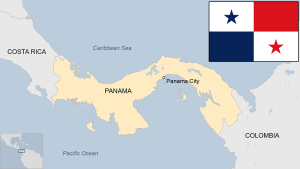
The year 1989 marked a significant moment in American foreign policy, as the George H. W. Bush administration, having recently taken office, launched a military invasion of Panama. This operation, while swift, was steeped in the complexities of evolving geopolitical priorities and the lingering shadow of the Vietnam War.
At the heart of the U.S. intervention was General Manuel Noriega, the de facto ruler of Panama since 1983, who had become a major problem for the United States. Noriega’s regime was characterized by corruption, brutality, and authoritarianism. Crucially, he was deeply implicated in the drug trade, using Panama as a key transit point for illicit narcotics from South America into the United States. While Noriega had once been a U.S. ally and a paid informant of the CIA, even during George Bush’s directorship in 1976-1977, his usefulness had run its course by 1987. He had previously cooperated with the CIA in covert operations against the Sandinista government in Nicaragua, and had even met with Colonel Oliver North to discuss sabotage targets there. However, his illicit activities and defiance, including rigged elections and harassment of U.S. citizens and businesses in Panama, became an increasing embarrassment for Washington. The U.S. aimed to bring him to trial on drug trafficking charges, for which he had already been indicted in Florida. Furthermore, with the sovereignty of the Panama Canal slated to transfer to Panama in 2000, Noriega’s removal was deemed imperative. The final catalyst for the invasion came in December 1989, when assaults on American servicemen by Panamanian troops provided the necessary casus belli.
The military operation, officially dubbed “Operation Just Cause,” commenced in December 1989. It was, at the time, the largest U.S. military operation since the Vietnam War, involving nearly 28,000 American troops and 300 aircraft, including advanced high-tech fighter jets. The U.S. forces quickly overwhelmed the Panamanian defense forces, which offered little resistance. Noriega himself eventually surrendered after a weeklong standoff at the Vatican embassy and was extradited to the United States. He was subsequently tried and convicted of drug smuggling, receiving a forty-year prison sentence in 1992.
The invasion’s outcomes, however, extended beyond Noriega’s capture. The bombardment of neighborhoods in Panama City led to hundreds, possibly thousands, of civilian deaths and left an estimated 14,000 people homeless. Critics noted that even by official Pentagon figures, the civilian casualties were comparable to those in the Chinese government’s notorious attack on student demonstrators at Tiananmen Square just six months prior. A new Panamanian president, friendly to the United States, was installed, and weekly breakfasts between the Panamanian president and the American Ambassador were viewed by many Panamanians as the forum where “important decisions are taken”. Despite the stated objectives, the invasion “failed to stanch the flow of illicit narcotics through Panama”.
Perhaps one of the most significant, albeit complex, consequences of the Panama invasion was its perceived role in overcoming the “Vietnam syndrome”—a deep-seated reluctance among the American public towards foreign military interventions following the costly and divisive Vietnam War. Reagan’s administration had previously attempted to restore national prestige with smaller, “predictably winnable mini-wars” like the Grenada invasion in 1983. Panama, being the first post-Cold War military intervention, was framed not in terms of combating communism, but of spreading democracy. The Bush administration, by exploiting new high-technology weaponry to minimize American casualties, provided a model for a new military strategy focused on highly mobile, rapid-deployment forces over lengthy conventional campaigns. Liberal Democrats in Congress, keen to demonstrate a bipartisan approach to foreign policy, largely supported the military action. Indeed, Secretary of State James Baker would later claim that the operation helped change “the mindset of the American people about the use of force in the post-Vietnam era”. Furthermore, the Soviet Union’s decision not to join in international condemnation of the invasion signaled a developing rapport between Bush and Mikhail Gorbachev.
In sum, the 1989 invasion of Panama was a multifaceted event that reflected not only a direct response to a problematic regime and drug trafficking, but also the U.S. government’s intent to reassert its global power and domestic will in a changing world, subtly redefining the rationale for military intervention in the post-Cold War era.