

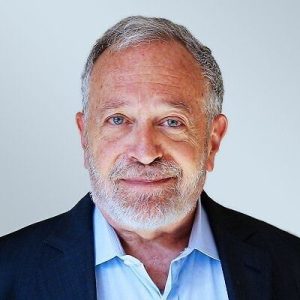
It’s truly insightful to delve into Robert B. Reich’s work, particularly “Supercapitalism: The Transformation of Business, Democracy, and Everyday Life,” as it offers a compelling framework for understanding the profound shifts in our economic and political landscape. Reich’s central argument is that the widening chasm of income and wealth inequality, the pervasive job insecurity felt by many, and the troubling prevalence of corporate influence in politics are not unforeseen side effects, but rather the logical and engineered outcomes of a system increasingly designed to serve a powerful few rather than the broader public. This perspective challenges the notion of a neutral or inherently fair “free market,” instead asserting that the market’s rules are human creations, shaped and enforced by those with the most influence.
Reich highlights that a fundamental transformation has occurred in democratic capitalism since the late 1970s, shifting power towards consumers and investors and away from the broader societal institutions that once aimed to spread wealth and stabilize communities. The prior system, sometimes referred to as a “Not Quite Golden Age,” involved large companies, labor unions, and government agencies negotiating to distribute economic growth, with CEOs often acting as “corporate statesmen” who considered various stakeholders. However, this stable production system was “cracked open” by new technologies, globalization, and deregulation, leading to intense competition that forced companies to prioritize relentless profit pursuit.
Let’s explore the consequences of this transformation:
Widening Inequality of Income and Wealth
Reich contends that the dramatic rise in income and wealth inequality is not an inevitable consequence of capitalism or technological advancement, but rather a direct result of how the market rules have been deliberately altered over the past decades. This process, he explains, constitutes a “hidden upward pre-distribution” of income and wealth, effectively moving economic gains from the middle and lower classes to a wealthy minority at the top.
A stark illustration of this is the soaring compensation of corporate CEOs relative to average workers. In 1965, the ratio of CEO pay to typical worker pay was 20 to 1; by 2013, it had surged to 296 to 1, and is over 300 to 1 today. Overall, CEO pay climbed 937% between 1978 and 2013, while the typical worker’s pay increased by just 10.2%. Reich argues that this disproportionate compensation is not due to a sudden surge in the value of their skills, but rather their increased power to shape market rules that enrich themselves.
The data reflects this trend across the board. The share of total wealth held by the richest 0.1% of American households (about 160,000 households) surged from less than 10% to 20% over four decades, now owning almost as much wealth as the bottom 90% combined. Meanwhile, labor’s share of nonfarm business income significantly dropped from 63% in 2000 to 57% in 2013, representing a substantial shift of $750 billion annually from labor to capital. This demonstrates how corporate profits have reached their highest share of the total economy in over eighty-five years, tying the record set during World War II, while workers’ wages have slumped.
Reich also deconstructs what he terms the “meritocratic myth,” which suggests that individuals are paid what they are “worth” in the market based on talent and effort. He asserts that this is a “tautology” that ignores how the market itself is organized and whether that organization is morally defensible. In reality, income and wealth are increasingly determined by “who has the power to set the rules of the game”. He criticizes the idea that capitalism “leads inexorably to mounting economic insecurity and widening inequality” because the basic rules are not “written in stone”.
Heightened Job Insecurity
The shift to “supercapitalism” has also profoundly impacted job security, moving away from a time of stable, high-volume production with relatively high wages and benefits. Intensified competition for consumers and investors has pressured companies to reduce costs, often leading to cuts in jobs and wages.
A key factor in this decline is the weakening of labor unions. By the mid-1950s, 35% of all private-sector workers in the U.S. were unionized; today, that figure stands at just 6.4%. Reich argues that this decline in union membership, which began its rapid descent in the mid-1970s (even before the Reagan administration), has severely eroded workers’ bargaining power, leaving a smaller portion of corporate revenues for wages and more for profits. This pressure to cut payrolls, which account for about 70% of a corporation’s costs, has driven companies to fight unions aggressively, a phenomenon not seen to the same extent in other developed nations facing similar global competition and technologies.
Furthermore, deregulation in sectors like transportation, communications, manufacturing, and finance, largely driven by Cold War-era technologies, has intensified competition, further pressuring companies to cut costs, jobs, and wages. This has led to widespread job losses and a decline in real wages for many, as companies move production to regions with lower labor costs or automate processes. Workers now face conditions like mandatory arbitration agreements and reduced options for employment, further weakening their negotiating position and intensifying their economic insecurity.
Corporate Corruption and Political Influence
Reich makes it clear that the core of the problem lies in the increasing concentration of political power in the hands of a corporate and financial elite. This elite leverages its vast wealth to influence the very rules of the economic game for its own benefit.
This influence manifests through several avenues:
- Campaign Contributions and Lobbying: Wealthy individuals and large corporations “flood the presidential, Senate, and House elections with billions of dollars of donations”. Lobbyists, often former government officials, swarm Washington and state capitals, seeking legislative changes that provide competitive advantages or avoid disadvantages. This creates a system where politicians become beholden to donors, rather than solely to their constituents. As one source notes, the more important money becomes to politicians, the more important donors become to them.
- Shaping the Legal and Regulatory Framework: Beyond direct political contributions, large corporations employ platoons of lawyers and paid experts to defend against lawsuits and push their agendas in agency rule-making proceedings, ensuring that laws are interpreted in ways that favor them. They leverage the “revolving door,” where public officials transition to lucrative private-sector jobs after defining or enforcing rules that benefited the industry.
- Propaganda and Narrative Control: The elite also invests in public relations campaigns, think tanks, and exerts economic influence over media outlets to promote policies they support and discredit those they oppose, thereby shaping public opinion. This is part of what Reich calls the “mythologies” that distract the public from the reality of how the market is organized.
- Decline of Countervailing Power: A critical element of this power shift is the “wither[ing]” of traditional centers of “countervailing power” that once balanced the influence of big business. These included labor unions, small businesses, small investors, and political parties rooted at local and state levels. Without these counterforces, the power of large corporations and Wall Street has grown unchecked.
The consequences of this influence are evident. For example, the neutering of antitrust laws has allowed corporations to grow larger and gain more market power, enabling them to raise prices and suppress wages. Landmark Supreme Court decisions like Citizens United and McCutcheon have been pivotal, opening “the floodgates to big money” in politics by legally redefining corporate political spending as constitutionally protected free speech. This has further skewed policy towards the wealthy and corporate interests, as politicians respond to those with the deepest pockets.
The “Myth” of the Free Market
A central theme in Reich’s analysis is that the concept of an immutable, self-regulating “free market” is a dangerous “mythology”. He argues that markets are not natural phenomena; they are human constructs, defined by rules governing property, monopoly, contracts, bankruptcy, and enforcement. The critical question, therefore, is not whether government should “intrude” on the market, but “who shapes those rules and for what purpose”. The current system, he asserts, has been shaped by a powerful minority to “channel a large portion of the nation’s total income and wealth to themselves”.
This “market fundamentalism” prevents the public from seeing that the system is “rigged”. It justifies widening inequality by claiming that people are paid what they are “worth” in the market, without examining the underlying legal and political institutions that define the market itself.
Consequences and Call to Action
The culmination of these systemic changes, Reich argues, is an “American oligarchy” that has triumphed, largely unnoticed, because public attention has been diverted by debates over “political right versus left, Republican versus Democrat, free market versus government”. This oligarchy, while perhaps not actively conspiring, operates within a system that inherently siphons economic gains to the top and weakens democratic vitality.
Reich’s work is not merely a critique; it’s a call to action. He believes that the current trajectory is neither inevitable nor irreversible. To reclaim democracy and build a more just economy, he proposes that the vast majority who currently lack influence must become organized and unified to re-establish a new “countervailing power”. This would entail fundamental changes, such as reinventing the corporation to share gains more broadly, getting “big money out of politics,” and adapting rules to create a more inclusive economy where gains from technological advancements are widely shared, rather than flowing predominantly to a few owners of capital and technology. The critical debate, he emphasizes, is “about whom government is for”.