
Understanding how specific historical events unfold, especially those shrouded in layers of secrecy and political maneuvering, requires a commitment to presenting facts clearly and without embellishment. It’s a truth-seeking endeavor, ensuring we portray the past as accurately as the available sources permit. Our focus now turns to the Bay of Pigs, an operation that stands as a significant, albeit deeply problematic, chapter in U.S. foreign policy and the early years of the Cold War.
The Bay of Pigs invasion was a counter-revolutionary invasion of Cuba by anti-Castro Cuban exiles, conceived and planned by the Central Intelligence Agency (CIA) during the Eisenhower administration. President Dwight D. Eisenhower had pushed for preparations while setting limits and conditions, leaving the ultimate decision to act to his successor. By the time John F. Kennedy took office in January 1961, the CIA had approximately 1,400 Cuban exiles armed and trained in Guatemala for this future invasion.
Kennedy inherited the plan and, despite seeming uncertain about the scheme, felt pressured by various factors, including the need to demonstrate boldness and his prior criticisms of Eisenhower’s and Nixon’s perceived inactivity. Even before taking office, Kennedy had issued a press statement indicating support for strengthening “anti-Castro forces in exile, and in Cuba itself, who offer eventual hope of overthrowing Castro”. When he entered the White House, he gave the plan his “enthusiastic support,” even granting the CIA complete control over the operation. He viewed it as an opportunity to show the nation and the world that he could be a “tough leader,” unafraid to act against communism.
However, the operation was plagued from the start. Allen Dulles, then Director of the CIA, had put Richard Bissell in charge of the invasion. The CIA leadership, including Dulles, appeared serenely confident that the invasion’s inevitable failure on its own terms would force Kennedy to commit U.S. military power to rescue the bogged-down forces, a tactic Dulles had successfully used with previous presidents. This “immaculate invasion” concept, where the CIA aimed to invade Cuba without actually invading it, was designed to trick Kennedy into believing it could succeed without direct U.S. military involvement, even though Dulles knew only U.S. soldiers and planes could ensure success.
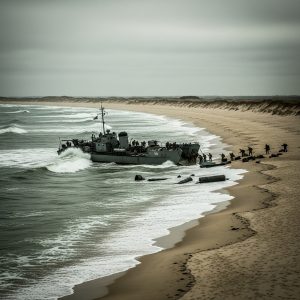
The invasion commenced on April 17, 1961, with a preparatory air strike by six old B-26 bombers against three Cuban airfields on April 15. Two days later, the land invasion began. The approximately 1,400 Cuban exiles attempting the landing at the Bay of Pigs “floundered”. The venture was disastrous and “never had a serious chance of success”. Cuban leader Fidel Castro, having been forewarned and aware of the landing location, had assembled several thousand troops and over fifty Soviet-made tanks at the invasion site by the time the landing force consolidated. The plan critically relied on a mass anti-Castro uprising, which never materialized. In just three days, Castro’s army crushed the CIA forces.
As the dire news poured in, the CIA and Navy pressed Kennedy to authorize U.S. air strikes. Despite the intense pressure, Kennedy refused to send Americans directly to war and risk escalation, including in Berlin. Admiral Arleigh Burke was particularly “gruff” in urging a wider U.S. involvement, with Kennedy firmly repeating, “Burke, I don’t want the United States involved in this”. Kennedy stood his ground, and the fate of the Bay of Pigs operation was sealed as the “last of the brigadistas were rounded up by Castro’s troops in the swamps”. Four American pilots involved in the invasion were killed, and their families were not told the truth about how they died.
The failure of the Bay of Pigs was immediate and profound. Kennedy quickly accepted responsibility for the debacle. However, behind the scenes, a fierce “war of ideas” ensued between Kennedy and Dulles over media spin and the control of the CIA. Dulles and his allies sought to shift blame, implying that the mission was doomed by Kennedy’s “failure of nerve” or lack of “determination to succeed”. They argued that the operation would never have been mounted if it were suspected that the vital element of air action would be eliminated. Indeed, a September 1961 Fortune magazine article, ghostwritten by a journalist close to Dulles, presented a version of events that largely blamed the White House.
Internal CIA assessments, however, were sharply critical. Dick Drain, a CIA officer involved in the operation, vent his frustration to the CIA historian, Jack Pfeiffer, stating that the Bay of Pigs operation was staffed largely by “agency castoffs” and “losers” whom division chiefs found “excess” or “insufficient”. He noted that many staff had no knowledge of Spanish or Latin America and lacked “sense or feel about the political sensitivities of these [Cuban exiles]”. Robert Amory Jr., the CIA’s chief of analysis, who had extensive experience with beach landings in World War II, was “stunned” by the decision to keep him on the sidelines and believed the agency used a “C-minus team” instead of an “A team”. An Inspector General’s report later concluded that Dulles had allowed division chiefs to dump their “disposal cases” on the Cuba project.
The post-invasion period saw significant fallout. Kennedy himself came to believe that Dulles had “lied to his face” about the operation’s chances of success. Kennedy’s relationship with the CIA became strained, and he made it clear he no longer wanted to be briefed by Dulles in person, instead receiving summary booklets. He privately vowed to “splinter the CIA into a thousand pieces and scatter it to the winds”. Kennedy eventually fired Dulles and other top CIA leaders, including Richard Bissell. John McCone, a Republican businessman and former Atomic Energy Commission chairman, was privately tapped as Dulles’s replacement.
For Cuba, the failed invasion reinforced Castro’s regime and was used for propaganda purposes, with Cuban officials contrasting the U.S. defeat with the “heroic Cuban victory”. The event solidified Cuba’s alignment with the Soviet Union, as the U.S. cut off sugar imports and petroleum, leading the Soviet Union to step in with aid and trade agreements.
The Bay of Pigs exposed a disturbing lack of control within Kennedy’s administration over its own intelligence services. It contributed to a “stuttering rage” among CIA officers aligned with Dulles, who felt betrayed by Kennedy’s lack of intervention. It also highlighted the concept of “plausible deniability,” where the President was supposedly not responsible for covert operations, although CIA officials often took the blame to preserve it. This practice had also been evident in earlier CIA actions, such as secret plans to assassinate Fidel Castro and other foreign leaders.
In essence, the Bay of Pigs was a catastrophic failure rooted in flawed intelligence, overconfidence, and a fundamental misunderstanding of Cuban popular support, leading to profound consequences for the U.S. intelligence community and its relationship with the presidency. It was a stark lesson in the complexities of covert action and the dangers of unchecked power, serving as a prelude to further challenges in the Cold War era, including the Cuban Missile Crisis that followed in October. This period also marked a shift in how U.S. foreign policy was managed, with Kennedy’s team becoming “enamored, even stimulated, by crisis management”.