
The assassination of President John F. Kennedy on November 22, 1963, is a pivotal moment in American history, shrouded in both documented facts and an enduring tapestry of speculation and theories. To truly grasp what transpired in Dallas, it’s essential to examine the rational, fact-based evidence presented in the sources, distinguishing it from conjecture, however compelling it may seem.
The Official Account: Lee Harvey Oswald as the Lone Assassin
The widely accepted conclusion by official investigations, notably the Warren Commission, is that Lee Harvey Oswald acted alone in assassinating President Kennedy and murdering Dallas Police Officer J.D. Tippit.
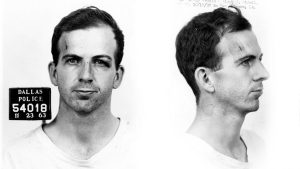
Lee Harvey Oswald: The Perpetrator’s Profile Lee Harvey Oswald was a 24-year-old ex-Marine with a complex and often contradictory personality. He was an avowed Marxist who had previously defected to the Soviet Union and harbored ties to Cuba. While in the Soviet Union, he described his political views as combining the best of capitalism and socialism in an “Athenian system”. His writings show a condemnation of both the U.S. and USSR, viewing them as oppressive and imperialistic, desiring a “pure communist society” after the “military debacle of the United States”. Despite some claims of being trained for a stressful interrogation, Oswald denied his guilt, emphatically stating, “I don’t know what this is all about. . . . I’m just a patsy!”. He was described as strangely calm and collected by detectives who questioned him. His personal life was also noted, with a history of sexual relationships in Japan and a mild case of venereal disease, which some conspiracy theorists have tried to link to intelligence work, though this has been refuted by evidence.
The Weapon and His Marksmanship Oswald ordered an Italian military rifle, a 6.5mm Mannlicher-Carcano, with a 4x scope, through a mail-order house under the alias A. Hidell in March 1963. Despite critics disparaging the Carcano as inaccurate, firearms experts who tested Oswald’s gun concluded it was “a very accurate weapon” with low kickback, making rapid firing easier. The 4x scope meant “even an untrained shooter could fire at a target like a marksman”. His Marine record also indicated he was fully capable of making the assassination shots, contrary to claims of poor marksmanship. The 6.5mm bullets were heavy and traveled at high velocity, similar to an AK-47, and were effective battle weapons.
The Shots in Dealey Plaza From the sixth floor of the Texas School Book Depository, Oswald fired three shots at President Kennedy’s motorcade.
- First Shot: Occurred between frames 161 and 166 of the Zapruder film. While it did not hit Kennedy or Connally directly, it may have struck a streetlamp or the pavement, causing fragments.
- Second Shot: Hit President Kennedy between frames 223-224 of the Zapruder film. This bullet entered the rear base of his neck, traversed his body without striking major organs, and exited his throat. This bullet then continued to strike Governor John Connally, who was sitting in front of Kennedy. This event is central to the “single bullet theory” (often controversially dubbed the “magic bullet” by critics). Forensic tests confirmed that this bullet, Warren Commission Exhibit 399, inflicted seven wounds on both men, losing only 3 grains of its 161-grain weight and showing only a flattening deformity, consistent with its path.
- Third Shot: The fatal shot, at frame 313 of the Zapruder film. This bullet struck Kennedy in the high, right rear of his skull, exiting the right side of his head. The forward jerk of Kennedy’s body (detectable only with significant film slowing) followed by a rapid backward movement is explained by a neuromuscular spasm caused by the bullet destroying his cortex and the “jet effect” of brain and blood tissue exiting his head, propelling it backward and to the left.
Autopsy Findings and Controversy The autopsy, conducted at Bethesda Naval Hospital, faced criticism for being “botched” and “incomplete” by some forensic pathologists, who noted pressure from the Kennedy family to finish quickly and a lack of proper forensic training among the doctors. Despite this, the House Select Committee’s nine-member forensics panel reviewed X-rays and photographs, confirming the neck wound was a rear shot entering from right to left, matching Oswald’s position. The head wound showed inward beveling at the entry point and outward beveling at the exit, confirming a rear-to-front trajectory. Claims of a large wound in the rear of JFK’s head by some Parkland doctors, which would suggest a front shot, contradicted autopsy photos showing the cerebellum intact. However, later views of autopsy photos by Parkland doctors confirmed the photos represented what they remembered, showing no rear defect except the entry hole near the top of the skull.
Oswald’s Escape and Arrest After firing the shots, Oswald dropped his rifle and ran from the Depository, later shooting and killing Dallas Police Officer J.D. Tippit within an hour of the assassination. The Tippit murder is considered key to understanding Oswald’s desperation and recklessness. He was arrested shortly thereafter in a cinema, having been spotted by a shoe store manager who found his behavior suspicious.
Jack Ruby’s Role Two days after the assassination, while Oswald was being transferred from one jail to another, Dallas nightclub owner Jack Ruby shot and killed him. Ruby claimed he was distraught over the assassination and acted out of sympathy for Jacqueline Kennedy. Accounts from his friends and family suggest a volatile, emotional, and unbalanced personality, leading to a momentary explosion of violent temper rather than a premeditated conspiracy. Ruby’s mental state deteriorated significantly after the assassination, with beliefs that American Jews were being slaughtered because of his crime.
The Warren Commission and Public Reception President Lyndon Johnson created the Warren Commission on November 29, 1963, with Chief Justice Earl Warren as chairman, to investigate the assassination and quell widespread speculation, particularly rumors that could lead to war if Cuba or the Soviet Union were implicated. The commission concluded that Oswald acted alone. While early reviews in the U.S. were positive, Europeans, with a longer history of political conspiracies, viewed it as a “sanitized version”. The honeymoon for critical acceptance was short-lived in the U.S..
Addressing Persistent Doubts and Conspiracy Theories
Despite the Warren Commission’s findings, conspiracy theories have flourished, fueled by skepticism and the desire to find deeper meaning in such a profound tragedy.
The “Conspiracy Industry” The notion that a “sociopathic twenty-four-year-old loser” with a $12 rifle could end “Camelot” was unsettling, leading many to believe that a powerful group must have eliminated Kennedy for a critical purpose. This led to a “conspiracy industry,” with over two thousand books written on the subject, many proposing myriad suspects and gunmen. This environment has unfortunately led to commercialization, with conventions, souvenir sales, and the propagation of sensational but often unreliable claims.
“Multiple Assassins” and Acoustical Evidence One prominent theory is that multiple gunmen were involved, particularly a second shooter from the “grassy knoll”. The Zapruder film is often cited as evidence, but analyses, including computer enhancements, support the rear shots. Acoustical evidence from police radio recordings claiming a fourth shot from the grassy knoll was put forward by the House Select Committee on Assassinations (HSCA) in 1979. However, this methodology was later found to be “based on multiple errors” and its demise was not widely reported. The idea that the shot that killed JFK came from behind the motorcade is visually confirmed by frame 313 of the Zapruder film.
Body Alteration and Autopsy Irregularities Conspiracy theories frequently claim JFK’s body was altered between Dallas and Bethesda to conceal evidence of a front shot. However, sources refute this, stating the casket was never unattended and was hermetically sealed at Parkland, only reopened at Bethesda. Claims of a missing brain are also addressed, with one source suggesting Robert Kennedy disposed of it to prevent a “lurid public exhibition”. While some doctors noted discrepancies, comprehensive forensic reviews and photographs support the official findings of entry and exit wounds from the rear.
Oswald as an “Imposter” or “Patsy” The “imposter” theory suggests that another person (or multiple people) used Oswald’s identity, especially during his trip to Mexico City, to create a false trail linking him to Communist intelligence. While the CIA did intercept phone calls where someone impersonating Oswald contacted the Cuban and Soviet embassies, these calls were not by Oswald himself, as confirmed by J. Edgar Hoover to Lyndon Johnson. This “audio fakery” indicated Oswald’s entanglement in “espionage business” but doesn’t necessarily prove he was a patsy for the assassination, though it certainly added to the confusion. The theory that Oswald was an informant for a U.S. agency has also been explored, suggesting his “provocative behavior in embassies… was grist for a counterintelligence operation”. Despite speculation, exhumation of Oswald’s body in 1981 confirmed it was indeed him, debunking claims of a KGB assassin swap.
CIA, FBI, and Mafia Involvement Allegations of CIA, FBI, or Mafia involvement are common. Some theories propose that CIA plots to assassinate Fidel Castro “backfired” on Kennedy. Sources indicate disagreements within the Kennedy administration and the CIA over Cuba policy, with certain CIA elements reportedly acting to frustrate Kennedy’s accommodation track with Castro. There were instances where Oswald allegedly threatened to kill Kennedy, which some interpreted as a “deliberate provocation” by the CIA to implicate Cuba.
Allen Dulles, the former CIA director fired by Kennedy after the Bay of Pigs, played a significant role in the Warren Commission, leading to suspicions of a cover-up. Critics suggest Dulles steered the inquiry away from the CIA. However, official documents reveal the CIA “deliberately withheld evidence” from the Warren Commission, not necessarily to hide a conspiracy against JFK, but due to prioritizing its “own interests” and protecting “sources and methods”.
As for Mafia involvement, sources explicitly state that those who have investigated the Mafia “do not believe there is any credible evidence that the mob was involved” in the JFK assassination. The lack of conspiratorial contact with Oswald, the timing of his movements, and his isolated lifestyle contradict such theories. One former FBI agent who led the fight against the Mafia noted that extensive surveillance on top mobsters revealed their hatred for Bobby Kennedy but no interest in assassinating the President.
“Mystery Deaths” of Witnesses The theory of a “murder squad” silencing witnesses connected to the assassination has been widely popularized. However, the initial statistical claim by The London Sunday Times of astronomical odds against such deaths was later retracted as a “careless journalistic mistake”. While a list of “mysterious deaths” was compiled and expanded, corroborating evidence for foul play or direct connection to the assassination case is lacking for many of these individuals.
In sum, while the tragic assassination of President Kennedy continues to be a subject of intense scrutiny and emotional debate, the overwhelming credible evidence, supported by detailed forensic, ballistic, and eyewitness accounts, points to Lee Harvey Oswald as the lone assassin. The enduring desire for a more complex narrative, however, often overshadows these facts, making it a compelling, yet often misleading, exploration for many.