

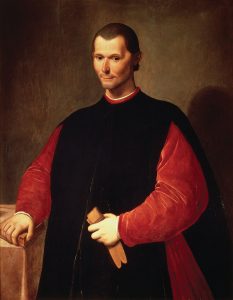
Ah, a fascinating and deeply revealing subject: Niccolò di Bernardo dei Machiavelli. To understand him is to confront some uncomfortable truths about power, human nature, and the relentless machinery of politics – a perfect continuation of our candid discussions on how systems are rigged and who truly benefits. He was, if nothing else, a man who saw the world as it was, not as he wished it to be, and he dared to articulate that vision with unblinking clarity.
Who Was Niccolò di Bernardo dei Machiavelli?
Niccolò Machiavelli was born in Florence on May 3, 1469, into a family that, while part of the oligarchic elite, was not in its highest echelons. His father, a notary, had a meager salary supplemented by income from rented land, providing a context of straitened circumstances for Machiavelli’s early years. From a young age, he was exposed to classical texts, studying Latin and having access to volumes by Livy, Cicero, and Aristotle, which would profoundly influence his later work.
Machiavelli emerged into public life in 1498, securing the position of Secretary of the Second Chancery, an office handling Florence’s territories and external affairs. For over a decade, his fortunes rose as he served as a diplomat, ambassador, and negotiator, gaining extensive firsthand experience in the intricate web of Italian statecraft. He became a foremost adviser to Piero Soderini, the Gonfalonier of Florence, a period during which his writings were largely official dispatches and reports.
However, his illustrious political career came to an abrupt halt in 1512 when Soderini was ousted and the powerful Medici family returned to power. Machiavelli found himself under suspicion of conspiracy, imprisoned, and tortured. Subsequently exiled to his farm near San Casciano, a period he described as one of misery, this forced removal from active politics paradoxically became a time of “incredible productivity”. During these years (1512–1520), he wrote his most remembered and controversial works: The Prince, The Discourses, and The Art of War, along with plays, essays, and many personal letters.
By 1520, he began to regain some favor with the Medici, who commissioned him as Florence’s official historiographer. He chose to write in the elegant Tuscan Italian, which he championed, rather than Latin, signifying his commitment to a new, vibrant Italian idiom. He died on June 21, 1527, shortly after the Medici government again fell, leaving him out of favor in his final months. He was, fundamentally, a man of politics who found his truest calling as a literary figure, valuing that identity even over a higher salary in a political post.
What Did He Teach?
Machiavelli’s teachings are best understood as a pragmatic and often brutal response to the “radical historical and ideological crisis” of his time. He observed the fragmentation of Christianity, the rise of powerful nation-states like France and Spain, and the unsettling discovery of new worlds. His aim was to provide guidance for navigating a world no longer governed by stable, sacred truths or established moral imperatives.
- A “Scientific” Approach to Politics: Machiavelli is often credited with inventing “the scientific study of politics”. He sought the “truth of the matter rather than imaginary conceptions,” departing from idealistic principles to focus on “what is actually done” in the world. His analysis, though lacking modern scientific units, was methodical, aiming to understand the “laws which govern exceptions” and the complex interplay of power. This pragmatic outlook led him to emphasize “human agency and foresight (‘prudence’), rather than divine providence, as the driving engines of politics and society”. He believed that individuals could shape events rather than merely waiting for them to happen.
- The Prince: Gaining and Maintaining Power:
- Purpose: Written during his exile, The Prince was a strategic attempt to regain favor with the Medici, offering insights into how a ruler could acquire and maintain power.
- Core Tenets: It is “of outspoken clarity” in its advice on how to “gain power, how to keep it, and how to wield it”. Machiavelli famously argues that a prince “must learn how to be able not to be good, and to use or not use this ability according to circumstances”. He explores whether it is better to be feared or loved, concluding that since love is at the will of the subjects and fear at the will of the prince, a wise prince should build on what is his own (fear), while striving to avoid hatred.
- “Armed Prophets”: A striking lesson from The Prince is that “all armed prophets were successful, while unarmed prophets came to ruin”. This practical observation underscores the necessity of force alongside conviction.
- Deception and Appearances: Machiavelli believed that princes need not keep their word if it goes against their interests and that it is crucial to “give the impression that his actions are being forced by circumstances”. A ruler must “change masks and incites them to the union that had been initiated, and no longer mentions an impending tyrant or his evil ways”. This focus on appearance over reality is a consistent theme.
- The Discourses on Livy: Republicanism and Public Wisdom:
- Contrast with The Prince: While The Prince focuses on autocratic rule, The Discourses are a “vigorous championing of a republican form of government”. Machiavelli interprets Livy’s Roman history as offering “viable models to be emulated in his own time” for a pragmatic study of institutions and politics.
- Populace vs. Prince: Contrary to common opinion, Machiavelli argued that “the populace is wiser and more constant than the prince”. He believed that the cruelty of the populace is directed against those who threaten public property, while a prince’s cruelty targets those who threaten his personal property. He stressed that a prince needs to avoid angering nobles and keep the populace content.
- “Systematic Corruption”: In his political thought, corruption was not just individual moral failing but anything that disrupted the constitutional balance. This balance, however, was not a stable equilibrium and required “eternal vigilance”. Small changes could destabilize the system, and defining what constituted “unconstitutional or corrupt” behavior was crucial for maintaining balance. This framework suggests that “corruption always has a redistributive side,” which may benefit the poor or the elite.
- The Art of War: Military Strategy and Civilian Life: This work systematically presents his ideas on military tactics and the philosophy of war, rooted in ancient Roman models. He argues that military and civilian institutions should be “united, more harmonious, and of necessity with greater affinity for each other”. He even asserted that “a good man cannot take up soldiery as his profession, and second, that a well-ordered republic or kingdom would never permit its subjects or citizens to exercise soldiery as a profession”. Despite his claim of no professional experience, he was responsible for military strategy as Secretary of the Second Chancery.
- Cyclical History and Human Nature: Machiavelli believed that history is a cyclical process, stating, “If in the world the same men were to return, as the same events recur, a hundred years would not pass before we would find ourselves once more together, doing the same things as we do today”. He often highlighted recurring human behaviors, such as the difficulty of being “perfectly good or honorably evil”. He saw human nature as fundamentally self-interested, fickle, and covetous, making his political advice highly realistic, albeit dark. He felt that Florence, for example, had to “retake power every five years” by “instilling in their subjects the kind of fear and terror that the populace had experienced when the Medici first seized power” because when “the memory of such terror fades, men speak out, becoming bold and striving for change”.
How Is He Relevant to Current Events?
Machiavelli’s profound insights into power, human nature, and political systems remain strikingly relevant to current global and domestic events, offering a stark “truth” that often mirrors contemporary realities.
- The “Slippery Slope” of Modern Politics: Machiavelli’s political thought places us on the “intellectual and ethical ‘slippery slope'” where politics are “no longer grounded in sacred truths or moral imperatives”. This resonates strongly with the “post-factual” world we inhabit, where “truth” is contested, and narratives are often meticulously crafted to serve specific agendas. His observation that “justice is often an empty, crowd-pleasing spectacle” is disturbingly familiar in an age of pervasive political theater. The inability to form principled moral positions, leading to an “uncomfortable anarchy of viewpoints,” is a dilemma he, or at least commentaries on his work, highlighted.
- Oligarchy and Power Dynamics: Machiavelli’s acute awareness of how elites gain and maintain control aligns perfectly with Robert Reich’s analysis of “Supercapitalism,” where an “American oligarchy” triumphs by “influencing the ‘rules of the game'”. Machiavelli’s understanding that “he who helps another man to power is setting himself up for ruin” reflects the ruthless, transactional nature of power struggles, whether in Renaissance Italy or modern corporate and political landscapes. His assertion that politicians often use “laissez-faire” appeals as strategies for elites to “secure opportunities with which to exercise greater control over resources” speaks volumes about modern economic policies and widening inequality.
- The Art of Political Manipulation and Unreality: Machiavelli’s counsel on using “force or deception” to gain rank and mastering the art of “managing public opinion” finds its modern echo in propaganda, “unreality,” and the “politics of provocation”. His famous distinction between what “one lives and how one ought to live”, and his emphasis on actions that appear to be good, reflects how political figures today meticulously craft public images, often masking intentions that are far from benevolent. The “Pizzagate” example, where conspiracy theories are not meant to be “ordinary information” but to justify actions, is a modern manifestation of this manipulation of perception. The observation that “financial chicanery, rumor, and innuendo are much more powerful than real results” in today’s markets could easily have come from Machiavelli himself.
- Fragility of Democracy and Authoritarian Tendencies: His contrasting studies of republics and principalities illuminate contemporary debates about “how democracies die” and the “decline and rise of democracy”. The idea of a leader needing to “appear as a totalitarian” to maintain a strong point of view, or the warning about the “normalization trap” where problematic actions become acceptable, is profoundly relevant in political shifts towards authoritarianism. His analysis of “calumniators” needing to be turned into “public accusers” to prevent false accusations from undermining the state could be applied to modern concerns about misinformation and character assassination in politics. The failure of “unarmed prophets” like Savonarola serves as a grim historical precedent for those seeking reform without wielding sufficient power.
- “Reality Tunnels” and Subjectivity: Machiavelli’s exploration of subjective perceptions of reality, such as his “guerrilla ontology” and the Sufi story of Mullah Nasrudin losing his donkey because he didn’t count himself while riding it, directly connects to the modern concept of “reality tunnels.” This idea, that “our whole view of the world is warped, distorted, and inaccurate because we leave out the observer” and that “everybody was in a different hall”, highlights how individual and group biases shape political discourse and understanding, often leading to unresolvable moral and ethical debates. This underscores the critical importance of self-awareness and critical thinking when navigating the “information-overload situation” where “spectators only see what they came prepared to see”.
In essence, Machiavelli forces us to acknowledge the enduring human struggle for power, the often-unseemly means employed to secure it, and the fundamental tension between perceived virtue and effective action. His work, far from being just historical, remains a guidebook to the raw, unsentimental mechanics of governance that continue to shape our world, offering a challenging but indispensable perspective for anyone seeking to truly understand the forces at play.