

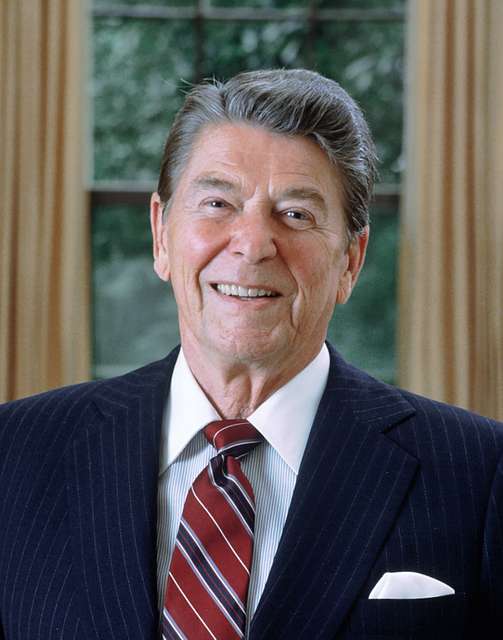
Alright, let’s cast our historical gaze back to 1980, a pivotal year that truly set the stage for a profound reshaping of American society. As the decade dawned, a new political philosophy began to solidify its grip on the nation, marked by significant shifts in economic policy and a deliberate re-imagining of national identity. This era, often termed the “Reagan Revolution,” did not merely tweak existing systems; it sought to dismantle and rebuild them, leaving an indelible mark on everything from financial regulation to public perception of protest and patriotism.
The Economic Re-engineering: Deregulation Takes Hold
The year 1980 saw critical legislative changes that fundamentally altered the landscape of American industry, particularly in transportation. Congress enacted the Motor Carrier Act of 1980, which effectively eliminated the power of the Teamsters union, and the Staggers Act, which removed a suite of rules governing railroads. These acts, alongside the earlier Airline Deregulation Act of 1978, were not isolated events but part of a broader, bipartisan push for deregulation that had gained momentum throughout the 1970s, fueled by anti-tax sentiments and a desire to reduce government oversight in the economy.
However, under the incoming Reagan administration, this push transformed into an “all-out pro-business crusade”. The consequences were swift and significant. For the trucking industry, deregulation shifted the work “from a middle-class profession into what one academic called ‘Sweatshops on Wheels’”. In the airline industry, it led to the gutting of routes to smaller cities and ushered in an era of regional inequality. More broadly, these policies significantly diminished the economic and political power of unions, setting a precedent that resonated throughout corporate America. One of the Reagan administration’s first acts, widely seen as a stark warning to labor, was the mass dismissal of striking air traffic controllers in 1981, a move that weakened the labor movement considerably.
The deregulatory fervor extended beyond transportation. The administration actively attacked the banking industry, allowing banks to offer higher interest rates on deposits and stripping away rules that had restricted savings and loan institutions (S&Ls) to their core business of home financing. This lax oversight, coupled with speculative practices, directly contributed to the catastrophic collapse of a large segment of the S&L system, resulting in a staggering cost to taxpayers, estimated at almost $370 billion by 1996. Critics noted that the administration seemed “ideologically blinded” and unable to distinguish between industries where private investors bore the risk and those where taxpayers ultimately footed the bill.
Environmental and workplace safety regulations also came under fire. Reagan appointed figures like Thorne Auchter to lead the Occupational Safety and Health Administration (OSHA), whose prior accomplishments included lobbying against the adoption of the Occupational Safety and Health Act in Florida. Under Auchter, workplace inspections, citations, and fines dramatically decreased. Similarly, Anne Gorsuch Burford, appointed to lead the Environmental Protection Agency (EPA), saw civil enforcement cases drop by over 75 percent in her first year. While some legislative attempts to abolish the EPA or drastically cut clean air standards failed due to public backlash and congressional opposition, the administration’s “do-nothing inertia” and “general disregard for oversight safeguards” left a ruinous regulatory legacy, incurring costs “into the trillions of dollars”.
Reshaping National Identity: Reagan and the “Noble Cause”
Economically, the country in 1980 was reeling from high inflation and unemployment, a situation Ronald Reagan masterfully leveraged in his presidential campaign. His famous question, “Are you better off now than you were four years ago?”, resonated deeply with a disillusioned public, allowing him to win a landslide victory and project an image of firm, warm leadership. This victory was not just about economic solutions; it was deeply intertwined with a project to restore a sense of American pride and patriotism, a direct response to the perceived “malaise” and divisions of the 1970s following the Vietnam War and Watergate.
Reagan himself was a key architect of this national re-imagining. He boldly declared the Vietnam War a “noble cause” and sought to “cleanse it of its most toxic associations,” presenting it not as a complex, divisive conflict, but as another chapter in a long tradition of heroic American military service alongside battles like Belleau Wood and Omaha Beach. This rhetoric was aimed at unifying the nation under a “single flag of patriotism and sacrifice,” effectively suggesting that there was “no need to question the righteousness or consequences of any specific war”. His inaugural address in 1981 was the first in which a president explicitly mentioned “Vietnam,” wrapping it in this new, sanitized narrative.
This redefinition extended to how anti-war protestors were portrayed. As governor of California, Reagan had infamously called campus activists “bums” who were “burning up the books” and even stated, “If it takes a bloodbath, let’s get it over with” to rid college campuses of dissent. In his presidential campaign, he and his supporters actively painted the protest movements of the 1960s, liberal politicians, and a “biased media” as having “badly weakened and unfairly attacked” the country and its military. This narrative was crucial to his “restoration project” and resonated with a segment of the public disillusioned with the previous era.
The “new nationalism” of the 1980s was not just political; it was deeply commercialized. Corporate leaders, like Chrysler CEO Lee Iacocca, became adept at “wrapping an American flag around ideas and symbols that had once inspired mass protest”. Reagan himself tried to appropriate the music of working-class champion Bruce Springsteen, describing his songs as containing a “message of hope” that aligned with American dreams. Springsteen, however, rejected this co-option, famously responding that he didn’t think Reagan’s favorite album “musta been” his raw, socially critical “Nebraska” album, and continuing to highlight the economic struggles of deindustrialization and poverty that Reagan’s policies exacerbated.
Reagan’s rhetoric also tapped into, and amplified, darker undercurrents of American society. His repeated use of the “welfare queen” anecdote, depicting an (unnamed, but implicitly Black) woman fraudulently collecting vast sums, became a “dominating motif” in political debates about social welfare programs. This narrative contributed to the stigmatization of the poor and, given its racialized undertones, deepened systemic oppression by painting welfare as rife with abuse, despite evidence to the contrary. The administration’s policies directly led to a dramatic increase in child poverty, with one-quarter of the nation’s children living below the poverty line by 1982, and its response to poverty was often limited to building more jails rather than addressing root causes. Furthermore, while Reagan had previously opposed discriminatory measures against LGBTQ+ individuals as governor, as president he called homosexuality a “tragic illness” and his administration largely ignored the burgeoning AIDS pandemic, which was frequently stigmatized as the “gay plague”.
The Unseen Resistance and Enduring Legacy
Despite the dominant narrative of conservative ascendancy, Ronald Reagan’s presidency faced significant, though often “unmentioned in the media,” opposition across the country. Thousands of local groups campaigned tirelessly for environmental protection, women’s rights, healthcare, and housing for the homeless. A powerful “nuclear freeze” movement gained widespread popular support, pushing for a halt to nuclear weapons production and influencing the administration to tone down its hawkish ambitions, despite Reagan’s initial mockery of the idea. Opposition to Reagan’s Central American policies, particularly support for the Contras, was also widespread, with public polls consistently showing majority disapproval, and significant congressional opposition. Activism against South African apartheid also compelled Congress to legislate economic sanctions over Reagan’s veto.
Reagan’s judicial appointments, aimed at filling federal courts with conservative judges committed to “traditional family values” and a strict construction of the Constitution, represent another lasting legacy. These appointments ultimately reshaped the Supreme Court, weakening precedents like Roe v. Wade and rolling back civil rights protections, a clear shift from the Warren Court era. His administration’s efforts to curtail the Voting Rights Act of 1965, by appealing to “states’ rights” in historically significant locations like Neshoba County, Mississippi, underscored a clear ideological battle over racial equality.
Ronald Reagan’s presidency, from 1980 onward, was a period of deliberate and dramatic change. While his proponents celebrate his role in economic recovery, rebuilding national pride, and contributing to the end of the Cold War, a multifaceted examination reveals a more complex truth. It was an era marked by the systematic re-engineering of the financial system, a reduction of government oversight that led to disastrous consequences, a rhetorical reframing of American history that sanitized conflict and demonized dissent, and policies that exacerbated social inequalities while often ignoring the plight of marginalized communities. The forces he unleashed, and those he resisted, continue to shape American politics and society today.