

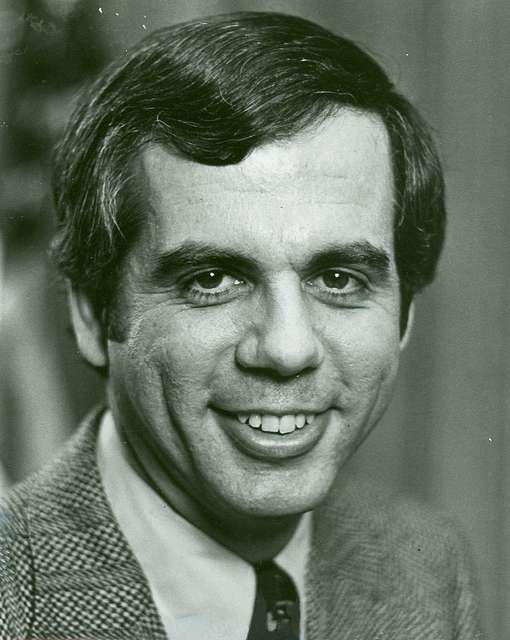
Indeed, to truly grasp the complex currents shaping American politics in the 1980s, we must turn our attention to seemingly specific, yet profoundly impactful, moments. Tony Coelho’s 1981 initiative to coordinate business Political Action Committees (PACs) to funnel money to Democratic candidates—is a pivotal one. It doesn’t just represent a shift in campaign finance; it embodies a deeper, more systemic transformation within the Democratic Party itself, reflecting the changing nature of power and influence in the “Age of Reagan.” This act speaks a truth about how economic forces began to redefine political allegiances and party ideologies.
By 1981, the Democratic Party was in a state of profound introspection, reeling from Ronald Reagan’s landslide victory in the 1980 presidential election. This defeat was widely perceived as a “psychological shock,” even worse than George McGovern’s substantial loss to Richard Nixon years earlier. The party had, by this point, largely “abandoned their New Deal alliances” with small businesses, family farmers, and unionized workers, consequently losing its traditional “ideological core”. There was a palpable need to “build something new”.
Into this vacuum stepped a “new generation of leaders,” often identified as “neoliberals” or “New Democrats”. Figures like Paul Tsongas, Bill Bradley, Gary Hart, Tim Wirth, and later, Bill Clinton, Bruce Babbitt, and Al Gore, emerged with a different vision for the party. Their language was intentionally vague, often shunning traditional populism and New Deal principles, aiming for a “bloodless revolution” within the party’s ranks. Walter Mondale’s 1984 presidential campaign, for instance, advocated for reducing the budget deficit and fostering cooperation between industry and government, presenting a distinctly “technocratic” approach that, tellingly, voters did not embrace, perceiving it as “technobabble”.
It is within this context of Democratic disarray and ideological redefinition that Tony Coelho’s actions become profoundly relevant. As head of the Democratic Congressional Campaign Committee (DCCC) in the 1980s, Coelho began coordinating business PACs, specifically directing their contributions to Democratic candidates who aligned with this “New Democrat mold”. This wasn’t merely about fundraising; it was about constructing a new “patronage machine”. Donors who contributed generously to initiatives like the “Speaker’s Club” effectively gained “trusted, informal advisors” status to top Democrats, which, though never explicitly stated, provided them with the ability to “influence policy”. This system effectively became a “pay-to-play system”, signifying a stark shift towards a transactional relationship between political power and financial contributions. Coelho himself was noted for “commencing a shakedown of corporate America”. This strategic alignment allowed Democrats to achieve a “rough parity with Republicans in contributions from corporate and Wall Street campaign coffers”.
However, this newfound financial equilibrium came at a cost, what one source aptly describes as a “Faustian bargain”. The Democratic Party’s increasing dependence on large corporations became strikingly evident when, in 1994, many congressional Democrats voted against President Bill Clinton’s healthcare plan because it was opposed by their corporate sponsors. This illustrates a critical point: while seemingly enhancing the party’s competitiveness, this reliance on corporate funding inadvertently constrained its policy choices, pulling it further from its traditional progressive roots.
The implications of Coelho’s strategy extend to a broader “corruption of the Democrats”. By the 1980s, the party had, in essence, “lost the ability even to think about the problem of concentrated economic power”. Consequently, they could not “understand what was happening” and were thus unable to effectively “oppose the process even if they wanted to”. This intellectual and ideological shift was deeply influenced by the ascendance of the “Chicago School” of economics, with figures like Aaron Director, Ronald Coase, Milton Friedman, Robert Bork, and Richard Posner, who had, by this time, “won the intellectual debate” on how to structure the political economy. Leading Democratic thinkers, rather than offering a distinct alternative, began to “sound exactly like leading Republican thinkers”. Even Stephen Breyer, later a Supreme Court justice but then an appeals judge appointed by President Carter, cited Chicago School figures and “public choice” theorists who championed deregulation in his own textbook.
This period saw power “recentralizing on Wall Street, in corporate monopolies”. As campaign costs escalated, politicians became increasingly dependent on money and major donors, inevitably elevating the influence of lobbyists. This led to a “gradual corruption” of politicians, where financial considerations began to shape legislative agendas. For example, the case of Congressman Fernand St. Germain, who, despite alleged corruption, was reelected on a “flood of business donations” because he criticized high interest rates, perfectly illustrates how “trivial but crowd-pleasing bills” could eclipse deeper issues of financial influence.
The consequences of this ideological and financial shift were profound. When the junk bond market crashed at the close of the 1980s, providing a potential “political cudgel” against Republicans and their free-market policies, the Democrats were largely unable to capitalize. Not only did they lack a coherent “ideological framework” to critique concentrated economic power, but many top Democrats were themselves “implicated” in the very financial systems that led to the crisis. The resignations of prominent figures like Tony Coelho himself (due to questions about personal finances involving a junk bond underwritten by a Milken protégé) and Speaker of the House Jim Wright (over gifts from corrupt savings and loan bankers) highlight this entanglement. Even in the 1988 presidential election, with figures like Michael Dukakis running, there was “scarcely a word” about the “smoldering S&L issue,” indicative of the party’s inability or unwillingness to address corporate power.
Coelho’s initiative, therefore, was not an isolated incident but a significant accelerant in the transformation of American politics. It solidified a new political economy where “buying access to the system” became explicit. This was part of a larger “Reagan Revolution” that involved an “assault on just about every part of the New Deal regulatory apparatus”. The collapse of “coherent intellectual opposition” meant that Reagan could implement his supply-side economics with “only minor resistance from the opposition”. This blurring of economic policy lines, driven by the new imperatives of campaign finance, contributed to what became known as the “new politics of compromise” in the 1990s, where Democratic policies increasingly mirrored those that would “warm the hearts of conservatives than liberals”.
In essence, Tony Coelho’s coordination of business PACs in 1981 was a foundational moment that helped recast the Democratic Party’s relationship with corporate power, irrevocably altering its ideological leanings and strategic approach. It was a truth made manifest that, in the evolving landscape of American politics, financial influence was not just a tool for specific policies, but a force capable of redefining the very identity and purpose of a major political party.