
When we speak of the Iran-Contra Affair, we are not recounting some minor bureaucratic oversight, but rather laying bare a massive abuse of covert action that shook the foundations of trust in American governance and demonstrated a willingness to circumvent the law for desired foreign policy objectives. This was a deeply complex saga, unfolding in the mid-1980s, primarily driven by the Reagan administration’s determination to achieve two seemingly disparate goals: securing the release of American hostages held in Lebanon and funding anti-communist guerrillas in Nicaragua, known as the Contras.
The motivation behind the Iran-Contra operation was rooted in the Reagan administration’s intense concern over American hostages being taken by Hezbollah in Lebanon, with some periodically killed. President Reagan also held a strong, personal commitment to supporting the Contras in Nicaragua, despite a bill he had signed into law making it illegal to ship military aid to them. This congressional ban, known as the Boland Amendment, was a direct response to public opinion and the lingering memory of Vietnam, both of which opposed military involvement in Nicaragua.
To bypass these legal and political constraints, key figures within the administration devised a clandestine operation. Robert McFarlane, then National Security Adviser, and his deputy, Admiral John Poindexter, believed that negotiating quietly with Iran – a country then considered an enemy – for the exchange of hostages for modest quantities of arms could improve the U.S. position in the Middle East. Secretary of State George Shultz and Secretary of Defense Caspar Weinberger explicitly opposed this approach.
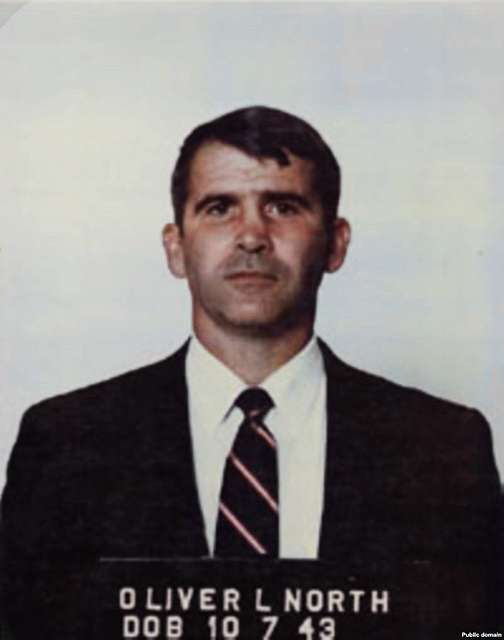
However, Marine Lieutenant Colonel Oliver North, a staffer for McFarlane and Poindexter, developed the audacious scheme that became the core of the scandal. His plan involved trading U.S. arms for hostages and, crucially, diverting the proceeds from these sales to the Contras, thereby sidestepping the U.S. law that prohibited direct aid. This “neat idea,” as North later described it, was designed to keep the Contras “body and soul together” despite congressional opposition. Director of Central Intelligence William Casey may have encouraged this plan, and McFarlane, captivated by the idea of a significant diplomatic achievement, was drawn into the initiative, even envisioning it as momentous as Nixon’s opening to China.
The mechanics of the operation involved multiple layers of deception and illicit activity. Months before the second Boland Amendment was passed in October 1984, President Reagan secretly pressed his aides to find alternative ways to finance the Contras. Reagan endorsed CIA Director William Casey’s argument that the National Security Council (NSC), not being an intelligence agency, could lawfully aid the Contras without congressional disclosure – a rationale that notably ignored the NSC’s statutory functions of policy review and coordination. Funds were solicited from “friendly” governments like Saudi Arabia, which became the largest donor, providing at least $32 million. Additional millions were pledged by South Africa, Israel, Taiwan, and Brunei, deposited into Swiss bank accounts. The Contras also resorted to cocaine trafficking as a “much more lucrative and consistent” source of funding, with the knowledge and support of the CIA and State Department.
The arms-for-hostages component began in February 1984. Following an unsuccessful attempt to involve Israel, McFarlane revised his plans to ask friendly governments to secretly fund the Contras. The first shipment of ninety-six TOW anti-tank missiles from Israel to Iran occurred on August 20, 1985, with the understanding that the U.S. would replenish Israel’s arsenal. However, no hostages were freed initially, and Iran demanded more missiles. The deal continued with Reagan’s clear approval, leading to the release of Reverend Benjamin Weir in exchange for more missiles. Reagan himself signed additional findings in January 1986 approving direct U.S. arms sales to Iran, without informing Shultz or Weinberger.
The scandal began to unravel in late 1986. A story in a Beirut magazine alleged that the U.S. had sold weapons to Iran in return for hostage releases, with profits diverted to the Contras. When confronted, President Reagan made several false statements, denying arms-for-hostages trades and downplaying the scale of weapon shipments. He claimed the purpose was to promote dialogue with Iranian moderates, while the real aim was a double one: to free hostages and aid the Contras. The lies multiplied when a transport plane carrying arms to the Contras was shot down by Nicaraguan gunfire, and the American pilot was captured. Assistant Secretary of State Elliot Abrams and Secretary of State Shultz publicly denied any U.S. government connection.
By November 1986, the exposure was undeniable. Reagan issued a false statement on November 6 that the initial article had “no foundation”. On November 13, in a televised speech, he admitted the transactions but maintained they were for aiding Iranian moderates, not trading arms for hostages, a claim he continued to assert privately. On November 25, Reagan, in a widely criticized performance, announced that Poindexter had resigned and North had been removed from the NSC staff, and that a special White House review board would investigate. This public announcement was the first time the diversion of funds to the Contras was revealed.
The immediate aftermath saw intense public scrutiny. Congressional investigations and televised hearings commenced in the spring and summer of 1987, seeking to uncover the full extent of the administration’s misdeeds. However, the investigation was severely hampered by the destruction of documents by North, Poindexter, and Secord. Director Casey suffered a debilitating stroke and died of brain cancer, preventing his testimony. Robert McFarlane attempted suicide by swallowing Valium pills, further muddying the waters and eliciting public empathy.
The investigations resulted in the indictment of fourteen leading participants, with eleven convicted, including Oliver North and John Poindexter, some for major felonies like destroying evidence, obstructing Congress, and accepting illegal gifts. However, North’s and Poindexter’s convictions were later overturned on appeal due to the use of immunized congressional testimony. President George H.W. Bush later pardoned six individuals convicted in the scandal, including Abrams and Weinberger.
Reagan himself largely escaped direct legal repercussions. He consistently denied knowledge of the diversion of funds to the Contras, and the focus on this specific detail ironically helped him, as no “smoking gun” directly implicating him in the diversion was found. While he accepted the conclusions of the Tower Commission, which criticized his “lax ‘management style'” rather than his deliberate political decisions, he continued to maintain the illusion that the arms sales were for strategic opening, not for hostages. He even went on record praising North as “a national hero”.
The Iran-Contra Affair left an indelible mark on American political life. It showcased a powerful executive branch willing to defy Congress and mislead the public, pushing the boundaries of executive power. It also highlighted how a popular president could largely escape accountability for significant governmental wrongdoing. The affair deepened public skepticism about government secrecy and raised profound, unresolved constitutional questions regarding Congress’s authority to oversee the executive branch. It remains a potent example of the dangers inherent when the pursuit of foreign policy goals is untethered from legal and democratic oversight.