
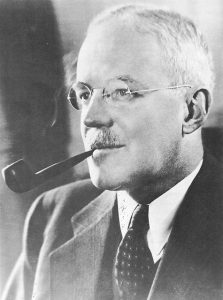
On April 13, 1953, CIA Director Allen Dulles formally authorized Operation MK-ULTRA. The program was the brainchild of Richard Helms, a high-ranking member of the CIA’s Clandestine Services, who championed such methods throughout his career. Dulles appointed Dr. Sidney Gottlieb, a biochemist and chief of the newly formed Chemical Division of the Technical Services Staff (TSS), to manage the secret program. The core purpose of MK-ULTRA was to investigate whether and how it was possible to predictably manipulate and modify human behavior through covert means. Driven by intense Cold War anxieties and the terrifying belief that Communist regimes had successfully developed “brainwashing” or “brain warfare” techniques, the CIA embarked on history’s most systematic search for mind control. Under the program’s charter, scientists sought to develop chemical and biological materials capable of being deployed in clandestine operations to exert complete control over the human mind.
To achieve this, Gottlieb organized MK-ULTRA into a vast network of numbered “subprojects” that relied on the cheap availability of helpless human subjects. The CIA systematically targeted unsuspecting U.S. citizens, prisoners, mental patients, and university students. To test the effects of drugs on ordinary people in real-life settings, the CIA established secret “safe houses” inside the United States, starting with an apartment at 81 Bedford Street in Greenwich Village. Run by George Hunter White, a narcotics detective operating under the alias Morgan Hall, this safehouse lured unsuspecting citizens back to be secretly dosed with LSD while agents recorded their reactions through two-way mirrors. In 1955, the operation expanded to San Francisco under the code name Operation Midnight Climax, where hired prostitutes slipped LSD to unwitting clients in a CIA-financed bordello while White observed their behavior through a one-way mirror.
For more intensive clinical testing, the CIA outsourced research to penal and psychiatric institutions. At the Addiction Research Center in Lexington, Kentucky, Dr. Harris Isbell administered LSD and other experimental hallucinogens to captive African American inmates, paying them in high-grade heroin and keeping some high for over seventy consecutive days. Similarly, Dr. Carl Pfeiffer of Emory University ran subprojects at the Atlanta Federal Penitentiary, administering massive, daily doses of LSD to prisoners, including future mob boss James “Whitey” Bulger, who suffered years of severe psychiatric disturbances as a result. Mental patients were also subjected to horrific abuses. Dr. Ewen Cameron at McGill University’s Allan Memorial Institute in Montreal tested “sleep therapy,” massive electroshock “depatterning,” and “psychic driving” to systematically erase patients’ memories and attempt to reprogram their minds. Meanwhile, Dr. Paul Hoch at the New York State Psychiatric Institute administered mescaline and LSD to psychiatric patients, including professional tennis player Harold Blauer, who died from an experimental injection in 1953. Hoch went so far as to administer LSD to patients and then lobotomized them to compare the drug’s effects.
University students were another major pool of unwitting or willing subjects, drawing in prestigious academic institutions like Harvard, Berkeley, MIT, Stanford, and Tulane. Using dummy foundations like the Geschickter Fund for Medical Research and the Society for the Investigation of Human Ecology, the CIA funneled grants to researchers who distributed vials of clear, tasteless liquid to student volunteers. Through these clinical trials, students like Ken Kesey, Robert Hunter, and the poet Allen Ginsberg had their first encounters with LSD. The CIA closely monitored these academic circles, using the Food and Drug Administration (FDA) to keep an eye on independent researchers while exempting national security experiments from legal oversight.
Despite their intense infatuation with LSD, which Gottlieb and his platoon initially believed was the “secret that was going to unlock the universe,” the spies ultimately faced absolute failure. Systematic field testing proved that LSD was too unpredictable and volatile to be an effective clandestine weapon. Instead of acting as a reliable “truth serum,” it frequently induced overwhelming anxiety, paranoid breakdowns, and loss of reality contact in subjects. By the early 1960s, Gottlieb and his fellow MK-ULTRA officers were forced to accept the scientific reality that mind control was a psychological impossibility. While they had successfully perfected the ability to destroy a human mind, they had found no way to rebuild a new personality in the resulting void.
The extreme secrecy of MK-ULTRA was fiercely guarded, even past its termination. The program’s human toll had already produced a major crisis in November 1953, when civilian biochemist Frank Olson was unwittingly dosed with LSD at a Deep Creek Lake retreat. Olson fell into a deep, psychotic depression and, under the close custody of CIA escort Robert Lashbrook, fell to his death from a thirteenth-floor window of the Statler Hotel in New York. The CIA quickly orchestrated an efficient cover-up that successfully hid the truth of Olson’s drugging for over twenty years. Shortly before his retirement in January 1973, Gottlieb met with DCI Richard Helms and agreed to let the program “die with us,” ordering the systematic shredding of all MK-ULTRA files to prevent future public exposure or prosecution. Despite this destruction of evidence, the program was ultimately exposed in the mid-1970s by the Rockefeller Commission and the Senate’s Church Committee, which forced a retired Gottlieb to testify under immunity and finally brought the horrific realities of the CIA’s mind-bending crusade to light.