

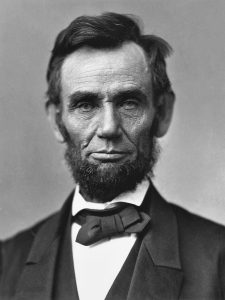
In the winter of 1854, the political landscape of Illinois was fundamentally disrupted by the passage of the Kansas-Nebraska Act, prompting Abraham Lincoln to launch a vigorous bid for the United States Senate. However, as Lincoln sought to unite the anti-Nebraska coalition, he ran headfirst into deep-seated skepticism from the radical abolitionists of northern Illinois, particularly within the Chicago Anti-Slavery Committee. These militants viewed Lincoln not as an anti-slavery vanguard, but as a cautious, moderate “Compromise Whig” who was overly attached to a dying political party. To determine whether Lincoln could truly be trusted to champion their cause, prominent abolitionist editor Zebina Eastman and his associates initiated an informal, internal background check. This quiet inquiry sought to look past Lincoln’s public, calculated political reticence and uncover his true “feelings and scruples” regarding colored people and the institution of slavery.
The abolitionists’ distrust of Lincoln was deeply rooted in his recent political maneuvers and public silence. In his newspaper, The Free West, Zebina Eastman openly declared that the anti-Nebraska movement was no Whig triumph and refused to advise anti-slavery men to support moderate candidates of Lincoln’s stamp. Eastman pointed out that Lincoln dared not publicly oppose the Fugitive Slave Law and refused to pledge himself against the admission of future slave states. This discontent was further Rent by developments in December 1854 when a pro-Nebraska Democrat won a legislative vacancy in Sangamon County to replace Lincoln after his resignation—a defeat that northern Radicals interpreted as a direct result of Lincoln’s poor local management and a “seal to their discontent”. Cut off from the vital northern metropolis, Lincoln grew increasingly anxious as his Chicago associates stopped responding to his letters, leaving him in a dangerous informational vacuum.
To bridge this divide, Lincoln’s legislative ally, Congressman Elihu B. Washburne, extensively lobbied Eastman, urging him to show a liberal and flexible spirit. Washburne insisted that Lincoln was “with us in sentiment,” possessed spotless integrity, and would carry out their anti-slavery views in the Senate. Unsatisfied with third-party political assurances, Eastman bypassed Lincoln’s direct circle and sought a more reliable, ideological guarantee. He turned to Lincoln’s law partner, William H. Herndon, who was widely recognized across northern Illinois as an uncompromising, radical abolitionist. Because of Herndon’s long-standing radical credentials, the anti-slavery men of Chicago trusted him implicitly and looked to him as a direct window into Lincoln’s private conscience.
Between December 1854 and January 1855, the Chicago Anti-Slavery Committee dispatched a delegation to Springfield to conduct a thorough, personal inquiry. Meeting with Herndon, the committee bluntly demanded to know: “Can Mr. Lincoln be trusted?”. Recognizing that his partner’s political future hung in the balance, Herndon delivered an emphatic, solemn guarantee: “I pledge you my personal honor that at the proper time he shall be with us”. Seeking to verify these claims himself, Eastman traveled to Springfield during this period to learn “nearer than public report, and public life” exactly what Lincoln’s private feelings and scruples were in regard to colored people. Eastman wanted to ascertain if Lincoln was a genuine friend to the black race, calculating that if his personal feelings were sincere, he could ultimately be trusted as a politician.
Herndon’s passionate mediation successfully satisfied Eastman and dismantled the committee’s resistance. By leveraging his own reputation as an uncompromising reformer, Herndon served as a crucial bridge of trust, assuring the Chicago abolitionists that Lincoln’s cautious public moderation was a tactical political necessity rather than a moral failing. Although Lincoln would ultimately lose the 1855 Senate election by sacrificing his own votes to secure the victory of Lyman Trumbull, the internal background check and subsequent reconciliation with Chicago’s radical core established a vital precedent. This quiet alignment of moderate Whigs and radical Free Soilers laid the indispensable structural and moral foundation for the birth of the Illinois Republican Party, proving that Lincoln’s “slow but sure” path toward emancipation could eventually unite the disparate factions of the north.