

Following the unconditional surrender of the Third Reich, the geopolitical landscape of the postwar era experienced a rapid and dramatic transformation. For a core of American military and intelligence planners, the end of World War II merely marked the beginning of a new, existential struggle against monolithic Communism. In this hyper-sensitized environment of emerging Cold War anxieties, the United States government authorized a clandestine program designed to harness the intellectual and technological capital of fallen Germany: Operation Paperclip.
The Bureaucracy of “Bleaching”
Operation Paperclip was formally set in motion by President Harry S. Truman on September 3, 1946. Truman’s secret executive order authorized the issuance of up to one thousand visas for German and Austrian scientists, but it carried a strict, explicit prohibition: the program was forbidden from cooperating with anyone who had been an active member of the Nazi Party or more than a nominal participant in its militarism. However, the Joint Intelligence Objectives Agency (JIOA)—the military agency tasked with executing the recruitment—recognized that the most valuable scientists were often those deeply embedded in the Nazi military machine. Consequently, the JIOA systematically cast Truman’s moral restrictions aside.
To bypass the legal and ethical barriers to entry, JIOA officers implemented a highly organized program of biographical falsification, commonly referred to as “bleaching”. Whenever a desired scientist possessed an incriminating record, JIOA staff systematically expunged evidence of their SS membership, collaboration with the Gestapo, abuse of slave laborers, or participation in human experimentation. Ardent Nazis were re-categorized as “nominal,” and fabricated references to exemplary family lives were added to their dossiers.
This systematic bleaching was met with intense domestic resistance. State Department diplomats, consular officers, the Federal Bureau of Investigation (FBI), and the American Federation of Scientists actively objected to the program and threatened to block visas for compromised applicants. This friction infuriated the head of Operation Paperclip, Captain Bosquet Wev, a pugnacious former submarine commander. In a series of vituperative memos to Washington, Wev accused his opponents of “beating a dead Nazi horse” over “picayune details” like SS membership, warning that if the United States did not secure these minds, they would inevitably be recruited by the Soviet Union. As Cold War fears intensified, the objections of moralizing diplomats were pushed aside, and the JIOA successfully imported more than seven hundred scientists, engineers, and technicians. While the primary initial objective was the recruitment of rocket scientists to secure an advantage in missile technology, the program quickly expanded to satisfy the appetites of the newly upgraded U.S. Army Chemical Corps.
The Infiltration of Fort Detrick
The Chemical Corps watched the successful importation of rocket scientists with envy and proposed utilizing Operation Paperclip to secure Nazi physicians, chemists, and biologists who had conducted chemical and biological warfare research. Planners at Camp Detrick (later renamed Fort Detrick)—the highly classified Maryland nerve center of the U.S. biological weapons program—were eager to obtain the unique data gathered from human experiments in Nazi concentration camps. Less than a year after the war ended, three German scientists who had worked on chemical and biological projects arrived at Detrick. All had been Nazi Party members, and they immediately began lecturing American military researchers on the properties of sarin gas, utilizing highly classified records from their wartime experiments which documented how quickly human subjects died upon inhalation.
The scientific director of Camp Detrick, Ira Baldwin, and his team of researchers were particularly thrilled by the capture of Dr. Kurt Blome, the deputy health minister of the Reich and the director of Nazi biological warfare research. Operating under the camouflage of “cancer research” at his high-security complex in Posen, Blome had tested pathogens and viruses on human subjects. He had developed aerosol delivery systems for nerve gas tested on prisoners at Auschwitz, bred infected mosquitoes and lice tested at Dachau and Buchenwald, and produced gas used in the systematic killing of thirty-five thousand tuberculosis patients in occupied Poland.
Blome was arrested by the Counterintelligence Corps in Munich on May 14, 1945, and sent to Kransberg Castle. Rather than prosecuting Blome, American military scientists viewed his human data as a priceless strategic asset. Although Blome’s highly visible record made it impossible to prevent his indictment at the landmark Nuremberg “Doctors’ Trial” in late 1946, Detrick’s intense desire to protect the bio-warfare chief was quietly communicated to the U.S. military officers overseeing the trial. Consequently, despite his complicity in massive atrocities, Blome was acquitted of war crimes on August 27, 1947.
Immediately following his acquittal, Blome was interrogated by a team of Camp Detrick scientists, to whom he offered to “revolutionize” the American biological program in exchange for passage to the United States. However, Blome’s proposed “accelerated Paperclip contract” was ultimately blocked by the chief of U.S. Army intelligence in Berlin, Colonel Garrison Cloverdale, and High Commissioner Lucius Clay. They feared that importing Blome would trigger a catastrophic public scandal, especially in the wake of a parallel controversy involving Dr. Walter Schreiber (the former surgeon general of the Nazi army), whose Paperclip visa was canceled after columnist Drew Pearson exposed his complicity in medical atrocities.
The Intelligence Pivot and Camp King
While the visa block prevented Blome from traveling to Fort Detrick, it did not end his service to the United States. Furious CIA and military officers bypasses the State Department restrictions by hiring Blome directly in occupied Germany. He was appointed as the staff doctor at Camp King, a secure U.S. military facility north of Frankfurt. At Camp King, Blome resumed his wartime research under American patronage, testing “the use of drugs and chemicals in unconventional interrogations”.
At Camp King and its adjacent CIA-operated “black site” at Villa Schuster, Blome worked alongside other recruited German researchers. The facility served as a laboratory for Operation Artichoke (the predecessor to MK-ULTRA), where “expendable” Soviet prisoners, double agents, and refugees were subjected to extreme, coercive interrogations. Under a research protocol specifying that “disposal of the body is not a problem,” these human guinea pigs were injected with dangerous combinations of stimulants and depressants—including Benzedrine, sodium amytal, Pentothal, and mescaline—paired with electroshock and sensory deprivation.
To guide these brutal mind-manipulation experiments, the CIA relied heavily on the expertise of recruited Nazi doctors. Dr. Walter Schreiber (“Doc Fisher”) served as Camp King’s staff doctor, lecturing visiting American teams on his concentration camp findings before his visa scandal forced his quiet retirement to Argentina. Similarly, the chief of anesthesiology at Massachusetts General Hospital, Dr. Henry Knowles Beecher, traveled to Camp King on a CIA contract. Despite his public defense of the Nuremberg Code’s voluntary consent standards, Beecher drew heavily on the mescaline experiments conducted by Nazi doctors at Dachau, conducting high-dose LSD trials on unwitting subjects to formulate a reliable chemical “truth serum”.
The Far East Parallel: General Shiro Ishii and Unit 731
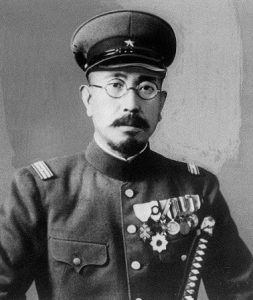
While Operation Paperclip systematically salvaged the scientific elite of the Third Reich, a parallel and even more extreme bargain was struck by American military scientists in the Far East. Following Japan’s surrender, Camp Detrick researchers pressed the Counterintelligence Corps to locate General Shiro Ishii, the army surgeon who directed Unit 731 in occupied Manchuria. Under Ishii’s direction, Unit 731 had treated thousands of Chinese, Korean, Mongolian, and Allied prisoners as “logs,” subjecting them to horrific vivisections, high-pressure chambers, extreme freezing, and experimental biological bombings.
American investigators quickly realized the value of Ishii’s data, noting that his human susceptibility studies could never have been replicated in U.S. laboratories due to “scruples attached to human experimentation”. Under the direct authorization of General Douglas MacArthur, the Supreme Command of Allied Powers secretly decreed that “the value to the US of Japanese biological weapons data… far outweighs the value accruing from war-crimes prosecution”.
In exchange for absolute immunity, Ishii and his subordinates turned over boxes of research documents and fifteen thousand microscope slides containing human organ tissues harvested at the precise moment of death. Although political and cultural barriers prevented Ishii and his team from being brought to the United States under Paperclip-style contracts, they were quietly installed in laboratories across East Asia. Under U.S. military protection, these Japanese scientists conducted human experiments that could not legally be performed on American soil.
Conclusion: The Lineage of Coercive Interrogation
The legacy of Operation Paperclip and the parallel Japanese immunity agreements permanently stained the ethical foundations of American science and intelligence. The unique, horrific findings surrendered by Kurt Blome and Shiro Ishii were successfully integrated into the domestic behavioral research of the CIA and the military. This joint CIA-military research, funded under the umbrella of Project MK-ULTRA by Sidney Gottlieb, systematically tested these chemical, biological, and psychological weapons on prison inmates, mental patients, and unwitting American citizens.
Ultimately, the torture techniques developed through Operation Paperclip, Bluebird, and MK-ULTRA were codified in the CIA’s 1963 KUBARK Counter-Intelligence Interrogation manual. This document served as the blueprint for military and intelligence operations throughout the late twentieth century, establishing a direct, unbroken lineage of “extreme interrogation” stretching from the concentration camps of Dachau and the vivisection tables of Unit 731 to modern CIA “black sites” around the globe.