

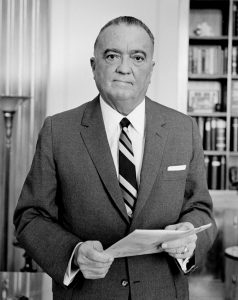
Between 1956 and 1971, the Federal Bureau of Investigation, under the long-standing leadership of Director J. Edgar Hoover, executed a massive, clandestine counterintelligence program known as COINTELPRO. While the FBI’s public image was carefully cultivated as a premier law enforcement agency, its secret operations in the domestic arena functioned as a sophisticated, illegal vigilante campaign. COINTELPRO was designed to harass, disrupt, and break up domestic dissident groups, with a particular, aggressive focus on Black freedom and civil rights organizations. The program operated under the unstated premise that any popular activism challenging the nation’s racial, social, or economic inequities constituted a dangerous threat to national security. In the pursuit of maintaining the existing social and political order, the Bureau routinely subverted the First Amendment rights of American citizens, deploying military-grade counterintelligence tactics against those seeking racial justice.
The ideological framework of COINTELPRO was deeply rooted in the anti-communist paranoia of the Cold War era. Under J. Edgar Hoover, the FBI scoured the nation for “subversive” elements, equating demands for racial equality and integration with communist agitation. To conceal these problematic political objectives under the guise of virtuous ideals, the Bureau used the rhetoric of “law and order” to mask its domestic programs. However, as congressional and media investigations later revealed, the actual target of COINTELPRO was the ideas themselves. The program was structured on the theory that preventing the propagation of dangerous ideas and the growth of challenging groups was a legitimate duty of federal law enforcement. Consequently, anyone who spoke out forcefully against the established racial hierarchy became a prime target for state-sanctioned neutralization.
This secret war focused heavily on the most prominent and inspiring leaders of the Black freedom struggle. Reverend Martin Luther King, Jr., whose message of nonviolent direct action had won widespread sympathy, was a primary target of Hoover’s personal animosity. The FBI subjected King to relentless, unlawful wiretaps, physical surveillance, and aggressive attempts to publicly discredit his character. Alongside King, the FBI systematically targeted other towering figures of the movement, including Malcolm X and Stokely Carmichael. These civil rights leaders were subjected to a barrage of hostile tactics adopted from military counterintelligence—actions that a Senate investigation in 1976 concluded “would be intolerable in a democratic society even if all of the targets had been involved in violent activity”.
To accomplish its goals, the FBI relied on a vast, sub rosa network of paid informants, infiltrators, and provocateurs. Rather than merely gathering intelligence, these assets were directed to actively subvert organizations from within. In the case of the Black Panther Party, which had risen to prominence in the late 1960s with its combination of armed self-defense, free medical clinics, and community breakfast programs, the FBI utilized extreme subterfuge to tear the party apart. Undercover operatives routinely drafted “poison pen” letters to sow deep distrust among party leadership. For instance, the historic, devastating split between Huey Newton and Eldridge Cleaver was actively fomented and accelerated through deliberate FBI manipulation and manufactured letters. Informants also worked to push activists toward extreme positions, discrediting the broader anti-war and civil rights coalitions in the eyes of mainstream America.
The most tragic and violent manifestation of this state-sanctioned campaign occurred on December 4, 1969, in Chicago, Illinois. A squad of Chicago police officers, armed with shotguns and a submachine gun, launched a pre-dawn raid on an apartment housing members of the Black Panther Party. The police fired dozens of rounds into the apartment, killing twenty-one-year-old Chicago Panther leader Fred Hampton as he lay asleep in his bed, along with fellow Panther Mark Clark. It was later uncovered during court proceedings that the FBI had actively participated in planning the lethal raid. The Bureau had placed an informant within the Chicago Panthers who successfully obtained and delivered a detailed floor plan of the apartment directly to the police, specifically marking the bed where Hampton slept. Subsequent investigations concluded that the FBI had effectively conspired with local police to commit what amounted to a politically motivated assassination.
Over its fifteen-year duration, COINTELPRO authorized at least 295 distinct actions specifically designed to disrupt and destroy Black freedom groups. The secret program was finally brought to an end in 1971, and its terrifying scope was exposed to the public in the mid-1970s through the landmark congressional investigations of the Church and Pike Committees. The revelation that the federal government had systematically spied on, harassed, and conspired to murder its own citizens shocked the American public, causing favorable ratings of the FBI to plummet from 84 percent down to 37 percent, leading to the dissolution of the Domestic Intelligence Division. For the modern reader, COINTELPRO serves as a vital, sobering historical lesson on the dangers of unconstrained executive power and domestic surveillance. It proves that when law enforcement agencies are permitted to operate in total secrecy without democratic oversight, they will inevitably twist the ideals of justice to serve the preservation of power, turning the machinery of the state against the very citizens they are sworn to protect.