

In the mid-1980s, the administration of President Ronald Reagan faced a complex convergence of foreign policy challenges that would ultimately culminate in the gravest political scandal of his tenure. In Central America, the Marxist Sandinista government of Nicaragua, which had overthrown the U.S.-backed dictator Anastasio Somoza in 1979, was viewed by administration hardliners as a dangerous communist foothold in the Western Hemisphere. Reagan fervently championed the anti-Sandinista counterrevolutionary guerrillas, known as the Contras, labeling them “freedom fighters” and describing them as the “moral equivalent of our founding fathers”. Concurrently, the administration was deeply consumed by a hostage crisis in Lebanon, where Hezbollah, an extremist Islamic group backed by Iran, was systematically kidnapping and periodically killing American citizens, including a CIA station chief. Driven by an intense emotional focus on the plight of the hostages, Reagan instructed his national security staff to find any viable pathway to secure their release.
The path toward covert action was forged when Congress, alarmed by mounting reports of systemic Contra human rights abuses and fearful of entering another foreign military quagmire, intervened by passing the Boland Amendment. This legislation explicitly prohibited the Central Intelligence Agency, the Department of Defense, or any other government intelligence entity from spending federal funds to support military or paramilitary operations in Nicaragua. Rather than abiding by this legislative constraint, President Reagan privately ordered National Security Adviser Robert McFarlane to find alternative methods to keep the Contras together “body and soul”. This directive prompted a highly secretive campaign to secure third-party funding for the Contra resupply effort. Under this arrangement, administration officials successfully solicited millions of dollars from foreign allies, including over thirty-two million dollars from the government of Saudi Arabia, alongside contributions from Taiwan and Brunei. Concurrently, Oliver North and Admiral John Poindexter formulated an expansive legal rationale, arguing that the restrictive terms of the Boland Amendment did not apply directly to the National Security Council because the NSC was not technically defined as an intelligence agency.
This shadow infrastructure laid the groundwork for a highly controversial diplomatic gambit: the trade of American military hardware for hostages. Robert McFarlane and his deputy and eventual successor, Admiral John Poindexter, conceived a plan to quietly negotiate with the hostile government of Iran to exchange much-needed military parts and anti-tank missiles for the release of the American captives in Beirut. This proposed transaction directly contradicted the administration’s public commitment to Operation Staunch—a global diplomatic initiative to enforce an arms embargo against Iran—as well as Reagan’s frequently stated vow never to negotiate with or make concessions to terrorists. During a pivotal Oval Office meeting on Tuesday, January 7, 1986, Secretary of State George Shultz and Secretary of Defense Caspar Weinberger argued fiercely and passionately against the arms sales, warning that the transaction was highly misguided, possibly illegal under the Arms Export Control Act, and amounted to paying ransom. However, Director of Central Intelligence William Casey, Attorney General Edwin Meese, and Vice President George H.W. Bush supported the initiative, and Reagan ultimately authorized the shipments to proceed. Shultz and Weinberger were subsequently shut out from future deliberations on the matter.
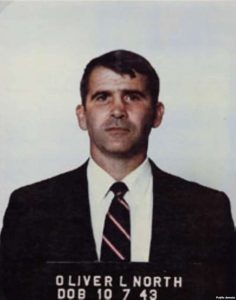
To execute the secret transfers, Marine Lieutenant Colonel Oliver North, an energetic and highly motivated NSC staffer, assumed operational control, utilizing Israel as a willing intermediary to deliver the weapons. Despite these covert efforts, the arms-for-hostages deal proved to be a strategic failure, as the delivery of over two thousand TOW missiles and dozens of Hawk anti-aircraft missiles succeeded in ransoming only a handful of hostages, while new captives were promptly taken by Hezbollah to maintain their leverage. The operation was dramatically transformed when North devised what he famously termed a “neat idea” to link the Middle Eastern arms sales with the Central American conflict. Working with retired Air Force Major General Richard Secord and Albert Hakim, North established a private, off-the-books network of dummy corporations and Swiss bank accounts known as “the Enterprise”. The Enterprise sold the American missiles to Iran at highly inflated prices, pocketing millions of dollars in residual profits. These illicit funds were then secretly diverted to purchase weapons and supplies for the Contras in direct and conscious defiance of the congressional Boland Amendment.
The entire clandestine network collapsed into public view in the autumn of 1986. On October 5, 1986, Nicaraguan Sandinista forces shot down a C-123 cargo transport plane belonging to the Enterprise, capturing the lone surviving crew member, Eugene Hasenfus, who quickly confessed that he was part of a CIA-directed logistics operation. This exposure was rapidly followed on November 3 by a report in the Lebanese magazine Al-Shiraa, which revealed McFarlane’s secret diplomatic journey to Tehran. Faced with public exposure, the White House scrambled to implement damage control, prompting President Reagan to deliver a televised address in which he falsely denied trading weapons for hostages or condoning third-party arms shipments. Attorney General Edwin Meese initiated an informal internal inquiry to get the story straight, directing his aides John Richardson and Bradford Reynolds to review NSC records. In Oliver North’s files, investigators discovered a highly sensitive April 1986 memorandum detailing the illegal diversion of twelve million dollars in residual arms profits to the Contras. Realizing that they had uncovered an impeachable “smoking gun,” Meese’s team notified the White House, prompting John Poindexter to resign and Oliver North to be dismissed.
Before investigators could secure the White House offices, Oliver North and his secretary Fawn Hall engaged in a frantic “shredding party,” destroying or altering over five thousand pages of classified documents, while Poindexter destroyed signed presidential findings that retroactively approved the initial arms sales. The exposure of the scandal triggered exhaustive investigations by the Tower Commission, joint congressional committees, and Independent Counsel Lawrence Walsh. Although the final congressional report concluded that the ultimate responsibility for the illegal policies rested squarely with President Reagan, investigators found no written record proving that the president had personal knowledge of the actual diversion of funds to the Contras. John Poindexter testified that he had intentionally withheld this specific information from the president to preserve his “plausible deniability”. Concurrently, Vice President George H.W. Bush repeatedly insisted that he had been entirely “out of the loop” regarding the scandal, a claim later contradicted by his own diaries and minutes showing his active presence at the crucial meetings where the arms sales were debated and approved.
The legacy of the Iran-Contra Affair left a profound and lasting scar on the American constitutional fabric. Independent Counsel Lawrence Walsh successfully secured fourteen indictments and eleven convictions against key administration figures, including Oliver North, John Poindexter, and Robert McFarlane, for charges of lying to Congress and destroying evidence. However, the convictions of North and Poindexter were ultimately overturned on appeal due to their immunized congressional testimony, and in December 1992, outgoing President George H.W. Bush issued sweeping presidential pardons to Caspar Weinberger, McFarlane, Elliott Abrams, and others, effectively closing the legal chapters of the scandal. Rather than achieving its strategic goals, the operation succeeded only in strengthening the fundamentalist Iranian regime, prolonging the bloody conflicts in Central America, and exposing the alarming ease with which an unconstrained executive could establish a shadow government free from congressional oversight. For the modern reader, the Iran-Contra Affair remains a stark and enduring warning of the dangers of institutional secrecy, illustrating the fragile vulnerability of the constitutional rule of law when it is subordinated to the demands of partisan ideological zealotry.