

The battle for federal patronage during the transition to President Zachary Taylor’s administration in 1849 ignited one of the most contentious, backroom political struggles of the antebellum era. At the center of this storm was the commissionership of the General Land Office, a highly coveted bureau within the newly created Department of the Interior that offered a handsome salary of $3,000 a year. Abraham Lincoln, a freshman congressman whose term was drawing to a close, was heavily pressured by friends to seek the post to secure his financial footing. Fearing that taking the office would mean a final surrender of his law practice, Lincoln initially hesitated, but eventually decided to pursue the position. This decision threw him into a fierce rivalry with Justin Butterfield, a polished Chicago attorney backed by prominent eastern Whigs like Daniel Webster.
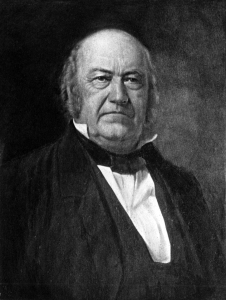
Butterfield’s principal champion in Washington was the newly appointed Secretary of the Interior, Thomas Ewing, who possessed substantial authority over appointments within his department. Although President Zachary Taylor and Postmaster General Jacob Collamer personally expressed strong partiality toward Lincoln, Secretary Ewing insisted on appointing the Chicago lawyer. Lincoln’s allies warned the president that Butterfield’s appointment would alienate the Whigs of Illinois, but Ewing, alongside other politicians, successfully misled President Taylor regarding who the state’s party members actually preferred. In June 1849, the Taylor administration officially awarded the commissionership to Butterfield, leaving Lincoln and his supporters deeply disappointed and suspicious of political chicanery.
The true depths of the underhanded tactics employed during this patronage scramble did not begin to unravel until the summer of 1850. On June 24, 1850, Lincoln was given a sealed file containing his original endorsements, which he had requested from Secretary Ewing. When Lincoln finally inspected the sealed file on July 8, he was shocked to discover that two of his most critical recommendation letters—written by Indiana Congressmen Richard W. Thompson and Elisha Embree—were entirely missing. These missing letters had carried enormous strategic weight during the cabinet’s deliberations. Thompson’s missing missive was a direct recantation of a previous recommendation he had written for Butterfield, declaring that he now firmly preferred Lincoln. Embree’s letter was similarly explicit in its opposition to Butterfield and support for the future president.
The absence of these letters had directly crippled Lincoln’s candidacy. Postmaster General Collamer had previously informed Lincoln that the cabinet had chosen Butterfield because he appeared to be “better recommended from the Public Land states”. Lincoln quickly realized that without the letters of Thompson and Embree, the cabinet was left with the false impression that Indiana backed Butterfield. Indignantly, Lincoln wrote to Secretary Ewing, demanding to know how these decisive documents had vanished from the official files. Lincoln emphasized that he valued those two letters more than any others in his possession due to the high standing of the writers and their unique perspective on his character and local reputation.
The controversy over the missing letters soon reached Congress, prompting a formal investigation by a congressional committee. Following Zachary Taylor’s sudden death in July 1850, a major cabinet shakeup occurred, and protests accusing Commissioner Butterfield of inefficiency and uncouth behavior led to a rigorous examination of his original appointment. The congressional committee focused specifically on discovering whether Lincoln’s letters of recommendation had been fraudulently removed or suppressed prior to President Taylor’s final decision. The committee’s investigation yielded alarming results, confirming that a clerk inside the Interior Department had indeed suppressed the brief of recommendations endorsing Lincoln. While investigators could not prove “beyond cavil” that Secretary Ewing had personally ordered the files to be tampered with, the scandal cast a dark shadow over his administration. In August 1850, the Washington correspondent of the New York Herald publicly reported on the committee’s findings, noting that the “suppression of the brief of the recommendations” of Lincoln by an Interior Department clerk had become the talk of the capital.
Despite the committee’s shocking revelations, Lincoln ultimately decided against making a public protest or demanding a formal political reckoning. In private correspondence, he confessed that he was filled with “indignation” over the “piece of villainy” that had cost him the commissionership, but insisted on remaining silent. Lincoln reasoned that his high regard for certain members of the cabinet, his deep personal devotion to the memory of General Taylor, and his absolute fidelity to the Whig cause required him to suppress his grievances. He feared that exposing the full details of the scandal to the public would “disparage a good cause,” “reflect no credit” on him, and potentially harm innocent people who had supported the administration.
Ultimately, this clandestine episode of political sabotage proved to be a profound blessing in disguise. Lincoln returned to Springfield and quietly resumed his law practice, which soon recovered and flourished. Had the “piece of villainy” not occurred and had Lincoln won the routine, bureaucratic post of Land Commissioner, he likely would have remained in Washington, separated from the local political movements of Illinois. By returning to the Prairie State, Lincoln was positioned to re-enter the political arena on his own terms when the nation faced its next constitutional crisis, eventually rising to the presidency. The investigation into his missing recommendation letters stands as a chilling testament to the corrupt realities of early American patronage, and a vital prelude to the political resurrection of Abraham Lincoln.