

The Ignition of a Global Shock: Military Escalation and Chokepoint Paralysis
The modern global economy is fundamentally reliant on maritime chokepoints—narrow, vulnerable geographic corridors through which vast quantities of international trade, energy, and raw materials continuously pass. When unilateral military force is introduced into these sensitive maritime choke points, the resulting geopolitical shockwaves extend far beyond the immediate combat zone. On February 28, 2026, the initiation of joint U.S.-Israeli military strikes against Iranian targets triggered a rapid and catastrophic escalation across West Asia. In direct retaliation for the bombardment, the Islamic Revolutionary Guard Corps (IRGC) enforced the closure of the Strait of Hormuz, halting commercial transit through a waterway that ordinarily carries approximately 20 to 25 percent of the world’s seaborne petroleum and 20 percent of its liquefied natural gas (LNG).
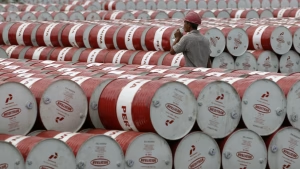
The sudden maritime paralysis precipitated the largest global oil supply disruption since the 1970s energy crisis, eclipsing previous historic market shocks in both speed and severity. Following IRGC warnings, boardings, and the laying of sea mines, commercial shipping traffic through the strait plummeted to near zero. Over 2,000 merchant vessels and an estimated 20,000 mariners were immediately stranded within the Persian Gulf, unable to exit the contested maritime corridor. The sudden containment of energy exports sent panic through international markets, causing oil prices—which had stood below $70 per barrel prior to the outbreak of hostilities—to surge rapidly past $100 and reach peaks between $126 and $139 per barrel. International Energy Agency (IEA) leadership characterized the crisis as the “greatest global energy security challenge in history,” underscoring the systemic vulnerability of global market stability to unilateral executive military action.
The Architecture of the Dual Blockade and Commodity Volatility
The economic turmoil intensified as military operations expanded from localized strikes into a protracted, multi-front naval confrontation. Following the breakdown of diplomatic negotiations in Islamabad, the United States imposed a comprehensive naval blockade of Iranian ports on April 13, 2026, deploying patrol aircraft and destroyers to intercept commercial oil tankers entering or exiting Iranian territory. This enforcement created a unprecedented “dual blockade”: while the U.S. Navy blockaded Iranian coastal infrastructure, Iran maintained its denial of passage through the Strait of Hormuz to U.S.-aligned commercial traffic.
This dual blockade severely disrupted global industrial supply chains well beyond raw crude oil:
- Liquefied Natural Gas (LNG) and Power Grids: Retaliatory strikes and security threats against Gulf gas infrastructure, including Qatar’s critical Ras Laffan industrial facilities, triggered an unprecedented shutdown of LNG exports, driving natural gas prices sharply upward and straining electricity generation across Europe and Asia.
- Industrial Inputs and Metallurgy: Critical global commodity markets experienced severe supply deficits. Production at major regional industrial hubs, such as Bahrain’s primary aluminum smelters, was forced into emergency output reductions due to raw material and fuel constraints. Similarly, international supplies of specialized industrial gases, such as helium, faced acute contraction.
- Aviation and Logistics Shutdowns: Civilian airspace across West Asia—including Iran, Iraq, Kuwait, Qatar, Bahrain, Syria, the United Arab Emirates, and Israel—was abruptly closed, forcing international commercial airlines to ground fleets, reroute long-haul transit, and incur massive fuel and operational surcharges.
Asymmetric Fallout on Import-Dependent Sovereign Economies
While primary belligerents absorb the direct fiscal costs of military operations, the most severe economic consequences of maritime corridor closures are borne by non-belligerent, import-dependent developing nations. In Southeast Asia, where sovereign economies rely heavily on Middle Eastern energy imports to sustain basic domestic consumption and power generation, the exhaustion of national fuel reserves toward the end of March 2026 triggered severe widespread inflation and widespread fuel deficits.
This dynamic manifested acutely in the 2026 Philippine energy crisis. Facing sudden supply deficits and soaring import costs, the Philippines was forced to enact emergency state measures, including national fuel rationing, rolling electricity blackouts, and emergency budgetary reallocations to stabilize essential public services. Similar emergency measures swept across other developing economies in Asia, where high energy import bills rapidly depleted foreign exchange reserves and threatened domestic industrial output.
Furthermore, the maritime shutdown generated a major global threat to agricultural productivity and food security. Nearly 50 percent of global urea and sulfur exports—key feedstocks for nitrogen-based agricultural fertilizers—normally transit through the Strait of Hormuz. The paralysis of fertilizer exports, combined with soaring natural gas prices, caused global fertilizer costs to skyrocket just as planting seasons commenced across the global south. The United Nations World Food Programme (WFP) warned that these cascading cost increases would inevitably drive up global food prices, threatening to push millions of vulnerable individuals into acute food insecurity.
Systemic Consequences of Unilateral Executive Action
Answering the central analytical question—What are the systemic global economic consequences when unilateral U.S. executive military actions induce maritime corridor closures and major energy supply shocks for non-belligerent import states?—reveals three fundamental conclusions regarding modern international governance:
- Destabilization of International Supply Chains: Unilateral military interventions in vital maritime chokepoints convert localized security disputes into immediate, global economic crises. By forcing the closure of key transit corridors like the Strait of Hormuz, unilateral executive war-making weaponizes global energy and commodity markets, inflicting severe inflationary shocks on non-belligerent nations.
- Asymmetric Externalization of Economic Costs: The financial and social burdens of executive war-making are externalized onto sovereign, import-dependent states that possess no formal role in the diplomatic or military decisions leading to conflict. Emergency interventions, such as the Philippine energy crisis response, illustrate how non-belligerent nations are forced to exhaust public resources to mitigate external shocks induced by foreign military decisions.
- Erosion of the Liberal International Order: Bypassing multilateral diplomatic frameworks and international maritime law—such as the United Nations Convention on the Law of the Sea (UNCLOS) and UN Charter constraints governing the use of force—undermines the foundational rules of global trade. When executive decisions prioritize unilateral strategic objectives over international consensus, the predictable legal mechanisms regulating global commerce are replaced by extreme market volatility, fragmentation, and systemic economic instability.