

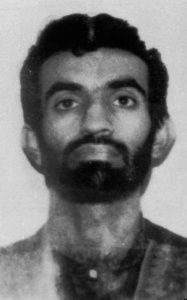
The year 1995 presented a stark, unfolding tableau of global threats and nascent technological shifts, embodied powerfully by the arrest of a notorious terrorist and, in a seemingly disparate realm, the quiet emergence of discussions around digital privacy. This period illuminates a critical juncture in the post-Cold War world, where the physical manifestations of radical ideologies collided with an evolving understanding of information and control.
Central to the year’s narrative was the capture of Ramzi Yousef, a figure whose actions profoundly shaped the understanding of the “new terrorism”. Yousef was apprehended in Islamabad, Pakistan, on February 7, 1995, after an accomplice turned him in. His capture was orchestrated through a “rendition” technique, a method preferred by the CIA that allowed for the transfer of detained terrorists without formal extradition proceedings, legal overseas but not within the United States. Upon his transfer to American custody, on a flight from Pakistan to the United States on February 8, Yousef, appearing relaxed and curious about the legal process, eagerly claimed credit for his actions. He asserted his independence as an operator, stating that while Muslim leaders provided inspiration, none controlled his work, though he refused to identify them. He also revealed that he had lived in a Pakistani guesthouse funded by Osama bin Laden for months after the 1993 World Trade Center bombing.
Yousef’s previous endeavors cast a long shadow. He had been the mastermind behind the February 1993 bombing of the World Trade Center in New York City, an attack that killed six people, injured over a thousand, and caused an estimated $500 million in damage. He had used a false Iraqi passport to enter New York in September 1992, intending to secure an American passport and scout targets before raising funds, but decided to act immediately. His ambition was chilling: he hoped the first 110-story tower would topple the second, envisioning around 250,000 casualties, a number he equated with those from the atomic bombings of Hiroshima and Nagasaki. His choice of targets, including the World Trade Center, stemmed from a desire to “attack a friend of your enemy” if direct attacks on Israeli targets proved too difficult. His initial demand letter, issued on behalf of the “Liberation Army, Fifth Battalion,” notably lacked Islamic references and focused on secular political themes, demanding an end to U.S. aid to Israel and intervention in the Middle East, even threatening “potential Nuclear targets”. A discarded draft of this letter chillingly admitted, “Unfortunately, our calculations were not very accurate this time. However, we promise you that next time, it will be very precise and WTC will continue to be one of our targets unless our demands have been met”. He had considered his bomb “threadbare” and complained about the quality of his confederates, calling one “stupid” for attempting to retrieve a rental car deposit, which led to his arrest. Yousef’s actions, while connected to figures like Sheikh Omar Abdal Rahman, reflected a “technologist’s arrogance” and a murderous desire for “a big bang”.
The most immediate revelation following Yousef’s arrest was the discovery of the Manila air plot, also known as “Bojinka”. In January 1995, Philippine authorities, responding to a fire at an apartment belonging to Yousef’s uncle, Khalid Sheikh Mohammed (KSM), found bomb-making residue, encrypted files, and Yousef’s cohort Abdul Hakim Murad. Murad confessed to working with Yousef on a grand scheme to bomb a dozen American commercial airliners simultaneously over the Pacific Ocean. This plot involved a sophisticated, undetectable timing device fashioned from a Casio watch. Yousef had already conducted a practice run, planting a small bomb in an airplane seat that killed a Japanese businessman. If successful, the larger plot could have resulted in as many as a thousand American deaths. Beyond this, Murad also revealed plans to assassinate President Clinton and the Pope during their visits to Manila, and to hijack a commercial airliner to crash into the CIA headquarters—a purely suicidal mission. KSM, who had wired money to Yousef for the 1993 WTC bombing, was deeply involved in the planning, and by his own account, his “animus toward the United States stemmed… from his violent disagreement with U.S. foreign policy favoring Israel”. KSM had envisioned an even more grandiose plan involving ten hijacked aircraft, with nine crashing into targets including the White House, the U.S. Capitol, the Pentagon, the World Trade Center, and nuclear power plants. He viewed this as “theater, a spectacle of destruction with KSM as the self-cast star—the superterrorist”. KSM managed to evade capture in early 1995, despite an indictment.
The intelligence community’s response to Yousef’s capture and the revelations of his plots highlighted both a dawning awareness of a new kind of threat and significant limitations in perception and focus. FBI Director Louis Freeh, post-1993 World Trade Center bombing, had recognized terrorism as a major threat, increasing international legal attaché offices and urging pre-emptive action. However, the successful legal prosecution of the 1993 World Trade Center bombers had the unintended consequence of obscuring the need to deeply examine the extent and character of the new threat.
In 1995, Yousef’s case compelled the FBI to identify a “new generation of Sunni Islamic Terrorists”. Analysts recognized that these groups, unlike state-sponsored terrorism, were “autonomous and indigenous” and had “access to a worldwide network of support for funding, training and safe haven”. Afghanistan’s training camps were deemed crucial, with Pakistan and Bosnia also emerging as important bases. The FBI explicitly noted the vulnerability of the American homeland, citing Murad’s confessed kamikaze plot against the CIA headquarters.
However, the FBI’s focus was significantly diverted by domestic terrorism, particularly the April 1995 Oklahoma City bombing by Timothy McVeigh, which killed 168 people. This event “galvanized the Clinton administration to focus on terrorism” domestically, but the extensive investigation “drained FBI resources,” leading them to not follow up on the “airplane kamikaze plan”. Similarly, the CIA remained heavily focused on Iranian and Shiite terrorist threats. Despite the November 1995 Riyadh car bombing, which killed five Americans and was inspired by bin Laden, Iran continued to be perceived as the major threat, drawing attention and resources away from bin Laden and his followers. As late as 1997, the CIA’s Counterterrorist Center still primarily described bin Laden as an “extremist financier”. Although a 1995 National Intelligence Estimate predicted attacks against “national symbols” and “civil aviation,” it notably did not mention Osama bin Laden by name. Concerns about the use of aircraft as weapons were slow to fully integrate into aviation security thinking; for instance, the 1996 Gore Commission, formed after the TWA Flight 800 crash, focused mainly on bombs placed on aircraft rather than suicide hijackings.
Thus, 1995 emerges as a year of profound contradictions: a moment of intensified physical terrorist threats, largely misunderstood by intelligence agencies still grappling with evolving paradigms, and the quiet, underlying advancements in digital technologies that would, in time, introduce new dimensions to the challenges of information control and privacy in an increasingly interconnected world.