

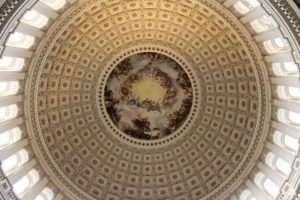
The inauguration of Donald Trump as the 47th President of the United States on January 20, 2025, marked the official commencement of his second term and ushered in a period of immediate and sweeping executive actions, setting the tone for what many anticipated would be a presidency defined by a concentrated assertion of executive power and a dramatic shift in national policy. This opening salvo, often framed as a “shock and awe” campaign, immediately signaled a sharp pivot from traditional governance, with an unprecedented number of executive orders signed on his first day.
January 20, 2025: The Inaugural Volley of Executive Power
Upon taking the oath of office in the Capitol Rotunda, President Trump wasted no time initiating his agenda. His immediate actions included a significant revamp of economic and social policy, alongside key changes in foreign relations and governmental structure.
Economically, the administration swiftly announced the imposition of new tariffs on goods from Mexico, Canada, and China. Specifically, a 25 percent tariff was set for most goods from Mexico and Canada, and a 10 percent tariff on Chinese imports, a move consistent with Trump’s previous self-identification as “tariff man” and his long-held belief that tariffs are “the greatest thing we’ve ever done as a country”. This strategy, which aims to address perceived trade imbalances, reflected a key promise from his campaign to apply tariffs on foreign trade partners.
On the domestic front, the new administration moved decisively to roll back Diversity, Equity, and Inclusion (DEI) policies. An executive order titled “Defending Women from Gender Ideology Extremism and Restoring Biological Truth to the Federal Government” was signed, unequivocally defining gender as a male-female binary determined “at conception” and halting federal funding for gender-affirming care. This action was not an isolated measure but rather a direct implementation of proposals outlined in “Project 2025,” a comprehensive blueprint for a potential second Trump administration, developed by conservative think tanks like the Heritage Foundation. The plan, deeply critical of DEI programs, advocated for the systematic elimination of terms like “gender identity” and “gender equality” from federal regulations and communications, reflecting a desire to “turn the clock back several decades” on social issues.
In foreign policy, President Trump reinstated Cuba’s designation as a state sponsor of terrorism, thereby reversing the Biden administration’s previous decision.
Perhaps one of the most immediate and impactful actions on January 20 was the White House press release announcing the granting of pardons and commutation of sentences for “certain offenses relating to the events at or near the United States Capitol on January 6, 2021”. This move, promised during his campaign, signaled a clear intent to address the legal consequences faced by his supporters.
January 21, 2025: Expanding Executive Authority
The momentum continued into the second day of the presidency, with President Trump signing further executive orders designed to “concentrate executive branch power in the West Wing” and move the country “sharply rightward”. These actions were perceived by legal scholars as testing the very “limits of executive authority” and, in some instances, ignoring or violating existing federal laws, regulations, and the Constitution.
The January 6 pardons were expanded, extending clemency to approximately 1,500 individuals “convicted of offenses related to the January 6 United States Capitol attack,” including members and leaders of extremist groups like the Proud Boys and Oath Keepers. Furthermore, Trump issued a full and unconditional pardon to Ross Ulbricht, the founder of the darknet market Silk Road, fulfilling a specific campaign promise made at the Libertarian National Convention. Critics quickly noted that these pardons, especially for those involved in the Jan. 6 attack, were “appalling” and could fuel further extremism.
In a foreign policy move affecting the Middle East, sanctions on Israeli settlers in the West Bank were canceled. Domestically, the administration initiated a hiring freeze and mandated the end of remote work for federal employees. These measures directly mirrored Project 2025’s aim to significantly reduce the federal workforce and dismantle civil service protections, pushing for mass firings of civil servants and replacing them with political loyalists. The goal, in part, is to ensure that federal employees are “hired, promoted and retained based on merit not political loyalty”.
The initial public reaction to these early actions was captured in a Reuters/Ipsos poll, released on January 21, which found that 47 percent of adult Americans approved of Trump’s performance as president, while 41 percent disapproved. Notably, this inaugural approval rating was historically low for a president, mirroring his 2017 rating and marking a new high for inaugural disapproval. The poll also indicated that his pardons related to January 6 were unpopular.
January 22, 2025: Continued Assertions and Broader Implications
By January 22, reports from major news outlets, such as The New York Times, highlighted President Trump’s aggressive push at the “limits of presidential power in early orders”. This rapid, top-down approach, characterized by a “shock and awe campaign,” exemplified his “determination to concentrate executive branch power in the West Wing”.
The implementation of Project 2025’s agenda became undeniably evident, as nearly two-thirds of Trump’s executive actions within the first four days aligned with the blueprint, despite his previous attempts to distance himself from it on the campaign trail. This alignment extended to:
- Mass Deportations: The plan calls for centralizing power within a new cabinet-level border and immigration agency and initiating immediate roundups for mass deportations, a long-held ambition of Trump’s.
- Dismantling Federal Agencies: The administration began targeting federal agencies for weakening or outright abolishment, including USAID, the Department of Education, and the Consumer Financial Protection Bureau. This also included freezing federal funding for programs, a tactic that faced immediate legal challenges and was temporarily blocked by federal judges.
- Weaponization of Government: The early days showcased a “concerted attempt to intimidate elected Democratic officials by weaponizing law enforcement”. This included the arrest of a mayor and judges, and threats to federal officials who defy the administration, contributing to a “chilling effect” on dissent.
This period immediately following inauguration reinforced a consistent pattern from his first term: a willingness to challenge democratic norms, undermine the rule of law, and publicly attack critics, including judges and news organizations. The strategic advisor, Steve Bannon, had openly advocated a “flood the zone” approach to overwhelm the media and push the administration’s agenda forward.
In essence, the first two days of Donald Trump’s second presidency were a concentrated demonstration of his intent to fundamentally reshape the federal government, driven by a highly centralized executive power and a clear ideological agenda, with tangible and immediate consequences across domestic and foreign policy, as well as the very structure of American governance.