

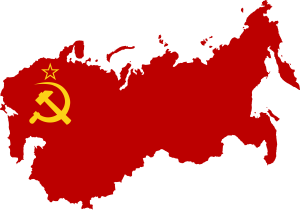
The formal cessation of the Soviet Union in December 1991 marked a profound and unexpected turning point in global history, fundamentally reshaping the geopolitical landscape and ushering in an era ripe with both hope and unforeseen challenges. This pivotal moment, the culmination of decades of internal strain and shifting international dynamics, profoundly impacted the United States, which found itself as the world’s sole superpower.
The demise of the Soviet Union was not a sudden, singular event but rather the climax of a complex process. Decades of poor planning and systemic corruption had significantly weakened the Soviet economy. By the 1980s, the nation was grappling with severe structural problems. Mikhail Gorbachev, who came to power in 1985, sought to revitalize the ailing state with his policies of perestroika (economic restructuring) and glasnost (openness). However, these reforms, while intended to save the Soviet system, ultimately contributed to its unraveling, proving to be “doomed”. The costly and protracted Soviet-Afghan War also served as a significant drain on Soviet resources and morale, contributing to the nation’s decline.
A crucial turning point came in 1989. Gorbachev, signaling a dramatic shift in policy, announced that the people of Eastern Europe were free to determine their own destinies, and Moscow would no longer intervene in their affairs. This declaration ignited a wave of change across the Soviet bloc. Communist regimes, previously propped up by Soviet repressive power, began to collapse “like a house of cards”. The Berlin Wall, a potent symbol of Cold War division, was torn down by jubilant crowds in November 1989, and Germany was formally reunited in October 1990. These events, contrary to some expectations, demonstrated that “creative political possibilities” were not confined to the distant past.
By August 1991, the chaos and uncertainty within the Soviet Union had further damaged its economy. Hardline Communist officials and military officers, seeking to reverse Gorbachev’s reforms, staged a coup and placed him under house arrest. However, this amateurish attempt was quickly thwarted, largely due to the courageous and flamboyant opposition of Boris Yeltsin, the new president of the Russian Republic, who famously rallied pro-democracy protesters from atop a tank in Moscow. The coup’s swift collapse signaled the irreversible decline of the Communist Party and the Soviet state itself.
Within weeks of the failed coup, the Soviet republics began to split off, one by one, claiming independence. Finally, on December 21, 1991, Boris Yeltsin officially proclaimed the end of the Soviet Union. The Communist Party of the Soviet Union collapsed, and a new entity, the Commonwealth of Independent States (CIS), comprising eleven former republics, was formed. This profound shift led to widespread changes, as Soviet embassies became Russian embassies and the hammer and sickle flag was replaced by the old Russian tricolor. In May 1992, at Westminster College in Missouri—the very place where Winston Churchill had declared an “Iron Curtain” had descended across Europe—Gorbachev himself announced that the Cold War was indeed over.
The global reaction to the Soviet Union’s dissolution was largely one of triumph and relief in the West. For Americans, born after World War II, who had never known a time without the Soviet threat, the disappearance of this formidable enemy created a sense of void. There was an initial surge of hope for a “peace dividend”—a supposed redirection of massive defense spending towards domestic social purposes. This led to calls for a reassessment of national military strategy, including a proposed 25% reduction in active-duty forces.
Intellectually, the collapse was widely interpreted as a vindication of liberal democracy and free-market capitalism, epitomized by Francis Fukuyama’s “end of history” thesis, which posited that ideological evolution had reached its endpoint. This perspective suggested that Western political and economic systems had “won” on a world scale. Many believed that the conflict had been a “moral and even religious crusade”, and the Soviet collapse confirmed the “superiority of Western capitalism”.
However, the outcomes were far more complex and brought significant unintended consequences:
- The Myth of the “Peace Dividend”: Despite initial hopes, the world proved to be anything but a peaceful utopia. The Cold War had, in some ways, suppressed regional, social, religious, nationalist, and ethnic conflicts. Its end unleashed these long-simmering tensions, leading to new conflicts, such as the breakup of Yugoslavia and the attempted secession of Chechnya from Russia. The notion of a substantial “peace dividend” was suppressed, and the United States continued to build its arsenals to maintain its status as the sole superpower.
- Economic Transition Challenges: In former Soviet states, the transition to capitalism was often chaotic and painful. Russia’s economy spiraled into hyperinflation and low productivity in 1993, with anxiety in America about a potential return to authoritarianism or a new Cold War. For countries like Czechoslovakia, independence meant a move from a “zoo into a jungle,” with rising crime and a literal interpretation of the “free market” as a free-for-all. The initial hopes of “socialism with a human face” in places like Hungary and Czechoslovakia were tragically cut short by Soviet intervention and the eventual economic realities of post-communism.
- Persistent U.S. Global Engagement: Despite the end of the Cold War, the United States did not retreat from global engagement. Instead, its military vision embraced “Global Reach—Global Power,” a strategy aimed at enlarging the “family of democratic nations”. The U.S. maintained substantial military forces abroad, including tens of thousands of soldiers in Germany and Japan, long after the Soviet threat dissipated, retaining its “leverage”.
- Seeds of New Conflicts: The U.S. decision not to support Iraqi dissidents or the Kurdish and Shiite rebellions against Saddam Hussein after the 1991 Gulf War (which occurred just months before the formal Soviet dissolution, influencing the “new world order”) left Hussein in power. The continued stationing of thousands of American troops in Saudi Arabia after the Gulf War, near Muslim holy sites, became a “principal recruiting device” for anti-American Muslim terrorists, including Osama bin Laden. Bin Laden’s al-Qaeda, an extreme fundamentalist group that seized power in Afghanistan in 1996 following the Soviet withdrawal, welcomed his presence.
- The “End of History” Challenged: The immediate aftermath of 9/11 would prompt many intellectuals to reflect on the perceived “peace and prosperity” of the 1990s as a period of “frivolity and emptiness,” leading to a re-evaluation of the “end of history” narrative itself. The unexpected rise of non-liberal politics, such as Islamic fundamentalism, and new conflicts like those in the Balkans, demonstrated that history had not, in fact, ended.
In essence, the formal dissolution of the Soviet Union in December 1991, while a celebrated victory for the West and a moment of genuine liberation for millions in Eastern Europe, also unveiled a more complex and often volatile global landscape. It eliminated a clear adversary but introduced a multipolar world fraught with new forms of instability and ideological challenges that continue to shape international relations today.