

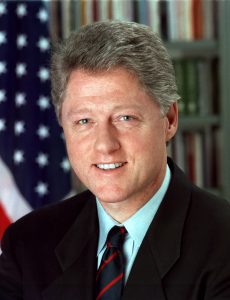
The election of Bill Clinton as president in 1992 marked a significant pivot for American politics, especially given the dramatic backdrop of the Soviet Union’s formal cessation in December 1991, as we’ve previously discussed. This was a moment where the United States, standing as the sole superpower, was poised for new directions, and the American electorate was ready for a different kind of leadership.
The Shifting Landscape Before Clinton’s Ascent
To truly understand Clinton’s victory, one must appreciate the context set by the preceding years, particularly George H.W. Bush’s presidency. Following the decisive victory in the First Gulf War in March 1991, President Bush’s public approval rating soared to an unprecedented 89 percent, surpassing even the peaks of popular presidents like Truman and Eisenhower. Republicans, in this heady aftermath, even began to believe they had a “permanent lock on the presidency”.
However, this high approval proved to be a “pyrrhic victory” in some respects. A brief U.S. economic recession, spanning from October 1990 through mid-1991, with a painfully slow recovery extending into 1992, significantly eroded Bush’s domestic support. Bush had also broken his 1988 campaign pledge not to raise taxes to achieve a budget deal, which further contributed to his loss of backing, even within his own party. Challenges from figures like Patrick Buchanan, who campaigned on an isolationist “America First” message, and populist complaints from Ross Perot, highlighted Bush’s vulnerability. The perception that if the president could lead around the world, he should also take care of Americans at home, became a powerful counter-narrative. By 1992, his expertise in foreign policy, which had seemed paramount just a year earlier, appeared less crucial to voters as the Soviet threat became a memory and the Middle East was “relatively calmed” after the Gulf War. Indeed, President Bush’s approval rating dropped “precipitously” as Americans grew disdainful of a leader “hopelessly unfamiliar with workaday realities”.
Bill Clinton’s Strategic Campaign
Against this backdrop, Bill Clinton, the then-governor of Arkansas, emerged as an “exceptional campaigner”. At 45, he had already built a significant political career, rising from a “troubled home” to become a Rhodes scholar and a Yale Law School graduate, serving five terms as governor. Clinton aimed to “reinvent” American liberalism, adopting a formula that sought not radical social change but electoral victory by moving the Democratic Party closer to the center. This meant appealing to working people, women, and Black voters while simultaneously attempting to win over white conservative voters with a program emphasizing “toughness on crime” and a “strong military”.
He co-founded the Democratic Leadership Council (DLC) in 1985, a group dedicated to reclaiming the political center, and by 1990, he was its chairman. Clinton articulated a vision of “change and continuity,” a message that some “old-line Democrats” found confusing or even “treacherous”. He attacked the “glorification of ‘the pursuit of greed and self-interest'” of the 1980s and the rising poverty rates. His campaign was distinctly populist, encapsulated by the internal slogan “It’s the economy, stupid!”. The 1992 Democratic platform even used the word “revolution” fourteen times.
Clinton’s campaign was not without its “personal” challenges. Allegations of a twelve-year affair with a nightclub singer, Gennifer Flowers, surfaced just before the New Hampshire primary. Clinton addressed this on 60 Minutes with his wife, Hillary, admitting to causing “pain in his marriage” while denying the specific allegations. Charges regarding his military draft deferral also arose. Despite these hurdles, Clinton’s ability to navigate the media, coupled with his strong second-place finish in the New Hampshire primary behind Paul Tsongas, earned him the moniker “comeback kid”.
For his running mate, Clinton chose Senator Al Gore Jr. of Tennessee. This selection was a strategic move, showcasing “generational politics over geography”. Gore, with his military service and unblemished family life, brought Washington experience without appearing as a “Capitol Hill baron,” and his presence made the Democratic ticket appear “youthful, vigorous, bursting with new ideas—but definitely not beholden to northeastern liberals”. Clinton’s strong performance in televised debates, appearing “crisp and knowledgeable,” further solidified his image, contrasting sharply with Bush’s perceived disengagement.
The 1992 Election Results and Its Aftermath
Ultimately, Bill Clinton won the 1992 presidential election with 43.7 million votes and 370 electoral votes. While a clear victory, his popular vote percentage of 43 percent was the lowest for any president since Woodrow Wilson in 1912, and even less than Michael Dukakis had garnered in 1988. Ross Perot, who had briefly left the campaign and then re-entered, secured 19.2 million votes but no electoral votes, though his support may have impacted Clinton’s ability to achieve an absolute majority.
Clinton’s election ended the Republican Party’s twelve-year domination of the White House and brought a Democratic majority to both houses of Congress for the first time since 1976. However, the modest popular vote and the continued fragmentation of the Democratic Party meant Clinton faced a complex political reality with no clear “mandate”.
Clinton’s Initial Policy Focus and Challenges
Upon entering office, Clinton immediately signaled a shift in focus, prioritizing the economy “like a laser beam”. His administration quickly enacted legislation that had been stalled under Bush, such as the Family and Medical Leave Act, which guaranteed workers unpaid leave for family emergencies. He also reversed a “gag order” on abortion counseling in federally funded clinics.
However, Clinton’s early presidency was also marked by controversies and unforeseen challenges:
- “Don’t Ask, Don’t Tell”: His attempt to permit homosexuals to serve openly in the military, a campaign pledge, was met with strong opposition from military leadership and Congress, notably Chairman of the Joint Chiefs of Staff Colin Powell and Senator Sam Nunn. This led to the compromise policy of “don’t ask, don’t tell,” which satisfied no one fully.
- Budget Deficit: Inheriting significant deficits from the Reagan and Bush administrations, Clinton made deficit reduction a central economic priority. This aligned with Wall Street’s demands and eventually led to substantial reductions and even surpluses by the late 1990s.
- Trade Agreements: Clinton pushed for the enactment of the North American Free Trade Agreement (NAFTA), which had been reached by the Bush administration, and later oversaw the creation of the World Trade Organization (WTO). These policies reflected a move towards globalizing neoliberalism.
- Judicial Appointments: Clinton appointed Ruth Bader Ginsburg and Stephen Breyer to the Supreme Court, both of whom were pragmatic moderates.
- Crime Bill: In 1994, he signed a significant crime bill that emphasized punishment, extending the death penalty, providing funds for new prisons, and adding police officers.
- Scandals: The administration faced scrutiny over the Whitewater land deal, the suicide of White House deputy counsel Vincent Foster, and the “Travelgate” controversy involving the White House travel office. These issues would “linger” over his presidency.
- Terrorism: In February 1993, Muslim extremists bombed the World Trade Center in New York City. Following evidence that militants connected to Saddam Hussein had attempted to assassinate former President Bush, Clinton ordered a cruise missile attack on Baghdad in June 1993. The shock of the Oklahoma City bombing in 1995 (a domestic attack) and a sarin gas attack in Tokyo by a cult “created a new sense of urgency” regarding terrorism and weapons of mass destruction, leading to the first terrorism policy review in early 1995 and Presidential Decision Directive/NSC-39 on Counterterrorism.
Clinton’s first term saw him “find his feet” in foreign affairs, facing “setbacks in Somalia, Haiti, Rwanda, and the Balkans”, initially seeming “uncertain whether the American public would back military interventions where U.S. interests appeared more humanitarian than strategic”.
In essence, the 1992 election ushered in a Democratic president who, despite campaigning with populist rhetoric, embraced policies that often mirrored conservative economic principles and sought to define a new path for America in a post-Cold War world. It was a period of both significant domestic policy shifts and a re-evaluation of America’s global role.