
The scientific clarity that Roger Revelle and Hans Suess brought to the understanding of oceanic CO2 absorption in 1957, revealing an uncomfortable truth about humanity’s “geophysical experiment,” contrasts sharply with the murkier, yet equally profound, “experiments” unfolding in global geopolitics during the same period. While one revelation dealt with the planet’s atmospheric balance, another, involving the United States’ covert actions in Latin America, would fundamentally re-evaluate the nation’s role in shaping foreign governments and the consequences of such interventions.
In the spring of 1960, a critical juncture emerged for U.S. foreign policy, largely shaped by the unfolding Cuban Revolution. Fidel Castro’s revolutionary victory on January 1, 1959, dramatically altered the political landscape just ninety miles off the Florida coast. Initially, this regime change seemed of “little significance,” but a deepening alignment with the Soviet Union swiftly transformed Cuba into a “new wrinkle in the cloth of U.S. foreign policy”. By early 1960, the Eisenhower administration, through CIA Director Allen Dulles, concluded that Castro was a dedicated Communist and a serious threat to U.S. security. This assessment was mirrored by figures like William Pawley, an entrepreneur whose Cuban investments were nationalized by Castro, and who subsequently lobbied Eisenhower for aggressive action, even offering to pay for Castro’s assassination.
Against this backdrop, President Eisenhower took a significant, and secret, step. In response to Castro’s nationalization of American-owned property, including sugar and oil industries, and Cuba’s acceptance of aid from Moscow after the U.S. imposed an embargo on Cuban sugar, Eisenhower authorized the Central Intelligence Agency (CIA) to arm and train anti-Castro Cuban exiles. This covert initiative was headquartered in Guatemala, serving as a clandestine base for future operations. Defense Secretary Gates, for instance, contributed to a four-point plan to overthrow Castro, which became an early blueprint for the later Bay of Pigs operation. The CIA’s paramilitary plan involved mercenary pilots dropping bombs on Cuban sugar mills in February 1960 and the explosion of a French freighter loaded with Belgian weapons in Havana Harbor in March, killing dozens. Eisenhower’s strategy also included a plan to train a paramilitary force outside Cuba for a future invasion, spearheaded by Vice President Nixon and the CIA. It marked a clear shift in U.S. policy, driven by the assumption that all Latin American revolutions after 1960 were “Communist-inspired,” leading to a tightening grip on the region through support for “friendly dictators and military juntas”. This period cemented a perception that failure to act aggressively would allow “the cancer [of communism to] spread to other Latin American nations”.
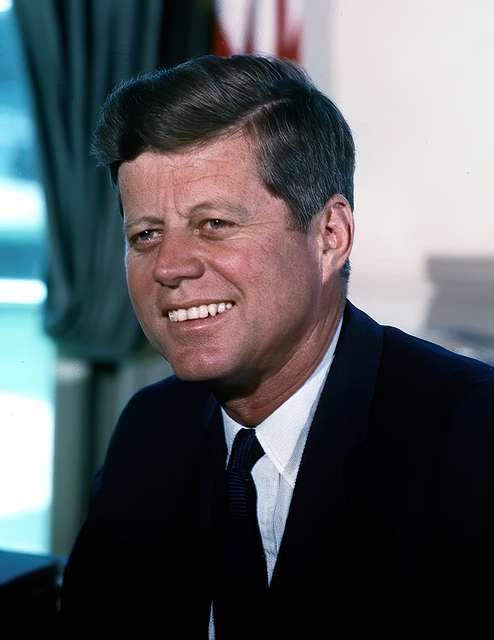
As 1960 drew to a close, the nation turned its attention to a new political chapter: the presidential election. John F. Kennedy, the Democratic Party candidate, narrowly defeated his Republican rival, Richard Nixon. While Nixon was often portrayed as “tied to Eisenhower and the past,” Kennedy symbolized “the future, of rebirth and hope”. This transition of power, however, brought with it the inherited “grenade with the pin pulled” of the Cuban invasion plan. President Eisenhower had pressed for preparations but left the decision to act to his successor.
The incoming Kennedy administration found itself confronting a sophisticated, yet often self-serving, intelligence apparatus. Allen Dulles, the long-standing CIA Director, navigated this transition with remarkable dexterity, aiming to ensure his continued influence regardless of who occupied the White House. He famously played both sides of the 1960 campaign, providing JFK with an intelligence briefing at the Kennedy family compound in Hyannis Port. Nixon later claimed that Dulles’s briefing gave Kennedy an unfair advantage, alleging that Kennedy used this “inside information to straitjacket him on the Cuba issue” during debates. Dulles, in a “slippery” denial, stated he hadn’t personally briefed Kennedy on the training before the election, but left open the possibility that other CIA officials had. Furthermore, Kennedy’s father, Joseph P. Kennedy, who had served on an advisory board that urged an overhaul of the CIA’s management, had already made JFK aware of Dulles’s “dangerously unsupervised management style”. Despite this, key figures connected to the “Dulles old guard,” such as McGeorge Bundy, appointed as National Security Adviser, ensured that the CIA chief had “eyes and ears” in crucial White House and Defense Department posts. This demonstrated the “deep reluctance” of the established order to cede power to the “New Frontier” team, despite Kennedy’s inaugural declaration that “The torch has been passed to a new generation of Americans”.
The year 1961 saw the culmination of Eisenhower’s secret authorization in the disastrous Bay of Pigs invasion. On April 17, 1961, approximately 1,400 CIA-trained anti-Castro Cuban exiles “floundered” ashore, in an operation “organized and financed by Washington”. This proved to be Kennedy’s “first important foreign policy decision” and “undoubtedly his worst”. Despite his prior criticism of Eisenhower’s inaction and campaign rhetoric about strengthening anti-Castro forces, Kennedy gave the plan his “enthusiastic support” and “complete control of the operation to the CIA”. He saw it as an opportunity to project an image of “tough leader[ship]” against communism.
However, the operation was plagued from its inception. American involvement was “thinly disguised” and “exposed almost immediately by the New York Times”. Crucially, Castro was “forewarned” and had amassed “several thousand troops and more than fifty Soviet-made tanks at the invasion site by the time the landing force consolidated on the ground”. The plan’s reliance on a “mass anti-Castro uprising” never materialized, leading to an immediate “fiasco”. Despite an aircraft carrier being nearby, Kennedy “chose to do nothing” to escalate the conflict, refusing to send U.S. air strikes and risk wider war. This decision resulted in 68 invaders killed and another 1,200 captured, a vision that “haunted [Kennedy] that week and many weeks and months to come”.
The post-mortem revealed disturbing truths about the CIA’s conduct. Dulles, who was reportedly sunning himself at a Puerto Rico resort during the invasion, was later criticized by the CIA’s own official history for his “inexcusable” absence. The internal Kirkpatrick Report on the debacle identified “glaring errors,” noting that the CIA should have terminated its role when the plan became public and outgrew its covert capabilities. It accused the agency of failing to “keep [the president and his] policymakers adequately and realistically informed of the conditions essential for success”. A 2005 release of CIA minutes further revealed that the task force knew in November 1960 that the invasion was “unachievable, except as a joint [CIA/Department of Defense] action,” yet this critical assessment was withheld from the president. Moreover, Dulles and his deputy Richard Bissell had also concealed from Kennedy their “magic bullet” for success: an ongoing, Eisenhower-authorized plot with the Mafia to assassinate Castro.
It became evident that Dulles had “set a trap for Kennedy,” convinced that the young president would be forced to deploy U.S. military forces once the invasion began to fail. The CIA had evaluated the plan as “doomed to fail” from the start, intending its failure to trigger an “all-out, U.S. military invasion of the island”. Kennedy, however, “underestimated the young man in the White House” and resisted this pressure. Though he publicly accepted full blame, privately, Kennedy was “furious” and “vowed to “splinter the CIA into a thousand pieces and scatter it to the winds””. This “stuttering rage” within the CIA, particularly among those on the Cuba task force, reflected a deep resentment towards Kennedy for what they perceived as a “failure of nerve”. The Bay of Pigs directly led to a “first fracture” between Kennedy and his national security chain of command, prompting him to reassess his control over these powerful agencies. The subsequent efforts by Robert Kennedy’s representative, James Donovan, to negotiate the release of the captured exiles brought further complexities to the intertwined narratives of covert action and the shifting dynamics of power within the U.S. government.