

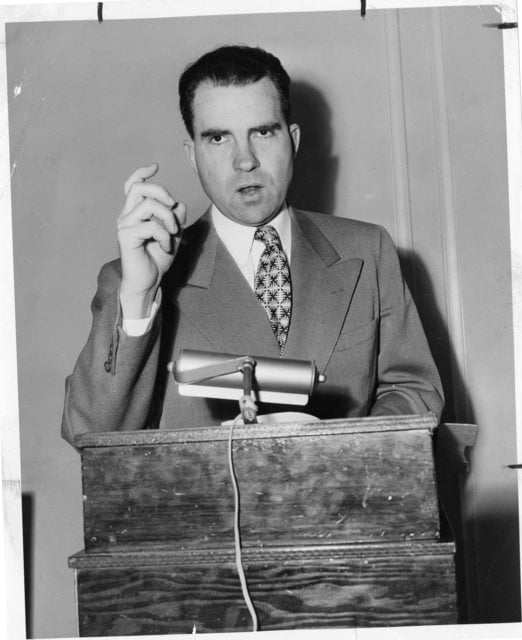
It is a truly insightful task to delve into the profound shift that occurred when Richard Nixon took the US dollar off the gold standard in 1971, a decision that ripples through American economic life even today. To understand this pivotal moment, we must first appreciate the intricate system that preceded it, the pressures building against it, the dramatic events of the “Nixon Shock,” and its multifaceted legacy for the average American. My aim is to lay out the facts clearly, drawing directly from the sources and offering explanations that illuminate this complex history.
The Foundations of a Fraying System: Bretton Woods and the Dollar’s Strain
For a quarter-century after World War II, the international monetary system was governed by the Bretton Woods Agreement, established in 1944. This system anchored global finance to the US dollar, which was, in turn, fixed to gold at a price of $35 per ounce. This framework was instrumental in the recovery of war-torn Western Europe and Japan and fostered two decades of unprecedented prosperity in the non-Communist world. The dollar’s strength and the vast US gold reserves served as the bedrock of this stability.
However, by the early 1950s, the global economic balance began to shift. The United States, influenced by Keynesian economics, allowed the dollar to inflate. Simultaneously, several European countries, notably West Germany, France, Italy, and Switzerland, pursued more conservative, less inflationary policies, leading their currencies to grow stronger. This divergence created a persistent and growing deficit in the American balance of payments, leading to a steady outflow of gold from the United States and a significant accumulation of dollar claims in foreign central banks. By 1960, foreign short-term claims on American gold surpassed the actual US gold supply. Indeed, between December 1965 and August 1971, foreign official institutions amassed $28 billion in dollar claims.
The “guns and butter” policies of President Lyndon B. Johnson, encompassing both the Vietnam War and expansive “Great Society” domestic programs, further exacerbated these economic strains. This approach, encouraging Americans to believe they could pursue both a substantial war and vast social programs, strained the economy, fueled inflation, and further weakened the US dollar. The traditional US merchandise trade surplus, a consistent feature since 1893, began to shrink in 1969, even turning into a deficit by the summer of 1971. This signaled a “major negative structural change” in America’s trading position.
Foreign nations grew increasingly vocal about their discontent. France, for instance, criticized the unique US position of being able to acquire assets abroad using its own currency, while other nations were compelled to hold dollars as reserves. Some foreign officials, like those in France, overtly favored a devaluation of the dollar. The core problem of the Bretton Woods system, as many recognized, lay in its inherent conflict: it was impossible to reconcile fixed exchange rates with free capital movements and the pursuit of full employment policies.
The Pressure Cooker: Nixon’s Path to Unilateral Action
When Richard Nixon took office in 1969, he inherited these myriad domestic and international economic problems. His administration faced persistent inflation, a weakening dollar, and growing balance-of-payments deficits. While Nixon had initially opposed direct interference with wages or prices, and publicly maintained commitment to the dollar-gold link, the escalating crisis demanded action.
Nixon’s primary objective, especially with the 1972 presidential election looming, was to ensure economic expansion and prevent a recession that could jeopardize his re-election. He firmly believed that “jobs counted for more than anything else” in politics. By July 1971, public opinion polls reflected widespread dissatisfaction with his administration’s economic performance, with a significant portion of Americans favoring a wage and price freeze.
The calls for radical change grew louder. Senator Jacob Javits, a centrist Republican, openly suggested ending gold sales and convening a world monetary conference. The Joint Economic Committee in Congress released a report asserting the dollar was overvalued and advocated for wage/price restraints and exchange rate realignment, even hinting at unilateral action if the IMF failed to act.
Internally, Nixon’s advisors were divided but recognized the urgency. A 1969 task force led by Paul Volcker, then Undersecretary of the Treasury, had already identified the growing strain on the international monetary system and included the suspension of gold convertibility as an “ultimate weapon” if negotiations failed. Even Arthur Burns, Nixon’s Federal Reserve chairman and a conservative central banker, who initially opposed controls, came to believe that mandatory wage and price regulations were necessary to combat inflation.
By early May 1971, the crisis reached a breaking point. European central banks, including West Germany, the Netherlands, France, and Belgium, began demanding to exchange their dollars for gold, creating a palpable fear of a “gold rush” that would deplete dwindling US reserves. The US was on the “brink of a market panic” that would inevitably force it off gold. The British even approached the US to cover their $3 billion in dollar reserves, with Treasury Secretary John Connally observing, “Anybody can topple us—anytime they want—we have left ourselves completely exposed”.
Facing this immense pressure, both domestic and international, Nixon, in his memoirs, described early 1971 as “the lowest point of my first term as president,” believing his re-nomination in 1972 was uncertain. He recognized that the “rules of economics are not working quite the way they used to”. It was in this crucible of economic distress and political imperative that the decision was made.
The “Nixon Shock”: August 15, 1971
On August 15, 1971, following two days of intense, secretive discussions at Camp David, President Nixon announced his “New Economic Policy” to the nation and the world. This multifaceted program included:
- Closing the Gold Window: The most dramatic measure was the unilateral suspension of the dollar’s convertibility into gold, effectively ending the dollar’s fixed link to gold at $35 an ounce. This move left foreign central banks with billions of dollars that had suddenly lost their gold backing. Nixon framed this as “defend[ing] the dollar against the attacks of international money speculators”. He wanted to portray the US as being “under attack” and responding decisively.
- Wage and Price Freeze: A 90-day freeze on all wages and prices across the broad US economy was imposed to combat inflation. This was a stark reversal of Nixon’s long-held conservative principles and public opposition to such controls.
- Import Surcharge: A temporary 10% import surcharge was levied on all dutiable imports, aimed at improving the US trade balance and pressuring trading partners to revalue their currencies. Nixon justified this by claiming “unfair” trade advantages held by foreign competitors.
- Tax Reduction: A variety of new tax incentives were introduced to stimulate the economy.
Nixon and his team, particularly John Connally, deliberately opted for a “bold, comprehensive, and integrated” package to maximize its impact and deter piecemeal criticism. Connally famously articulated the philosophy: “You take a position before you are forced to”. While Nixon expressed anxiety about how the public would perceive a “devaluation,” he was ultimately convinced by Connally that a bold, unified approach was necessary. He aimed to convey that the US was addressing its economic problems thoughtfully and decisively, without a “piecemeal stopgap emergency measure”.
The immediate domestic reaction was largely positive, bordering on euphoria. Many economists, including Walter Heller and Robert Triffin, applauded the “historic initiative”. Democrats, though recognizing Nixon had “stolen their shoes” by adopting their ideas, were nonetheless grateful for the action. However, concerns were raised about the extent of government intervention in the economy.
Internationally, the “Nixon Shock” was met with extreme concern, anger, and a sense of resignation. Foreign governments were taken by surprise due to the unilateral nature of the decision, given only a few hours’ prior notification. Japan, in particular, was shocked, having believed previous US pledges not to devalue the dollar. German newspapers characterized Nixon’s program as a “relapse of the world’s strongest economic power into nationalism and protectionism” and a “declaration of economic war”. Henry Kissinger himself acknowledged it was “seen by many as a declaration of economic war”.
Long-Term Effects on the Average American
The decision to delink the dollar from gold and implement comprehensive controls had profound and enduring effects on the average American, shaping the economic landscape for decades.
- The Rise of Inflation and Stagflation: While the wage and price freeze temporarily suppressed inflation, it “flared out of control” once controls were eventually removed. From an average of 3.6% before controls, inflation surged to 12.2% in the eight months after their end in April 1974. By the end of the 1970s, it was running at nearly 14%. This period saw the emergence of “stagflation”—the puzzling combination of rising inflation, slow economic growth, and increasing unemployment, a phenomenon that “mystified professional economists and laypersons alike”. The continued expansionary monetary policies, often driven by Nixon’s political pressure on the Federal Reserve to keep interest rates low for his re-election prospects, contributed significantly to this virulent inflation. Americans became deeply concerned about inflation, and a 1975 survey showed that people were “troubled most of all by inflation”.
- Erosion of Public Trust and Economic Anxiety: The economic turmoil of the 1970s severely impacted American confidence. A Gallup poll in June 1973 showed 67% of those polled thought Nixon was involved in Watergate or lied to cover it up, damaging trust. By March 1975, a survey revealed that over 83% of Americans agreed with the statement: “The people running this country (government, political, church and civic leaders) don’t tell us the truth”. Confidence in institutions like the military, business, the presidency, and Congress plummeted between 1966 and 1975. By 1975, 55% of Americans felt “alienated” and “disaffected” with the country’s state, leading to a “substantial decline in optimism about the future”. The period fostered a widespread sense of “America’s decline,” with historians even comparing the US in the 1970s to 19th-century Spain—a “has-been powerhouse that had lost its strength, its wealth, and its integrity abroad”.
- Shift in Global Economic Dynamics and Trade: Nixon’s actions signaled the end of America’s “near-omnipotent role” in the global economy. It forced allies to accept “burden-sharing” in defense and trade, shifting towards a more multilateral approach, even if reluctantly. While the immediate goal was to boost American competitiveness and eliminate “unfair” foreign advantages, the import surcharge raised fears of retaliation and a return to the “economic warfare” of the 1930s. The long-term impact on trade was complex, but it established a more competitive, and at times contentious, global trading environment.
- Government’s Expanded Role in the Economy: Despite Nixon’s conservative leanings, the New Economic Policy marked a significant expansion of government intervention in the private sector. The establishment of the Cost of Living Council, for instance, indicated a long-term government presence in economic affairs. This fundamentally altered the relationship between the government and the economy, a “sharp departure” from previous policies and commitments.
- The Dollar’s Enduring Global Dominance (Paradoxically): Perhaps counterintuitively, despite the dramatic break from gold, the US dollar did not lose its global preeminence. It continues to account for approximately 60% of all foreign exchange reserves in central banks and remains the most important currency for international trade and lending. US Treasury bonds and bills are still considered the world’s safest financial asset, allowing the United States to finance its deficits “with considerable ease and at low interest rates”. The dollar’s enduring strength has maintained its role as a “potent symbol of American industrial and military power across the globe” and a central part of the nation’s “image and soft power”. This has meant that for the average American, imported goods remained relatively affordable, and the country could continue to run large trade deficits without immediate severe repercussions, thanks to persistent foreign demand for dollars and US assets.
- Unresolved Monetary System: The Smithsonian Agreement, negotiated in December 1971, which included a devaluation of the dollar against gold and revaluations of other currencies, was hailed as a success, temporarily averting further chaos and preventing widespread protectionism. However, as Paul Volcker presciently noted, “I hope it lasts three months,” and indeed, it soon began to unravel due to ongoing inflation, capital outflows, and a lack of commitment from other nations to defend the new parities. The search for a new, permanent international monetary order failed after more than four years, ultimately leading to a more “permissive” system of floating exchange rates where gold played a phased-out role. This “non-system” meant greater currency volatility, which could affect prices of imports and exports, impacting the purchasing power of the average American and the competitiveness of domestic industries.
In essence, Nixon’s decision in 1971, born out of mounting economic pressure and political calculations, irrevocably altered the global financial architecture and American domestic policy. While it aimed to address immediate crises and stabilize the economy, its long-term impact included persistent inflation, a crisis of public confidence, and a more competitive global economic environment that fundamentally redefined America’s economic role in the world for the average citizen. It was a bold move that, in retrospect, simultaneously marked an end to one era and the turbulent beginning of another.