

The very air we breathe tells a story, a chronicle of change, and in 1990, the world received a stark and clear chapter of that unfolding narrative. This was the year the Intergovernmental Panel on Climate Change (IPCC) released its First Assessment Report, unequivocally stating that the world had been warming, and that future warming was indeed likely. It was a pivotal moment, marking a significant shift from scientific discovery to global political reckoning, and it set the stage for decades of environmental action—and reaction.
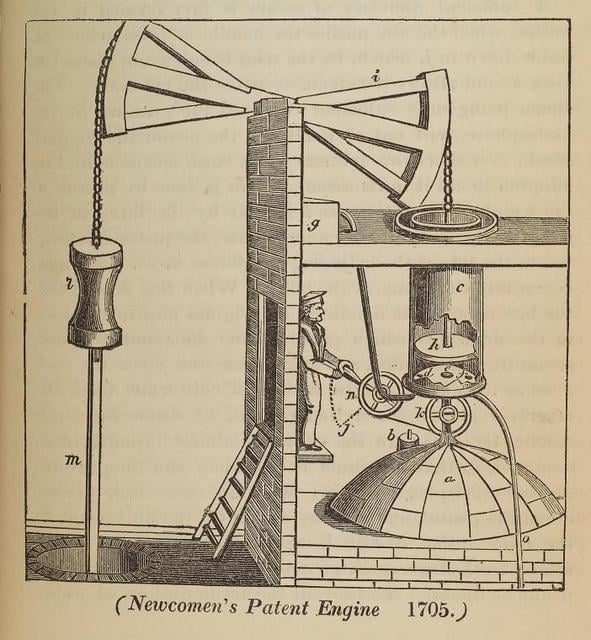
The foundations of this understanding stretch back centuries. As early as 1712, the invention of the steam engine by Thomas Newcomen paved the way for the Industrial Revolution and the large-scale use of coal, initiating a new era of human impact on the planet. By 1824, French physicist Joseph Fourier had described the Earth’s natural “greenhouse effect,” recognizing that the atmosphere augmented the planet’s temperature by trapping heat. Decades later, in 1861, Irish physicist John Tyndall identified specific gases, like water vapor, that created this effect, likening aqueous vapor to “a blanket more necessary to the vegetable life of England than clothing is to man”. The automobile arrived in 1886 with Karl Benz’s Motorwagen, and by 1896, Swedish chemist Svante Arrhenius had already concluded that industrial coal burning would enhance this natural greenhouse effect, predicting a warming of a few degrees Celsius for a doubling of CO2 – an estimate remarkably close to modern climate models. Another Swede, Knut Angstrom, further demonstrated in 1900 that CO2, even in tiny atmospheric concentrations, strongly absorbed infrared radiation, confirming its role in warming.
The evidence continued to mount through the 20th century. Carbon emissions from fossil fuel burning and industry reached one billion tonnes per year by 1927, climbing to six billion tonnes per year by 1989. British engineer Guy Callendar showed in 1938 that temperatures had risen over the previous century, correlating it with increased CO2 concentrations, though his “Callendar effect” was widely dismissed at the time. Yet, by 1950, carbon dioxide levels began to jump, and the US President’s Advisory Committee panel warned in 1965 that the greenhouse effect was a matter of “real concern”. The term “global warming” entered the public domain in 1975 through US scientist Wallace Broecker’s paper. By 1977, scientific opinion began to converge on global warming, not cooling, as the primary climate risk for the coming century. The Villach Conference in 1985 declared a consensus among experts that some global warming was inevitable, urging governments to consider international agreements to restrict emissions. The Montreal Protocol in 1987, though focused on the ozone layer, had a significant impact on greenhouse gas emissions. This increasing scientific clarity and public attention led directly to the formation of the Intergovernmental Panel on Climate Change (IPCC) in 1988, established to collate and assess the burgeoning evidence on climate change.
The culmination of these efforts was the IPCC’s First Assessment Report in 1990. This landmark document concluded that global temperatures had risen by 0.3-0.6 degrees Celsius over the preceding century. Crucially, it stated that humanity’s emissions were augmenting the atmosphere’s natural complement of greenhouse gases, and that this addition “would be expected to result in warming”. This report found “considerable evidence for anthropogenic climate change,” although it also noted “some uncertainty and need for more research”. This was not merely a prediction; it was a clear statement that a warming trend was already underway and that human activities were a contributing factor, with future warming deemed likely.
The IPCC’s report, while groundbreaking, landed in a complex political and economic landscape. In 1989, even before the report’s release, UK Prime Minister Margaret Thatcher, a chemist by training, warned the UN about the “vast increase in the amount of carbon dioxide reaching the atmosphere” and called for a global treaty on climate change, acknowledging that “change in future is likely to be more fundamental and more widespread than anything we have known hitherto”. However, the response from some major industrial nations was cautious, to say the least. In 1990, the White House, under the Bush administration, altered scientific testimony to minimize the danger of ozone depletion, prioritizing “business worries about regulation” over public safety. When the European Community and Japan proposed specific targets for carbon dioxide emissions, the US, a leading culprit in emissions, feared it “would hurt the nation’s economy in the short term for no demonstrable long-term climatic benefit”. This reluctance was further evidenced by deep cuts in renewable energy research made by the Reagan and Bush administrations—a 90% cut under Reagan—despite growing evidence for their efficacy.
Despite this resistance, the 1990 IPCC report provided the impetus for significant international action. In 1992, at the Earth Summit in Rio de Janeiro, governments adopted the United Nations Framework Convention on Climate Change (UNFCCC), with the key objective of “stabilization of greenhouse gas concentrations in the atmosphere at a level that would prevent dangerous anthropogenic interference with the climate system”. Developed countries participating in this convention committed to returning their emissions to 1990 levels. However, the influence of economic and corporate interests quickly became apparent; during the Earth Summit, the US delegation objected to discussing the military’s role in environmental degradation, and the suggestion was defeated.
The immediate aftermath of the 1990 report and the subsequent climate actions saw the rise of a concerted effort to sow doubt. Well-funded by conservative foundations and industry special interests, “attack machines” emerged, deploying tactics honed from previous battles against science on issues like DDT, acid rain, and ozone depletion. In the early 1990s, ExxonMobil, whose own scientists had accurately forecasted climate change in the 1980s, joined the Global Climate Coalition. This coalition consciously sought to create “significant uncertainties” in climate science among the American public and policymakers, aiming to delay or prevent action on climate change. Scientists like Roger Revelle, a mentor to Al Gore, had their names associated with denialist papers, even posthumously and against their known views, to discredit the scientific consensus. Figures like Ben Santer, who contributed to the 1995 IPCC report’s conclusion of a “discernible human influence,” were falsely accused of violating IPCC rules and subjected to “scientific cleansing” by figures like S. Fred Singer and Frederick Seitz. Conservative think tanks like the Heritage Foundation and the American Enterprise Institute (AEI) produced and disseminated analyses often biased to the right, even when non-partisan reports were available, effectively framing scientific disagreements as political issues.
Despite these formidable challenges, the scientific consensus continued to strengthen. Subsequent IPCC reports found “new and stronger evidence” in 2001 that human emissions were the main cause of warming, and by 2007, concluded it was “more than 90% likely”. The 2013 report declared scientists “95% certain” that humans are the “dominant cause” of global warming since the 1950s. This overwhelming consensus among the world’s scientific academies, including the National Academy of Sciences, affirms that climate change is real, human-caused, and an existing problem.
From the vantage point of today, the 1990 IPCC report stands as a crucial early warning. While the planet has warmed around 1°C since pre-industrial times, with atmospheric CO2 levels surpassing 400 parts per million by 2013—and exceeding 430 ppm last month, the highest in 30 million years—the projections for future warming remain stark. The economic costs of inaction are immense, with climate change potentially damaging global GDP by up to 20%. Furthermore, the health-related costs of plastic pollution, whose production is set to triple by 2060, are estimated at $1.5 trillion annually. The 1990 IPCC report thus served as a vital initial roadmap, outlining a challenge that humanity has continued to grapple with, demanding not just scientific understanding, but concerted global action in the face of persistent political and economic headwinds.