

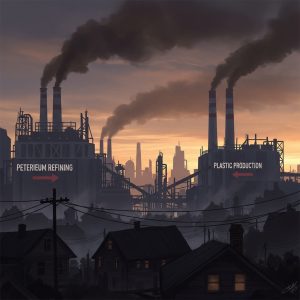
For more than half a century, the Clean Air Act has stood as the bedrock of American environmental law, responsible for drastically reducing deadly pollution and preventing thousands of premature deaths. Signed into law by President Lyndon B. Johnson in 1963 and vastly strengthened in 1970 and 1990, the legislation empowered the government to set, monitor, and enforce emissions standards for industrial polluters. Yet, in March 2025, the Trump administration engineered a breathtaking subversion of this historic law. In what the administration touted as the “biggest deregulatory action in U.S. history,” the White House offered major polluters a tantalizing deal: their facilities could be exempted from key provisions of the Clean Air Act simply by asking for a pass via email.
To understand the magnitude of this executive action, one must look at the historical trajectory of environmental regulation. For decades, environmental protection was a largely bipartisan endeavor. It was a Republican, President Richard Nixon, who established the Environmental Protection Agency (EPA) and signed the sweeping 1970 Clean Air Act amendments. Twenty years later, another Republican, President George H.W. Bush, utilized a market-based “cap-and-trade” system to pass the 1990 Clean Air Act amendments, successfully combating the crisis of acid rain and extending federal protection over the ozone layer.
However, the neoliberal turn of the 1980s fractured this consensus. During the Reagan administration, conservative officials and industry-funded think tanks began to view environmental safeguards not as necessary public health measures, but as oppressive constraints on the free market. Reagan’s EPA administrator, Anne Gorsuch Burford, slashed civil enforcement cases by 75 percent, and the administration drafted documents aimed at eliminating the Clean Air Act’s specific goals and deadlines. While public backlash prevented Reagan from gutting the law entirely, his administration solidified a conservative ideological framework that equated deregulation with economic liberty.
That ideological project reached its zenith in the spring of 2025. Stripping away the pretense of rigorous administrative review, the Trump White House established an email inbox to receive and funnel exemption requests directly from corporate executives. There was no formal application required; an email sent before the end of the month would suffice to secure a two-year reprieve from implementing expensive pollution controls. Within weeks, the inbox was flooded with over 3,000 pages of emails from executives across the nation’s heaviest industries.
The results were sweeping and catastrophic for public health. By presidential proclamation, Trump unilaterally granted exemptions to more than 180 polluting facilities across 38 states and Puerto Rico. The beneficiaries included some of the nation’s most notorious polluters, more than 70 of which had faced formal EPA enforcement actions in the past five years for violating emissions limits. Among those exempted were Citgo Petroleum refineries in Illinois, Louisiana, and Texas; Sterigenics medical sterilizer plants emitting the carcinogenic gas ethylene oxide; the massive Ameren Labadie coal-fired power plant in Missouri; and the Formosa Plastics facility in Louisiana’s “Cancer Alley”.
In granting these reprieves, the White House completely sidelined the EPA’s scientific and air quality experts. The inbox was managed by a political appointee with a background in the utility and petrochemical lobbying sectors, and an EPA spokesperson admitted that the agency “played no role in the determinations”. The process was so rushed and sloppy that the official presidential proclamations were riddled with spelling errors, misidentified company names, and listed facilities in the wrong states.
To justify this unprecedented bypassing of federal law, the Trump administration cited an obscure standard in the Clean Air Act, claiming that the exemptions were necessary for “national security” and that the technology required to meet the Biden-era regulations simply did not exist. These justifications quickly crumbled under scrutiny. Multiple utility companies publicly confirmed they were already implementing the necessary pollution controls, proving the technology was entirely available. Furthermore, the “national security” rationale was stretched to absurd lengths; for example, the Scrubgrass Reclamation Company in Pennsylvania secured an exemption for a coal-waste power plant by arguing that keeping environmental compliance costs low was vital for national security because a significant portion of its electricity was being used to mine Bitcoin.
The human cost of this “deregulation by email” falls disproportionately on marginalized and working-class communities. Approximately 250,000 people live within a single mile of these exempted facilities. Exacerbating America’s long history of environmental racism, roughly 54 percent of the people living near these heavily polluting sites are non-white, compared to just 43 percent of the general U.S. population.
By allowing corporate executives to evade decades of established environmental law with a simple email, the executive branch effectively replaced the administrative state’s scientific rigor with a system of raw political patronage. This subversion of
the Clean Air Act illustrates the terrifying culmination of the modern deregulatory agenda: a government that willingly sacrifices the air its citizens breathe to protect the profit margins of the very corporations poisoning it.