

The year 2018 emerged as a pivotal chapter in the unfolding narrative of contemporary global dynamics, marked by escalating trade tensions, assertive displays of executive power in foreign policy, significant, yet complex, international financial entanglements, and the intellectual effort to define and understand the political forces at play. Each event, when viewed through the lens of truth and context provided by the sources, reveals deepening patterns of polarization and challenges to established norms.
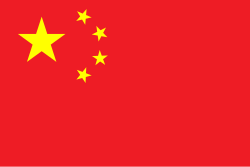
Economically, April 2018 saw China imposing 25% tariffs on a range of U.S. goods, a direct response to similar measures taken by the United States. This move underscored a significant shift in global trade dynamics, with President Trump frequently embracing tariffs as a cornerstone of his economic strategy, even famously labeling himself “Tariff Man”. This period was characterized by a U.S. approach where tariff policies could seemingly shift based on the president’s “personal whims,” as evidenced by frequent adjustments to rates and timings even in later years. This aggressive trade posture was not merely an economic tactic but, as some sources suggest, part of a broader “new Cold War” in which trade, industrial policy, and cyber-defense strategies became increasingly intertwined. Indeed, the introduction of tariffs prompted widespread discontent, even leading to discussions about an “economic armageddon” and confusion among both Republicans and Democrats about their rationale and impact.
In foreign policy, the Trump administration continued to demonstrate a willingness to act unilaterally, notably by imposing air strikes against Syria in 2018. This action, following similar strikes in 2017, reignited debates about the extent of presidential power in initiating military engagements without explicit congressional approval. While the U.S. Constitution grants Congress the sole power to declare war, raise and support armies, and maintain a navy, the exercise of executive authority in such matters has long been a complex issue. Legal analyses of similar situations in subsequent years, such as airstrikes in Iran, highlight that the definition of “war” in a constitutional sense remains contentious, often depending on factors like the duration of engagement, the level of hostilities, and the risk to military and civilian lives. These actions by the administration reflected a broader foreign policy stance characterized by a revival of “America First” and a transactional approach to international relations, where the U.S. might “take advantage of weakness”.
Beyond direct state actions, 2018 also revealed the intricate web of international financial influence. By this year, Saudi Arabia had become the single largest investor in U.S. startups. This significant financial relationship extended deeply into critical sectors, as demonstrated by the Saudi Kingdom Holding Company’s status as the largest outside shareholder in Twitter when it was a public firm, even surpassing co-founder Jack Dorsey. This investment, however, was not purely financial; sources indicate it was “weaponized,” used for propagandizing on behalf of Saudi economic programs, flooding discussions with pro-regime content, and tracking and harassing dissidents. Allegations even surfaced that a key Saudi advisor was running a spy ring inside Twitter’s San Francisco headquarters in 2014, with Twitter’s leadership reportedly aware of an “espionage problem” by 2018. This transactional relationship, where foreign governments “understand they’re dealing with a transactional president,” highlighted the acute danger of foreign influence within a U.S. administration, particularly one with numerous financial ties to such countries. The Saudis, in this context, effectively used their cooperation on “fundamental questions of oil and military basing rights” to gain flexibility on other issues, including addressing domestic Islamist rivals.
Intellectually, 2018 provided a critical framework for understanding these tumultuous events with the publication of Jason Stanley’s How Fascism Works. Stanley, a professor of philosophy at Yale University, is noted for his extensive work on authoritarianism, democracy, propaganda, and free speech. His book arrived as a timely “sweeping survey of this global fascist moment’s anti-education tide,” serving as both a “sequel and prequel” to his work on propaganda. Stanley defines “fascism” as a form of “ultranationalism of some variety (ethnic, religious, cultural), with the nation represented in the person of an authoritarian leader who speaks on its behalf”, citing Donald Trump’s “I am your voice” declaration from 2016 as a clear example. The book identifies a rise in “far-right nationalism” across multiple countries, including Russia, Hungary, Poland, India, Turkey, and the United States. It directly addresses the “right-wing attack on academic freedom” and the attempts to “control narratives around American history and social issues”. Stanley’s work highlights the “classic style of demagogic propaganda,” where attacks on institutions advocating for public reason and open debate are cloaked under the very ideals they undermine. He warns that such movements seek to “erase the perspectives and histories of marginalized groups” and that policies restricting knowledge, like those seen in Florida, constitute “educational authoritarianism”. The book’s publication served as a crucial intellectual tool for navigating an era characterized by the “normalization trap,” where previously unacceptable actions and rhetoric gradually become perceived as normal.
In retrospect, 2018 was a year that vividly demonstrated the complex interplay of economic, political, and social forces shaping the American and global landscape. The imposition of tariffs marked an aggressive shift in international trade, the presidential airstrikes continued to blur the lines of executive power, foreign investments highlighted new avenues of international influence and its potential abuses, and the timely publication of How Fascism Works offered a vital conceptual lens for understanding the political currents of the era. These events collectively underscored a period of accelerated polarization and the erosion of conventional democratic processes, pushing societies towards a deeper engagement with questions of truth, power, and the nature of governance itself.