

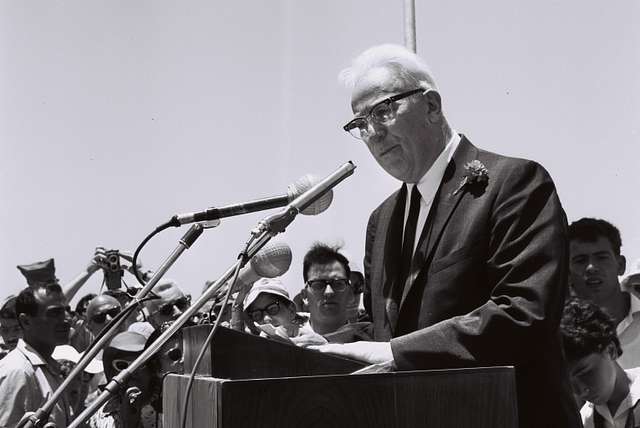
Indeed, let us turn our attention to 1954, a year that marked a profound turning point in the persistent American struggle for racial justice, as racial segregation in schools was declared unconstitutional, igniting a sustained campaign of civil disobedience. This historical juncture illuminates a truth that, while often celebrated, also reveals the complex and enduring nature of systemic inequality.
The bedrock of this shift was the Supreme Court’s landmark decision in Brown v. Board of Education of Topeka, Kansas in 1954, which unequivocally ended the “separate but equal” doctrine that had been upheld by Plessy v. Ferguson in 1896. The Court, led by Chief Justice Earl Warren, delivered a unanimous decision, a powerful statement declaring that segregated school systems were “inherently unequal”. This was not a sudden revelation but the culmination of a long legal battle waged by organizations like the NAACP. Prior to Brown, the NAACP had achieved victories chipping away at Plessy, such as Missouri v. Gaines (1939), which required separate but equal law schools for Black students, and McLaurin v. Oklahoma State Regents and Sweatt v. Painter (both 1950), which further dismantled the facade of equality in graduate education by recognizing “intangible reasons” for inequality, such as lack of interaction with white students and faculty. The Brown decision articulated that the separation of schoolchildren “generates a feeling of inferiority… that may affect their hearts and minds in a way unlikely ever to be undone”.
This momentous legal declaration, however, was just one piece of a larger, evolving puzzle. The message, though dramatic, often created a “customary gap between word and fact” for Black Americans. The Court, in its 1955 follow-up, insisted that desegregation proceed “with all deliberate speed,” a phrase that would, in practice, allow for significant delay. Indeed, by 1965, a decade later, “more than 75 percent of the school districts in the South remained segregated”. This “deliberate speed” was met with “massive resistance” from white segregationists, and President Eisenhower, despite having desegregated the District of Columbia and continuing efforts in the armed forces, hesitated to enforce Brown in state public schools, believing he lacked the authority and having “no faith in the law as an instrument of social change”. This stance left southern moderates isolated and “abandoned”.
Nevertheless, Brown served as a powerful catalyst, signaling the “start of a campaign of civil disobedience to secure civil rights for Americans of African descent”. The Black community, already imbued with a growing awareness and activism since World War II, understood that segregation could collapse against the force of Black unity, especially with federal backing. This sentiment was notably galvanized by the gruesome murder of Emmett Till in 1955, which vividly brought the brutality of segregation into Northern consciousness through widely circulated photographs.
The very next year, a pivotal act of civil disobedience unfolded in Montgomery, Alabama. While seemingly abrupt with Rosa Parks’s refusal to give up her seat in December 1955, this action was, in fact, “the result of a growing black awareness and activism since the war, and also the realization in the black community that segregation would collapse against the forces of black unity”. Parks, a seamstress, articulated her decision not simply as exhaustion, but a profound question: “when and how would we ever determine our rights as human beings?”. The Montgomery Black community was “ready”, having been planning such an act. Leaders like veteran trade unionist E.D. Nixon and the young Dr. Martin Luther King, Jr., organized a mass meeting and initiated a boycott of city buses. Despite retaliation, including the indictment of 100 leaders and violence such as bombings of churches and King’s home, the Black people of Montgomery “persisted”. Their unwavering resolve led to the Supreme Court outlawing segregation on local bus lines in November 1956. This tangible victory for nonviolence “catapulted King to the role of the movement’s primary leader”.
This marked the beginning of a larger style and mood of protest that would define the next decade: “emotional church meetings, Christian hymns adapted to current battles, references to lost American ideals, the commitment to nonviolence, the willingness to struggle and sacrifice”. Though there were voices like Robert Williams who advocated for self-defense with arms if necessary against violence, the dominant strategy in the South remained nonviolent. This was visibly demonstrated by the sit-ins that began in Greensboro, North Carolina, in 1960, where four Black college freshmen silently sat at a whites-only lunch counter. This initiative, reflecting a new determination among Black youth, spread rapidly, leading to thousands of arrests but also the desegregation of lunch counters in many places. The Freedom Rides, organized by CORE in 1961, followed, challenging segregation on interstate buses and terminals, and were met with severe violence, often ignored by federal authorities, highlighting the need for persistent, organized resistance.
The period after 1954, therefore, brought into sharp relief the ongoing struggle against racial discrimination, deeply rooted in American history. While the Fourteenth Amendment, ratified in 1868, was intended to secure equal rights for formerly enslaved people and provide a “constitutional foundation” for civil rights, its purpose had been “undercut” by Supreme Court decisions like Plessy and later attempts to twist its meaning into a “colorblind” principle that ignored existing inequality. Brown “restored the original purpose and vitality” of the Fourteenth Amendment, affirming its “great purpose” to “raise the colored race from [a] condition of inferiority… into the perfect equality of civil rights”.
Yet, the legal victories and the rise of civil disobedience also sparked a significant “white backlash” and calls for “law and order,” particularly intensifying after the widespread urban rebellions of the mid-1960s. This backlash often masked underlying racial resentment with “abstract” economic arguments or concerns about “property rights”. The campaign of civil disobedience, initiated and intensified after 1954, fundamentally challenged the deeply ingrained “racial caste system” that defined American life. It forced the nation to confront the fact that racial disparities were not just a consequence of historical conditions but were actively maintained through “systems of patrolling, surveillance, and punishment”. The post-1954 period cemented the notion that true equality would require not only legislative change but also sustained, organized protest and an unyielding demand for rights.