
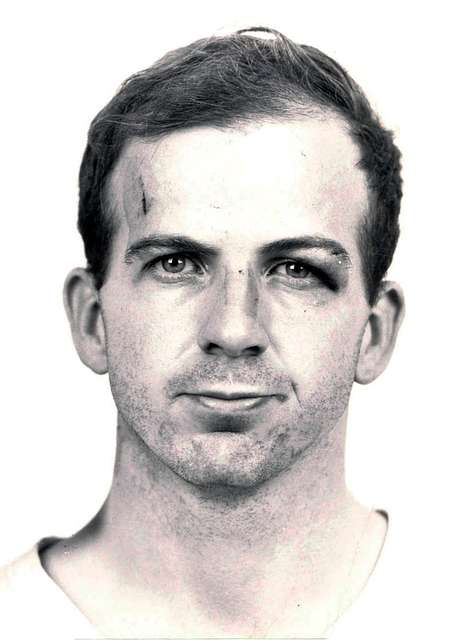
The intricate dance of global “geophysical experiments” and the delicate equilibrium within national governments, as we’ve previously discussed, find a stark human parallel in the life of Lee Harvey Oswald. His existence, a brief yet intensely scrutinized span, became inextricably linked to a singular, devastating event, forever altering the American psyche and spawning decades of debate. To truly understand Oswald is to navigate a labyrinth of personal turmoil, political idealism, intelligence complexities, and conflicting narratives—a testament to the sharp edge of truth in the face of momentous historical events.
Born in New Orleans in 1939, Oswald’s early life was marked by profound instability and neglect. His father died two months before his birth. By the age of ten, he had already lived in thirteen different homes and attended six different schools. His mother, Marguerite, a “domineering woman, consumed with self-pity” and “ill equipped to take care of her three sons,” frequently moved and struggled to manage her children. Social workers described young Lee as an “emotionally-starved, affectionless youngster”. At thirteen, a staff psychiatrist, Dr. Renatus Hartogs, found him to have “definite traits of dangerousness” and a “potential for explosive, aggressive, assaultive acting out”. Hartogs observed him as “intensely self-centered” and difficult to penetrate emotionally.
Oswald’s early exposure to Marxist ideology began around age fifteen, sparked by a pamphlet about the Rosenberg case. He read Das Kapital and the Communist Manifesto, describing the experience as “like a very religious man opening the Bible for the first time”. Despite his burgeoning leftist views, his desire to join the Marines, mirroring his older brothers, preceded his deep interest in Communism. He enlisted shortly after turning seventeen, eager to escape his mother’s “yoke of oppression”. His Marine service, however, was troubled; he accidentally shot himself, was court-martialed twice, and began flaunting his Russian studies and Communist leanings. He often debated politics with fellow Marines, asserting that “Communism was the best system in the world” and that “Castro was a great hero”. Notably, he envisioned himself achieving fame, wanting to be “looked back upon with honor by future generations”.
Oswald’s grand adventure began in earnest with his defection to the Soviet Union in September 1959. He obtained a passport, listing countries like Russia and Cuba as intended travel destinations. Upon arrival, he was “elated” and explicitly denounced the U.S., telling his brother he would “kill any american who put a uniform in defense of the american government”. Yet, his idealism soon clashed with Soviet reality. He became “disillusioned with the USSR,” concluding their system was a “perversion of Marxist goals”. Nevertheless, he maintained his identity as a “Marxist”. His friend Ernst Titovets, a medical student in Minsk, observed Oswald to be intellectually curious and proud of his American heritage, defending U.S. customs and the Marines. Despite the initial bravado, Oswald sought to return to the U.S. in early 1961, describing it as “the lesser of two evils”. His return process was routine, contradicting later speculation of intelligence backing.
Upon his return to America in 1962, the FBI interviewed Oswald to determine if he had contacted Soviet intelligence. He denied any such contacts, disavowed his renunciation attempt, and promised to inform the FBI of any Soviet approaches. His life in Dallas was marked by financial struggles, and his relationship with Marina became violent, with him physically abusing her. In January 1963, Oswald purchased a revolver and a Mannlicher-Carcano rifle using the alias A.J. Hidell. He then embarked on a bizarre, self-appointed mission to assassinate right-wing General Edwin Walker, photographing Walker’s home and drafting vitriolic manifestos condemning both the U.S. and USSR. He even posed for “backyard photos” with his weapons, telling Marina he wanted to prove he was “ready for anything”.
By April 1963, Oswald moved to New Orleans, where his pro-Castro sentiments escalated. He sought to establish a local chapter of the Fair Play for Cuba Committee (FPCC), becoming its sole member and distributing leaflets. He admired Fidel Castro as his “hero” and viewed Cuba as the “pure embodiment of Communist ideology”. His activism led to an altercation with anti-Castro Cubans, resulting in his arrest and subsequent public attention, which he “stirred things up” with. A radio debate, however, exposed his undesirable Marine discharge and Russian defection, publicly humiliating him. This humiliation seemingly intensified his detachment from reality and his focus on rifle practice, which Marina observed him doing for hours, operating the bolt action and aiming at “imaginary targets” in the dark. The FBI, while investigating him, dismissed him as a “weirdo” and a “nut,” finding no substantive connections to subversive elements.
In September 1963, Oswald undertook a trip to Mexico City, intending to secure a Cuban visa and potentially return to the USSR. His interactions at the Cuban and Soviet embassies were fraught with tension; he was denied a visa, which he declared would “end in tragedy,” and dramatically pulled out his .38 caliber revolver, sobbing and stating, “I’m going to defend myself”. This period gave rise to significant controversy, particularly the “Oswald Imposter” theory. A critical CIA blunder occurred on October 10, 1963, when a teletype described a “Lee Henry Oswald” at the Soviet embassy as “approximately 35 years old, with an athletic build, about six feet tall, with a receding hairline”—a description starkly different from the actual Oswald. This fueled claims of an imposter, reinforced by Cuban consul Azcue’s testimony that the man he argued with did not look like Oswald.
However, “the evidence is overwhelming that the real Oswald visited both embassies”. His visa application, with his verified signatures and photos, and his disruptive behavior at the Cuban embassy make the imposter theory highly improbable. The confusion and “falsification” surrounding these intelligence records were later theorized to be part of a “phase one” operation, designed to falsely link Oswald to a Soviet or Cuban assassination plot, which could then be used to justify a “phase two” narrative of a “lone assassin” to avoid nuclear war. There were also allegations that Oswald (or an imposter) threatened to kill Kennedy in the Cuban Embassy. Further adding to the enigma, government documents from multiple agencies show frequent, unexplained references to “Harvey Lee Oswald” instead of “Lee Harvey Oswald,” suggesting a “hidden common source” and “suppressed archetypal document” tied to military intelligence operations.
Returning to Dallas, Oswald secured a job at the Texas School Book Depository, a happenstance that would become crucial. The FBI, still interested in him due to his Mexico City trip, renewed its investigation. Agent James Hosty visited the Paines, and Oswald, furious about the “harassment” of Marina, left an unsigned, vaguely threatening note at the FBI office for Hosty. On November 21, 1963, Oswald left his wedding ring and $170 for Marina on their bureau—an uncharacteristic act for a man who had never before removed his ring.
The following day, November 22, 1963, the assassination of President John F. Kennedy unfolded. Oswald brought his rifle to work, and when he learned the presidential motorcade would pass directly in front of the Depository, he saw a unique opportunity. From the sixth floor, he fired shots at the motorcade. The Zapruder film and forensic analysis confirm shots came from behind, consistent with Oswald’s position. His escape was chaotic; he left the Depository, encountered Dallas patrolman J. D. Tippit, and shot him dead with a revolver. He was eventually cornered and arrested in a movie theater. In custody, Oswald denied everything, famously proclaiming, “I’m just a patsy!”. He requested a lawyer, specifically John Abt, known for his involvement in left-wing causes.
Two days later, on November 24, as Oswald was being transferred, he was shot and killed by Jack Ruby, a Dallas nightclub owner. Ruby claimed he was distraught over the assassination, though his mental state later deteriorated. Oswald’s murder, captured live on television, immediately fueled a surge of suspicion and rumors, with a Gallup poll showing only 29% of Americans believing Oswald acted alone a week later. The government-appointed Warren Commission concluded that Oswald was the lone assassin. Allen Dulles, whom President Kennedy had fired from the CIA, played a significant role in the Commission, reportedly steering the inquiry towards the “lone gunman” conclusion.
Despite the official findings, theories proliferated, ranging from “multiple Oswalds” to elaborate conspiracies involving the CIA, anti-Castro Cubans, the FBI, or the Mafia. Many struggled to accept that an “insignificant little man with no important background and no real future” could have changed history. Marina Oswald herself believed Lee was “manipulated” and “did not know who he was really serving”. Senator Richard Schweiker famously concluded there were “fingerprints of intelligence” all over Oswald’s life. While Oswald’s personality—his deep-seated anger, his desire for recognition, his “manipulative” political tourism, and his disillusionment with various systems—offers critical insight into his motivations, the ongoing release of documents, though not providing a “smoking gun,” continues to highlight the “deep reluctance” and “lack of full disclosure” from intelligence agencies, perpetuating skepticism. Fifty years on, the pursuit of “truth” remains entangled in an “avalanche of false information, distorted memories, and unrestrained speculation,” yet the overwhelming credible evidence points to Lee Harvey Oswald alone.