

Alright, let’s delve into the pivotal moments of early August 1964, a period that laid bare the complex and often contradictory forces shaping American politics and society. As a historian, I find such convergences of national and human drama to be incredibly illuminating, revealing deep currents of power, principle, and the perplexing ways in which we, as a nation, choose to define our interests.
The Crucible of 1964: Vietnam Looms, Civil Rights Bleeds
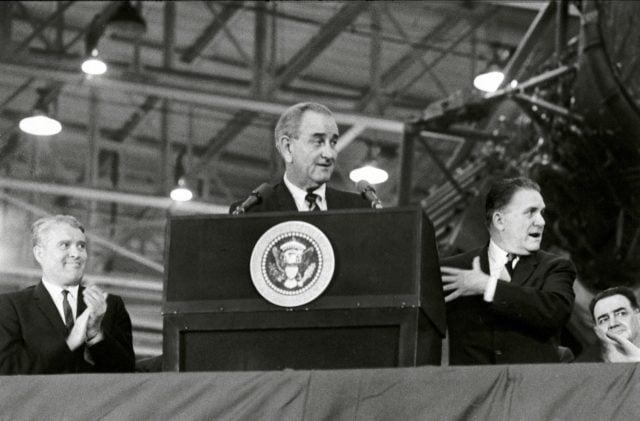
The summer of 1964 was a strange and potent mix of soaring legislative ambition and escalating international tension. In one corner, President Lyndon B. Johnson, a man described as a “masterful majority leader” who knew “how to manipulate the levers of power in Washington”, was skillfully navigating the political landscape in the wake of President Kennedy’s assassination. His grand vision, the Great Society, was taking shape, with landmark legislation like the Civil Rights Act finally overcoming filibusters and moving toward passage. Yet, in another, far darker corner, the nascent stages of an American war in Vietnam were being forged, and at home, the brutal realities of racial injustice continued to claim lives.
This dual reality, playing out simultaneously, offers us a profound lens through which to examine the nature of unchecked power, the influence of historical narratives, and the very definition of “national interest.”
The Gulf of Tonkin Incident: A Rapid Escalation of Power
On August 4, 1964, reports—confused and debated even at the time—emerged of a second North Vietnamese attack on U.S. destroyers in the Gulf of Tonkin. While historians still “wrestle with the question” of whether President Kennedy would have escalated the war or sought an exit strategy, Johnson had no such qualms. His approach was immediate and forceful. He ordered retaliatory strikes and, crucially, prepared a resolution for Congress. When his national security adviser, McGeorge Bundy, suggested taking time to think about the step, LBJ’s response was sharp and direct: “I didn’t ask you what you thought, I told you what to do”. This moment speaks volumes about the concentration of executive power, particularly in matters of foreign policy, and a readiness to act decisively.
Johnson’s motivations, as later historians have noted, were deeply rooted in his perception of political survival. He was acutely aware of the political fallout faced by Harry Truman and Dean Acheson, who had “lost their effectiveness from the day that the communists took over in China”. For LBJ, appearing “soft on Communism” was an existential political risk, especially with the 1964 presidential election looming. He believed that the potential “loss of Vietnam” could be politically devastating. This demonstrates how deeply personal and domestic political calculations can influence the gravest of international decisions.
The response from Congress was swift and overwhelming: the Tonkin Gulf Resolution passed with votes of 88-2 in the Senate and 416-0 in the House. This near-unanimous approval granted the president immense authority, essentially an unchecked mandate to take “all necessary measures” to repel attacks and prevent further aggression. From a historical perspective, this moment exemplifies the potential for “unreflective enthusiasm” and a “messianic pride of power” in foreign policy, as scholar Leo P. Ribuffo later described similar tendencies during the early Cold War. The “credibility” of the state—the idea that powerful nations must influence others through “reputation and psychology” and keep commitments to avoid being seen as a “Paper Tiger”—became a central tenet of the U.S. intervention in Vietnam. This emphasis on a “firm line” in a global ideological confrontation often short-circuited critical thinking and nuanced debate. The mainstream media, in this period, often “cooperated with the Kennedy administration in deceiving the American public on the Cuban invasion” and would similarly fall in line with dominant narratives, as described by critics who saw a “triumphalist history of the Cold War” that “overlooks those aspects of the struggle that might spoil the victory bash, while it highlights those that bolster the status quo”.
The Mississippi Murders: A Cry for Justice at Home
In a harrowing coincidence, on the very same day—August 4, 1964—that President Johnson was ordering retaliatory air strikes in Southeast Asia, the FBI located the bodies of three missing civil rights workers: James Chaney, Andrew Goodman, and Michael Schwerner, brutally murdered in Mississippi. This tragic discovery was a stark reminder that while the nation’s attention was being drawn to a distant conflict, a fierce, internal battle for justice and equality was raging at home.
The “black revolt” of the 1950s and 1960s, though often surprising to the mainstream, was “always an inch below the surface” for oppressed people carrying the “memory of slavery, and after that of segregation, lynching, humiliation”. This was not merely a historical memory but a “living presence”. The Civil Rights Movement, alongside other groups, was part of a “dramatic upsurge of democratic fervor” in the 1960s, demanding a “reassertion of equality as a goal in social, economic and political life”.
President Johnson’s immediate concern upon receiving the news of the bodies being found was to notify the families before the public announcement, but he was also calculating how this news might affect his domestic legislative agenda, specifically the crucial anti-poverty bill. This reveals the intricate dance between domestic and foreign policy, where even profound human tragedies can become factors in a political calculus.
This event also highlights the inherent wealth inequality and pockets of poverty that persisted in America despite the significant military budget of the Cold War era. Around 1960, half of the national budget went to the military, yet wealth distribution remained starkly unequal, with the lowest fifth of families receiving only 5% of all income, while the highest fifth received 45%. The civil rights struggle was, in part, a demand for economic justice and an equitable share of the nation’s prosperity.
Intersecting Histories and the “Propaganda of History”
The juxtaposition of the Gulf of Tonkin incident and the Mississippi murders in early August 1964 offers a powerful illustration of the inherent “politics of selection” in historical narratives. Mainstream media, as seen with Watergate, often gives “full treatment” to “bizarre shenanigans” or foreign policy crises, while “instances of ongoing practice”—such as the persistent racial violence or the work of domestic intelligence agencies—receive “the most fleeting attention”.
This relates directly to the concept of the “propaganda of history,” as powerfully articulated by W.E.B. Du Bois. He argued that historians sometimes “twist[] its ideals of truth and narrative accuracy to the service of dominance and power,” producing a “comforting vision of history” that covers over “stark moral differences”. The national narrative often emphasized “American exceptionalism,” suggesting that “America tells one story: the unbroken, ineluctable progress of freedom and equality”. Yet, the civil rights movement, and the brutal resistance it faced, starkly disputed this claim, forcing a confrontation with the “ugly truth of American history”.
The “end of history” ideology, popularized later by Francis Fukuyama but prevalent in the cultural landscape around 1995, posited that liberal democracy was the “final form of human government”. This complacency about ideological evolution, however, was clearly challenged by the ongoing “culture wars” and growing social divisions at home. The events of 1964, particularly the struggle for civil rights, underscore that “nations are not communities and never have been” in a way that “conceals fierce conflicts of interest…between conquerors and conquered, masters and slaves, capitalists and workers, dominators and dominated in race and sex”.
The ability of a president to act with seemingly unchecked power in foreign affairs, as seen in the Tonkin Gulf, highlights the enduring challenge to democratic accountability. This tendency, where the “power of the President to do anything he wanted in the name of ‘national security’ would stay”, raises questions about whether “political corruption” extends beyond explicit financial deals to include the misuse of authority for policy objectives that may serve partisan interests or perceived “national security” over domestic justice. Such uses of power, whether to control information, silence dissent, or justify actions abroad while ignoring deep-seated problems at home, echo concerns about “propaganda” and the manipulation of “reality-tunnels” that thinkers like Robert Anton Wilson explored.
In conclusion, early August 1964 was a micro-history of America’s internal contradictions. It revealed a nation ready to deploy vast military power to assert its “credibility” on the global stage, while simultaneously struggling to confront the fundamental injustices that undermined its very ideals of freedom and equality at home. It demonstrated how deeply intertwined foreign and domestic policies truly are, often reflecting the same underlying dynamics of power, control, and the constant, often contentious, negotiation of what it truly means to be a “just” society. Understanding these interwoven narratives, rather than accepting simplified versions, is essential for a true grasp of our past and for navigating the challenges that continue to define our present.