Building upon our previous discussion of the pivotal moments in 1964, particularly the complex interplay of foreign policy and domestic civil rights struggles, let us now turn our historical lens to a substance that, perhaps more than any other, became intertwined with the very fabric of American counterculture, government intrigue, and the ever-shifting landscape of consciousness itself: Lysergic Acid Diethylamide, or LSD. Its story is a profound illustration of how a single chemical compound can become a battleground for competing narratives of truth, power, and human potential.
The Unfolding Tapestry of LSD: From Lab Discovery to Cultural Catalyst
The history of LSD is not merely a scientific chronicle; it is a vibrant, often perplexing, saga that stretches from the precise, accidental discovery in a Swiss laboratory to its explosive role in shaping social movements, influencing political discourse, and challenging perceptions of reality itself.
The Genesis: A Chemist’s Revelation and a Medical Mystery
Our journey begins in 1938, when Dr. Albert Hofmann, a chemist at Sandoz Laboratories in Basel, Switzerland, first synthesized LSD-25 while investigating medicinal alkaloids from ergot, a rye fungus. The profound nature of his discovery, however, remained hidden until April 1943, when Hofmann accidentally absorbed a minute dose through his fingertips. What followed was an experience he described as a “remarkable but not unpleasant state of intoxication,” characterized by “intense stimulation of the imagination and an altered state of awareness of the world,” which he later detailed as “fantastic, rapidly changing imagery of a striking reality and depth, alternating with a vivid, kaleidoscopic play of colors”.
Hofmann immediately sensed that LSD could be a crucial tool for understanding the human mind and exploring the biochemical underpinnings of mental illness. Early scientific investigations in the United States, which began around 1949, initially echoed this view, focusing on LSD’s “psychotomimetic” or “madness-mimicking” properties. Researchers like Dr. Max Rinkel and Dr. Paul Hoch believed it could create “model psychoses” in a controlled laboratory setting, allowing for objective study of mental disorders like schizophrenia. Indeed, within a decade of its introduction, LSD gained high standing among psychiatrists, with over a thousand clinical papers discussing its use in treating a wide range of conditions, from sexual aberrations and autism to alleviating distress in terminal cancer patients and, notably, aiding in the recovery of chronic alcoholics.
Yet, even in these early years, the scientific community grappled with the drug’s elusive nature. Only a minuscule amount of LSD—a mere 0.01% of the original dose—entered the brain, and it remained there for only twenty minutes, despite effects lasting much longer. This physiological puzzle hinted at the profound, complex interactions at play within the nervous system.
The Shadowy Hand: CIA and Military Experimentation
As with many potent new discoveries of the Cold War era, the intelligence community quickly took keen interest. By late 1949, news of LSD reached Washington, sparking discussions of “Psychochemical Warfare” and the potential to weaponize mind-altering compounds. The CIA, and its wartime predecessor, the OSS, were already on a relentless quest for a “truth serum” or a “mind control” drug, having experimented with substances like marijuana (code-named TD), cocaine, heroin, and mescaline, none of which proved reliable enough.
Enter Dr. Sidney Gottlieb, head of the Chemical Division, who became captivated by LSD. He and his team, including Dr. Harold Abramson, engaged in extensive self-experimentation, initially believing LSD was “the secret that was going to unlock the universe”. The CIA invested heavily, purchasing “tonnage quantities” of LSD from Eli Lilly for $400,000. Under the clandestine MK-ULTRA program, launched in 1953, the Agency covertly funded research at numerous prestigious universities and hospitals across the country, often without the institutions’ knowledge of the true source of the funds.
These experiments often involved the “unwitting application” of LSD to subjects, including prisoners, mental patients, and even students, to study its effects on behavior, memory, and suggestibility. The goal was to find a reliable way to induce “intense mental confusion” and “break” individuals during interrogation. However, LSD proved frustratingly unpredictable; it caused “marked anxiety and loss of reality contact,” bizarre hallucinations, and even delusions of grandeur, often hindering interrogation rather than aiding it. By the early 1960s, the CIA and military began phasing out in-house LSD tests in favor of other “superhallucinogens” like BZ, deemed more effective incapacitants.
Yet, the Agency’s interest didn’t wane entirely. They shifted focus to understanding the drug’s broader social and political impact, even commissioning think tanks like the Rand Corporation and the Hudson Institute to analyze its effects on political activism and social movements. Perhaps most disturbingly, the CIA and military were complicit in a “disinformation campaign” that spread false information about LSD causing chromosome damage, even though their own internal studies showed otherwise. As John Lennon later mused, the CIA “invented LSD to control people, and what they did was give us freedom”.
The Cultural Eruption: From Elite Circles to the “Great Freak Forward”
Despite government attempts to control and weaponize it, LSD proved to have a “mind-manifesting” quality far beyond the intentions of its creators. Its initial leakage into elite society saw Hollywood stars like Cary Grant taking it more than sixty times, praising it for bringing him “close to happiness”. Prominent socialites like Clare Boothe Luce, publisher Henry Luce’s wife, were also early adopters, though she believed it should remain a drug for “doctors and their friends in the ruling class”.
The real explosion came as LSD found its way from medical and covert research into the burgeoning youth culture. This transition was, in part, a consequence of government restrictions themselves. The Kefauver-Harris Amendments of 1962 and the Drug Abuse Control Amendments of 1965 made access to LSD difficult for legitimate scientific research, inadvertently spurring the growth of a black market.
Key figures, often with their own initial encounters with LSD through government-funded research, became its most vocal proponents:
- Captain Al Hubbard, dubbed the “Johnny Appleseed of LSD,” became a tireless evangelist, emphasizing its potential for “visionary or transcendental” experiences. He freely distributed the drug and set up treatment centers, believing it could transform belief systems, even those of world leaders.
- Aldous Huxley, the renowned author of Brave New World, became a “propagandist for hallucinogenic drugs” through his influential essay The Doors of Perception. He envisioned LSD as a tool for intellectual elites to achieve spiritual enlightenment and a more unified social order.
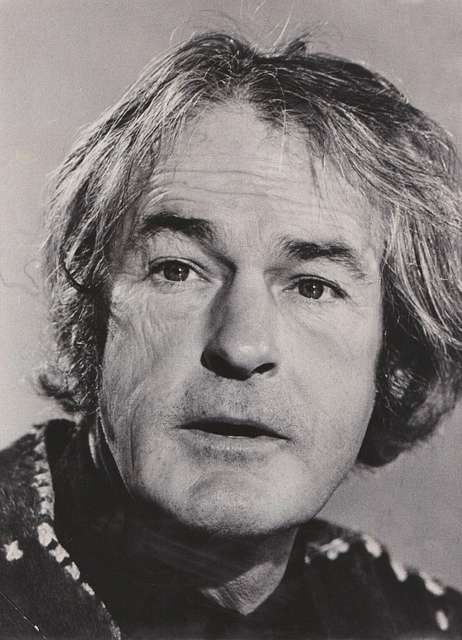
- Timothy Leary, a former Harvard psychology professor, had his transformative experience with psilocybin in Mexico, which he described as the “deepest religious experience of his life”. Dismissed from Harvard, he became the “High Priest of the psychedelic movement,” establishing the International Federation for Internal Freedom (IFIF) and later the League for Spiritual Discovery. Leary saw LSD as a “neurological” key to a “psychedelic century,” a means for young people to “decondition themselves away from the work-duty ethic” and achieve “spiritual growth”. He controversially fused LSD with “erotic politics” and “hedonic engineering,” promoting it as a path to intense sensuality and “several hundred orgasms”. His theatrical and provocative approach, embraced by the media, amplified the drug’s notoriety and spurred its widespread adoption.
- Ken Kesey, who first tried LSD in a government drug-testing program, took the drug out of the laboratory and into the countercultural mainstream with his “Merry Pranksters” and their “Acid Tests”. He saw the burgeoning grassroots use as “the revolt of the guinea pigs,” rejecting any “medically sanitized or controlled psychedelic experience”.
- Allen Ginsberg, another early subject of CIA-linked experiments, became an “outspoken advocate” of psychedelics. Initially envisioning a “peace and love movement” sparked by LSD, he later urged a more open, less fixated approach to the “infinite openness of psychedelic consciousness”.
As LSD spread, an “outlaw ethos” emerged. The Haight-Ashbury district in San Francisco became a “psychedelic city-state”, fueled by chemists like Augustus Owsley Stanley III, whose “Orange Sunshine” became legendary for its potency. Groups like the Brotherhood of Eternal Love, led by John Griggs and bankrolled by figures like Billy Hitchcock, distributed millions of doses, often operating under the guise of religious organizations. They even explored smuggling acid to “dose all the Chinese troops occupying Tibet”.
Competing Narratives and the “War on Drugs”
The widespread use of LSD ignited intense public and political debate, leading to what some historians call “psychedelic wars”. The initial medical-scientific perspective that saw LSD as a tool for therapy clashed with its association with recreational use and political rebellion.
The media played a crucial, often sensationalized, role. After initially positive coverage (like Life magazine’s 1957 piece on “magic mushrooms”), the narrative shifted dramatically. By the mid-1960s, “scare headlines” linked LSD to “instant psychosis,” bizarre behavior, violence, and the “domino theory” of drug abuse. The “chromosome hoax,” which falsely claimed LSD caused birth defects, was widely trumpeted, despite scientific evidence to the contrary that was known by the military and the CIA. This “smear campaign” successfully fostered a negative public perception.
The government, facing a counterculture increasingly tied to LSD, responded with a “War on Drugs.” In 1965, the Drug Abuse Control Amendments tightened restrictions, and by 1968, federal law made possession of LSD a misdemeanor and sale a felony. Ultimately, in 1970, LSD was classified as a Schedule I drug, deemed to have “no medical value whatsoever” and a high potential for abuse. This criminalization, as historian Emily Dufton notes, was often politically motivated, using LSD as a convenient scapegoat to discredit the radical youth movements that opposed the Vietnam War and challenged the status quo.
However, the “propaganda of history” that sought to define LSD solely as dangerous could not fully suppress its complex reality. As a “nonspecific amplifier of psychic and social processes”, LSD often reflected and intensified the prevailing “cultural stew”. The hostile environment created by prohibitionist laws paradoxically led to more “bad trips,” demonstrating the profound influence of “set and setting” on the drug experience.
Enduring Legacy and a “Psychedelic Renaissance”
Despite the concerted efforts to suppress it, LSD’s cultural impact proved enduring. It influenced rock music, from The Beatles’ “Tomorrow Never Knows” (inspired by Leary’s Tibetan Book of the Dead manual) to the Grateful Dead’s entire ethos. While the “tremedous outburst of energy in the sixties did not succeed in revamping the American power structure,” it undeniably opened “avenues of choice” and a “new set of options” for self-exploration and alternative lifestyles that persist to this day.
Today, decades after the peak of the 1960s counterculture, LSD has outlived its initial vilification. While still illegal, it continues to be used recreationally, often in lower doses, shedding some of its past “demoniacal or paradisiacal vibrations”. Bad trips are reportedly less frequent, in part because the “psychosocial matrix surrounding LSD has evolved,” losing much of its intense emotional and political charge.
Perhaps most notably, the 21st century is witnessing a “psychedelic renaissance,” with figures like author Michael Pollan and various Silicon Valley innovators openly discussing their experiences and advocating for new research. Institutions like Johns Hopkins University have established centers for psychedelic and consciousness research, backed by significant donations, signaling a major shift in the perceived “social legitimacy” of these substances. This renewed interest, driven by a diverse array of advocates—from libertarians to medical pragmatists and those seeking commercial opportunities—is slowly paving the way for the potential legal reintroduction of psychedelics into American society, often for therapeutic purposes like PTSD and end-of-life care.
The history of LSD is a powerful reminder that “truth” and “reality” are often contested terrains, shaped by scientific discovery, political agendas, cultural movements, and deeply personal experiences. The enduring fascination with this powerful compound, from the controlled experiments of covert agencies to the ecstatic visions of countercultural pioneers and its contemporary scientific re-evaluation, underscores humanity’s persistent drive to explore the boundaries of consciousness and redefine its place in the world. It is a story that reveals, perhaps more clearly than any other, the bewildering complexities of power, influence, and the relentless human quest for both liberation and understanding.