

It is truthful to say that the years 1965 and 1966 marked a pivotal period for opposition to the Vietnam War, with various forms of protest emerging across the United States. This era saw the initial stirrings of what would grow into a widespread antiwar movement, fundamentally challenging the nation’s involvement in Southeast Asia.
During 1965 and 1966, the U.S. significantly escalated its military intervention in Vietnam, a decision that transformed the conflict into an American war. This escalation prompted a growing wave of dissent at home.
Initially, these antiwar protests were often described as “small and well-mannered affairs”. Groups would gather in public spaces for silent vigils or march with signs, adhering to a more traditional form of demonstration. Women would often participate in skirts or dresses, and men in ties and jackets. However, even in 1965, there were early signs of more defiant actions, such as public draft card burnings and attempts to obstruct trains carrying U.S. troops. Tragically, some individuals took extreme measures, with three Americans burning themselves to death in protest of the war that year.
A crucial tactic that gained prominence during this time was the “teach-in.” Faculty members on college campuses began organizing these events to educate their students, colleagues, and the general public about why they believed the war in Vietnam was wrong. These discussions were vital, especially since mainstream media at the time generally supported official government claims regarding the war’s necessity and rarely featured dissenting viewpoints. Publications with smaller circulations, such as The Nation, I. F. Stone’s Weekly, and Ramparts, became essential sources for critical analysis that challenged the official narrative.
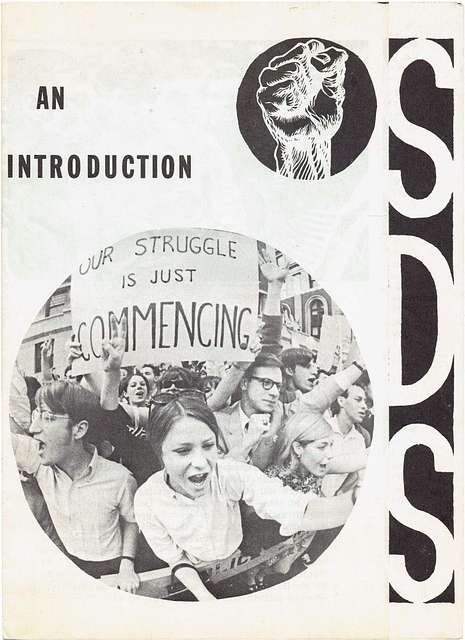
The Students for a Democratic Society (SDS), a prominent New Left organization, played a key role in organizing early antiwar efforts. In April 1965, SDS sponsored a significant rally in Washington, D.C., protesting President Lyndon Johnson’s decision to initiate sustained bombing of North Vietnam. This demonstration drew a much larger crowd than anticipated—thirty thousand people—and received extensive media coverage, boosting SDS’s prominence and expanding its influence. By October 1965, the first International Days of Protest saw rallies across a hundred cities in the Western world, including a notable event at Berkeley where Ken Kesey and his Merry Pranksters, along with folk singers and antiwar figures like Allen Ginsberg, addressed an audience of nearly fifteen thousand.
The antiwar movement was deeply intertwined with the ongoing struggle for civil rights. Many participants, especially Black activists, viewed the government with skepticism due to their own experiences with racial injustice. Black civil rights leaders, who had achieved landmark legislative successes through nonviolent protest in 1964 and 1965, hoped that similar collective action could stop the war. The Student Nonviolent Coordinating Committee (SNCC), a radical youth wing of the civil rights movement, explicitly condemned the U.S. policy in Vietnam in early 1966, stating that it violated international law and calling for withdrawal. Figures like Martin Luther King Jr., while initially cautious about speaking out for fear of jeopardizing civil rights legislation, began to articulate stronger opposition by early 1967, linking the war abroad to poverty and racial inequality at home. The Black press, unlike many white-owned publications, highlighted the irony that Black soldiers found more “functional democracy” in the military than in their own communities, and quoted troops expressing reluctance to fight in Vietnam only to be used to suppress urban riots back home.
The financial burden of the war also contributed to public discontent. Inflation began to climb in the mid-1960s, and as consumer prices rose, Americans increasingly connected the war’s expense to their own declining prosperity. The public, being increasingly informed by television news that brought the realities of Vietnam into their living rooms, began to question the war’s strategy, the rationale for U.S. presence, and the timeline for withdrawal. This period also marked the beginning of a significant erosion of public trust in government, which had been remarkably high before the mid-1960s. Despite government attempts to control the narrative, such as President Johnson’s belief that gradual bombing escalation was “seduction, not rape,” the brutal reality of the war became undeniable.
As the war continued, and despite the varying strategies and objectives within the broad antiwar coalition, frustration and anger deepened, drawing in new participants and groups. This dynamic began to challenge deeply held notions of American exceptionalism—the belief that the U.S. always used force for good and freedom—as inescapable evidence of the war’s brutality and its impact on Vietnamese civilians emerged. The anti-napalm campaign of 1966, for instance, specifically targeted Dow Chemical, the primary manufacturer, marking an early emergence of a moral critique of the war itself.
In essence, 1965-66 was a foundational period for the antiwar movement, characterized by a mix of traditional and increasingly defiant protests, growing public awareness fueled by media, and a strong connection to the civil rights struggle, all set against a backdrop of escalating military involvement and nascent economic strain.