

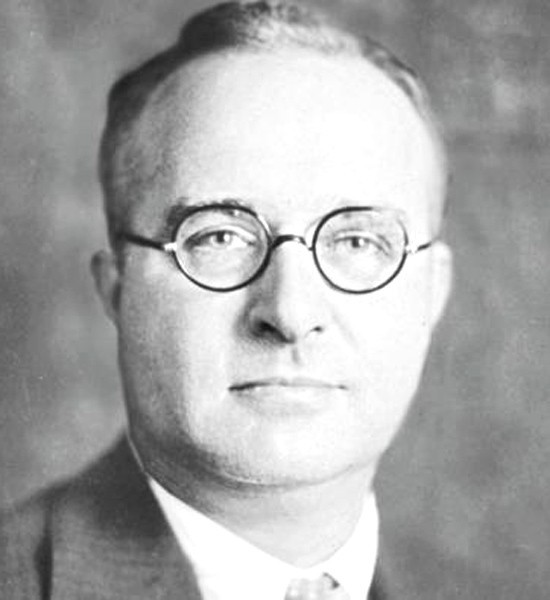
Indeed, to delve into the history of pivotal figures who shaped our world is to uncover a truth often more complex and consequential than initially perceived. When we speak of individuals whose innovations profoundly impacted life on Earth, Thomas Midgley Jr. stands as a particularly striking and, quite frankly, unsettling example. He was an inventor of undeniable brilliance, lauded in his time, yet the long-term repercussions of his most famous creations were, as we now understand with clear, truthful eyes, utterly disastrous for both human life and the planet itself.
Midgley’s inventive spirit was, it seems, inherited. Born in Beaver Falls, Pennsylvania, in 1889, he came from a family of innovators; his father, Thomas Midgley Sr., made improvements to automobile tire designs, and his maternal grandfather amassed a fortune by patenting a new type of saw and other tool enhancements. Midgley Jr. himself graduated from Cornell University with a degree in mechanical engineering in 1911, and his career quickly took him to Dayton, Ohio, a burgeoning center of technological advancement.
His first major challenge, given to him in a General Motors subsidiary lab, was to solve the pervasive problem of engine knocking in early automobiles. This phenomenon, characterized by loud pinging sounds and excessive vibration, was a common issue in engines of the early 1900s. Midgley approached this systematically, intrigued by the periodic table—a copy of which he reportedly carried with him at all times. By 1921, he and his team had found their solution: tetraethyl lead. A tiny quantity of this substance, when added to fuel, eliminated engine knocking by making the fuel burn more evenly. To prevent lead deposits from building up in the engine, ethylene bromide was also added, ensuring that all traces of lead were ejected via the vehicle’s exhaust system.
The discovery was transformative for the automotive industry, but it was not immediately embraced by the public, who recognized lead as a poisonous substance. General Motors, in a stark illustration of how industry can attempt to shape public perception, carefully avoided any mention of lead, simply calling their new product “Ethel”. Midgley himself played a central role in this public relations effort, famously demonstrating its supposed safety at a press conference in 1924 by pouring tetraethyl lead over his own hands and inhaling it from a bottle.
The immediate consequences of this invention, though, began to manifest among the workers producing it. Multiple deaths and hospitalizations occurred due to lead poisoning, with symptoms including hallucinations, insanity, and damage to the brain and nervous system. Despite this alarming evidence, Midgley’s insistence on the product’s safety, coupled with the immense demand for an anti-knocking solution, silenced critics, and leaded fuel became widely adopted across the United States and then globally.
The long-term impact of leaded fuel, however, would prove profoundly devastating. Decades later, in the 1960s and 1970s, as scientists developed more accurate measurement techniques, the true effects of Midgley’s invention became horrifyingly apparent. Huge concentrations of lead were found across the world, particularly in urban areas. Conclusive evidence emerged, demonstrating that lead could cause serious brain damage and developmental difficulties in young children. While the United States began phasing out leaded fuel in the 1980s, with many other countries following suit, it remained in general use as late as 2000. The exact extent of the damage is impossible to quantify, but it is unequivocally linked to millions of instances of illness, developmental difficulty, and premature death.
Midgley’s second high-profile invention was equally monumental in its immediate success and equally catastrophic in its eventual revelation. After taking a break to recover from symptoms of lead poisoning, he turned his attention to refrigeration. At the time, mechanical refrigeration relied on dangerous chemicals that were either explosive or poisonous. Midgley sought a safer alternative, and he quickly identified fluorine as a promising chemical. By mixing fluorine with chlorine and carbon, he created chlorofluorocarbons (CFCs), branded as Freon. These chemicals were non-explosive and non-dangerous to human life, making them ideal for home use.
Again, Midgley publicly demonstrated Freon’s safety, famously inhaling it at a 1930 meeting of the American Chemical Society, holding it in his lungs, and then using it to blow out a candle—all without apparent ill effect. Convinced, the audience witnessed Freon’s rapid adoption in the refrigeration industry. Beyond refrigerators and air conditioners, Freon was found to be an ideal propellant for aerosols, leading to its use in billions of spray cans worldwide.
Yet, much like leaded fuel, Freon harbored a hidden, long-term threat. In 1974, scientists Mario Molina and Frank Rowland published a paper that hypothesized CFCs were drifting into the atmosphere and destroying the Earth’s protective ozone layer. This finding was initially met with skepticism, and industry representatives, similar to the early days of leaded fuel, attempted to discredit their research and prevent its dissemination. They even complained that Molina and Rowland had used the brand name Freon without permission.
However, the truth could not be suppressed. In the 1980s, the British Antarctic Survey confirmed that the ozone layer was indeed thinning, forming “holes” over the Antarctic. The implications were stark: a depleted ozone layer would cease to protect the planet from the sun’s rays, leading to skyrocketing rates of skin cancer, crop failures, and disrupted food chains. In the most extreme scenarios, some scientists predicted that Earth could become uninhabitable as early as 2050. This grave reality spurred global action, culminating in the 1987 Montreal Protocol, an international agreement to phase out CFCs and other ozone-depleting chemicals. As of 2020, while some thinning persists, the process is slowly reversing, and the ozone layer is projected to return to full thickness by 2070.
The profound irony of Thomas Midgley Jr.’s life is that he ultimately died in 1944, not from his groundbreaking chemical inventions, but from a malfunction in one of his other mechanical inventions. Afflicted by polio in his final years, he had devised a mechanical hoist to help him transfer from his bed to his wheelchair. He was found strangled to death, tangled in the straps of his own creation.
In retrospect, Thomas Midgley Jr.’s story is a chilling testament to the unforeseen, monumental consequences that technological advancements can carry. His achievements were once celebrated as massive boons for economic growth and public health. Yet, the ultimate truth, laid bare by later scientific understanding and diligent investigation, reveals a legacy of utterly disastrous side effects, making him, arguably, the single inventor whose creations, combined, have caused more damage to human life and the environment than any other. His history serves as a powerful reminder that “progress” without comprehensive foresight and ethical scrutiny can lead to profound and lasting harm.